Deep Cleaning the Non-Toxic Way: A Whole House Checklist (No Harsh Chemicals Required)
You can do a deep cleaning of your entire house without bringing a single bottle of bleach into it.
I know that sounds like a stretch if you grew up watching your mom mop with Pine-Sol and bleach the bathroom every Saturday. It sounded like a stretch to me too, until I started swapping things out one room at a time and realized the natural stuff was, in some cases, working better.
Vinegar dissolves hard water deposits faster than the spray I used to buy. Castile soap cuts grease without the lung-burn of conventional degreasers. A microfiber cloth and a spray bottle do most of the heavy lifting in any room of the house.
This is the deep cleaning checklist I run twice a year (once in spring, once in fall) plus a quarterly tune-up of the high-impact spots. It’s broken down room by room, with the actual products I use noted, so you can print it, pin it, and work through it on your own schedule.
A non-toxic deep cleaning is a top-to-bottom house clean using ingredients like vinegar, baking soda, castile soap, hydrogen peroxide, and essential oils instead of bleach, ammonia, and synthetic disinfectants. It removes built-up grime, bacteria, and allergens without leaving toxic residue on the surfaces your family touches every day.
If you’re new to non-toxic cleaning, our DIY natural cleaning recipes using just 5 ingredients covers the base recipes you’ll need before you start.
Before You Start: The Basic Toolkit
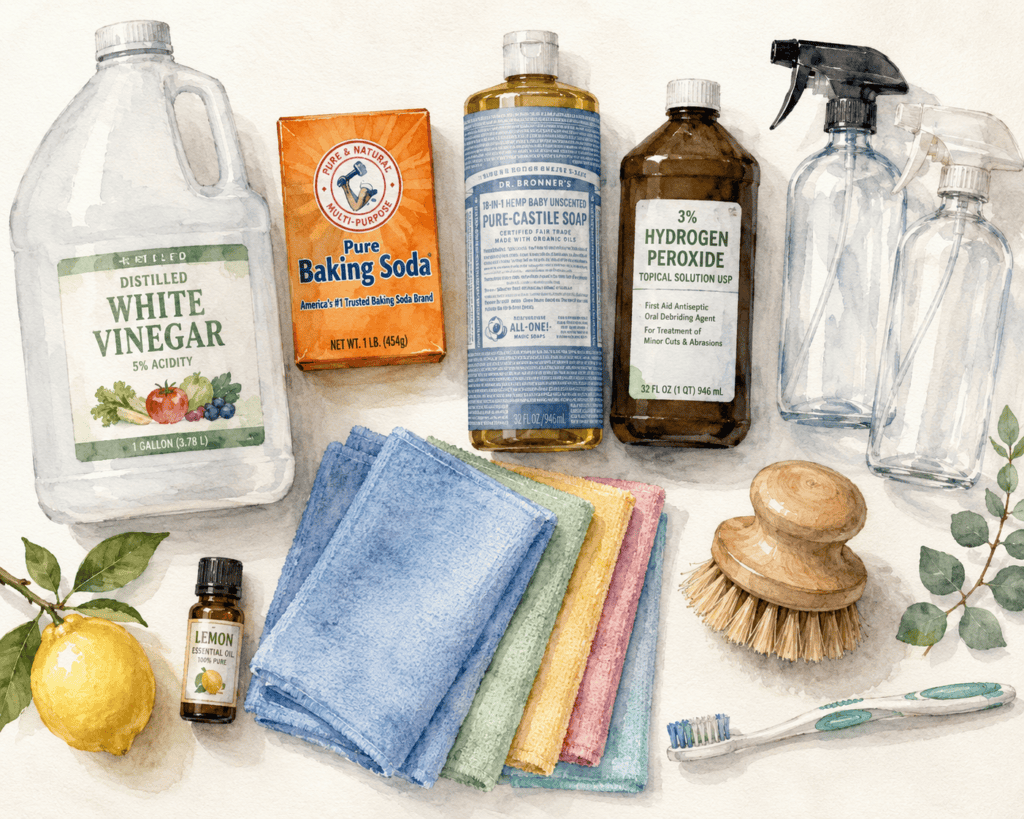
Don’t run out and buy a stack of new products. Most of what you need is in your kitchen already.
- White vinegar (gallon jug)
- Baking soda
- Castile soap (Dr. Bronner’s or similar)
- Hydrogen peroxide (3 percent, the brown bottle)
- Lemon (fresh or essential oil)
- A spray bottle or two
- 4 to 6 microfiber cloths
- A natural bristle scrub brush
- An old toothbrush (for grout, faucets, hinges)
That’s the whole toolkit. About $25 if you’re starting from zero, less than the cost of one round of conventional cleaning supplies.
The Order Matters: Top to Bottom, Back to Front
As an Amazon Associate, I earn from qualifying purchases. This means if you click an Amazon link and buy something, I may earn a small commission at no extra cost to you.
Before we hit the room-by-room list, the universal rule.
Always clean top to bottom. Dust falls. If you wipe the counters first and then dust the ceiling fan, the dust lands on your fresh counters. Start at the ceiling, work down to the floor.
Always work back to front. In any room, start at the wall opposite the door and work your way out. So you’re not walking through clean spots.
This single sequencing trick cuts your time roughly in half.
Kitchen Deep Cleaning
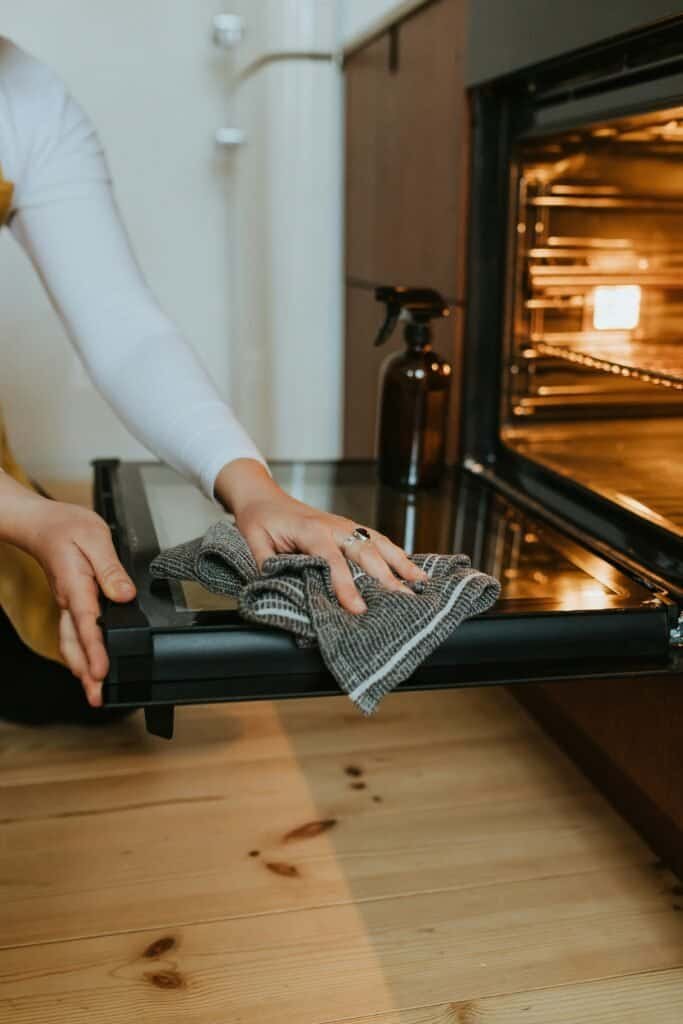
The kitchen has the most surfaces, the most grease, and the most overlooked spots. This is where the deep cleaning makes the biggest visible difference.
Cabinets and Hardware
Mix 1 part vinegar to 2 parts warm water in a spray bottle. Add a squeeze of castile soap. Spray on cabinet faces. Wipe with a microfiber cloth, paying attention to the area around handles where finger oils build up. Use the toothbrush around the hardware itself.
Inside the Microwave
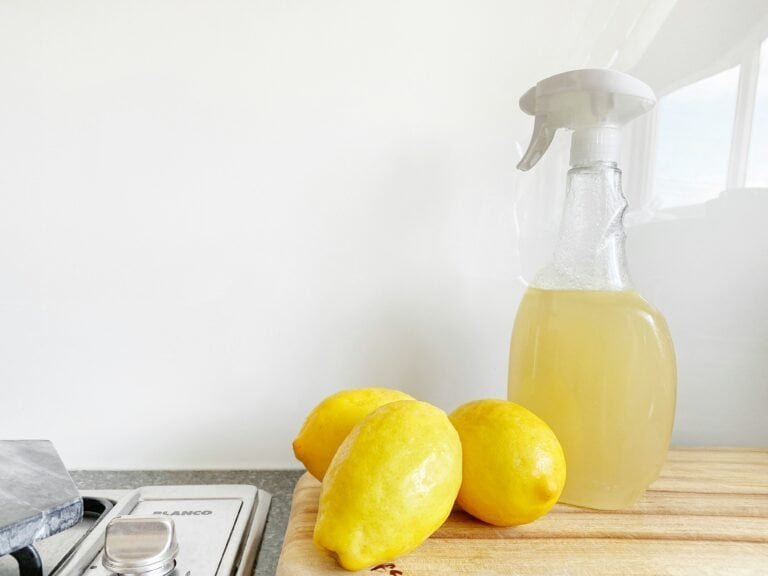
Fill a glass bowl with 1 cup water and 2 tablespoons of lemon juice (or half a fresh lemon). Microwave on high for 4 minutes. Let it sit (door closed) for another 5 minutes. The steam loosens everything. Wipe clean with a damp cloth.
The Stovetop and Burners
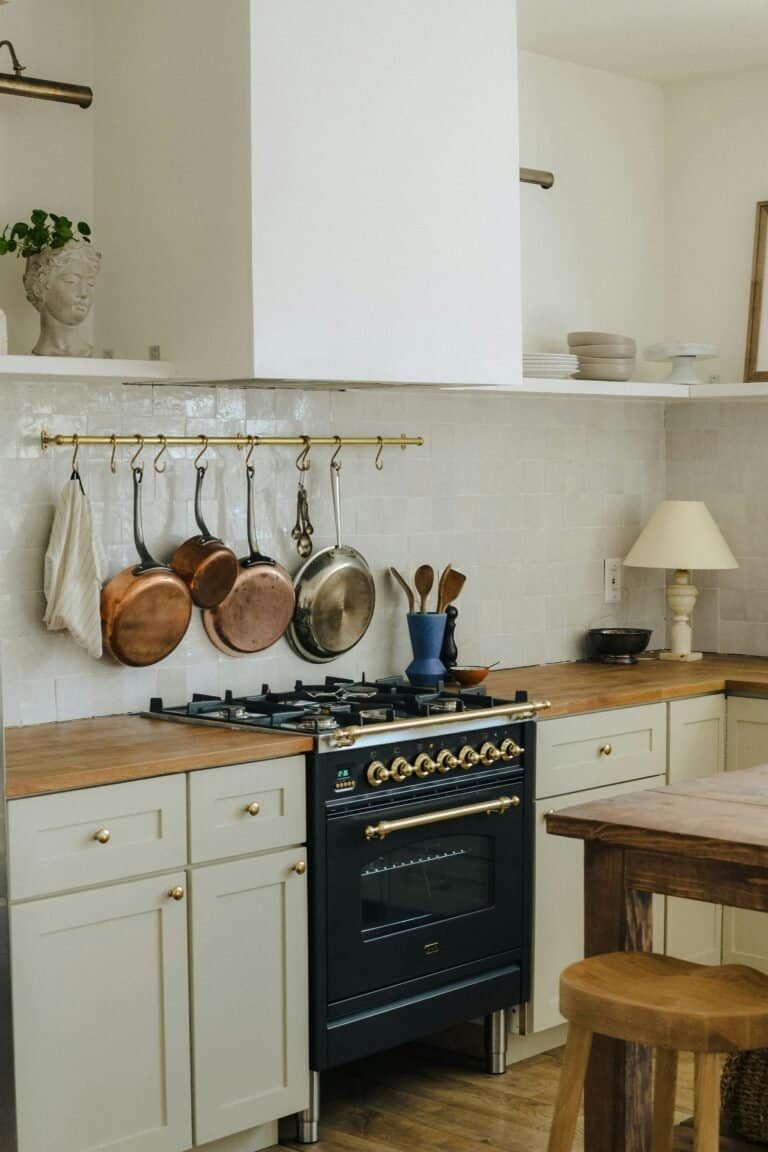
Sprinkle baking soda over the cooled stovetop. Spray with water until it forms a paste. Let sit for 15 minutes. Scrub with a damp cloth. For burnt-on spots, add a drop of castile soap to your scrub.
For removable gas burner grates, soak them in hot water with castile soap for 30 minutes, then scrub with a brush.
Inside the Oven
This is the big win.
Mix 1/2 cup baking soda with enough water to make a thick paste. Spread it across the inside of the oven (avoiding heating elements). Let it sit overnight. The next morning, wipe out the paste with a damp cloth. Spray any stubborn spots with vinegar (it’ll fizz, that’s normal). Wipe again.
Skip the toxic oven cleaner. Skip the “self-clean” cycle that off-gases for hours. This works.
The Refrigerator
Pull everything out. Toss expired items. Wipe shelves and drawers with a 1:1 vinegar and water spray. Pay attention to the gaskets around the door (this is where mold loves to grow).
For odors, place an open box of baking soda in the back of the fridge. Replace it every 3 months.
The Sink and Faucet
Sprinkle baking soda in the sink. Spray with vinegar. Let it bubble for 5 minutes. Scrub with a brush. Rinse hot.
For the faucet, soak a cloth in vinegar and wrap it around the base. Leave for 30 minutes to dissolve mineral buildup. Use the old toothbrush for the crevices.
Floors
Mop with a 1/2 cup vinegar to 1 gallon hot water solution, plus 5 to 10 drops of lemon essential oil. Skip the vinegar on natural stone (it can etch the surface).
For more cleaning recipes specific to different floor types, check out our DIY floor cleaner guide.

Your 7-Day Kickstart To A Non-Toxic Home
One swap per day. No overhaul required. Just 7 small changes that make your home a healthier place to live.
No spam. Unsubscribe anytime.
Bathroom Deep Cleaning
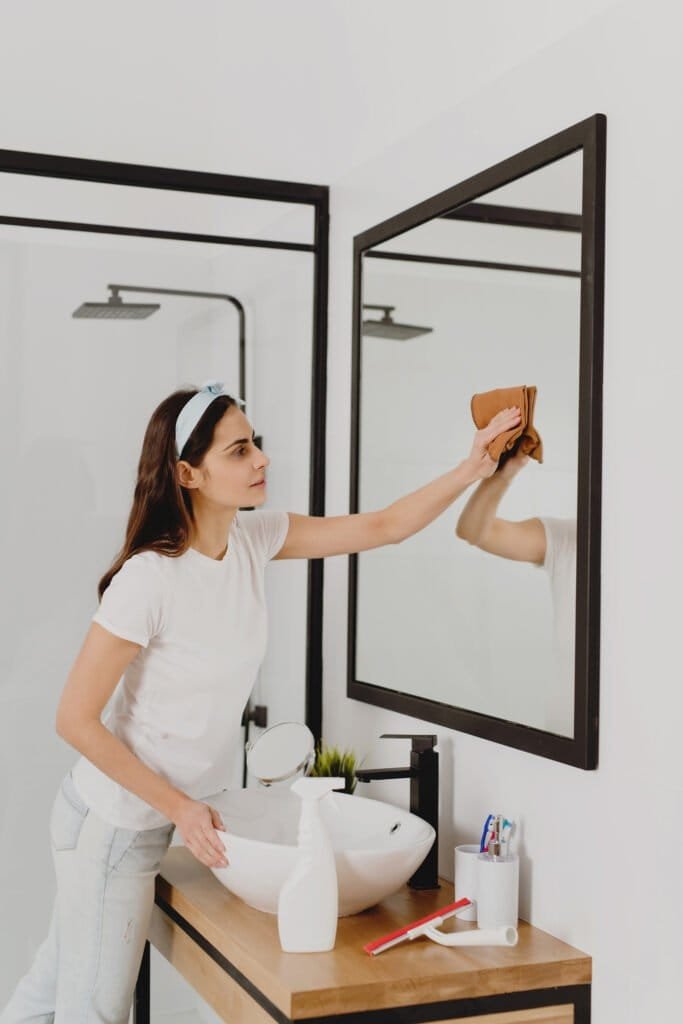
The bathroom is where most people are tempted to bring out the bleach. Don’t.
The Toilet
Pour 1 cup of vinegar into the bowl. Let it sit for 30 minutes. Sprinkle baking soda around the bowl. Scrub with a toilet brush. Flush.
For the outside of the toilet, use a microfiber cloth and a 1:1 vinegar-water spray. Pay attention to the base, the bolts, and the back of the seat.
The Shower and Tub
Mix equal parts vinegar and Dawn dish soap (or Dr. Bronner’s) in a spray bottle. Spray on the tub and shower walls. Let sit for 10 minutes. Scrub. Rinse.
For glass shower doors with hard water buildup, spray straight vinegar, let it sit for 15 minutes, then scrub with baking soda. The combination dissolves the calcium deposits without scratching the glass.
For grout, see our DIY grout cleaner post for the exact recipe that’s saved us so much regrouting.
The Sink and Faucet
Same as the kitchen. Baking soda plus vinegar in the sink. A vinegar-soaked cloth wrapped around the faucet base for 30 minutes.
Mirrors and Glass
Mix 1/2 cup white vinegar, 1/2 cup water, and 1 tablespoon of cornstarch (yes, really, it eliminates streaks). Spray on a microfiber cloth, not directly on the glass. Wipe in an S-pattern.
Floors
Vinegar and hot water for tile or vinyl. For natural stone, use a pH-neutral castile soap and water mix instead.
Bedroom Deep Cleaning
The Mattress
Strip the bed. Vacuum the mattress with the upholstery attachment. Sprinkle baking soda generously over the entire surface. Let it sit for 1 hour (or as long as you can leave it). Vacuum again.
This pulls moisture, dust mite waste, and trapped odors out of the fabric. Do it once a season.
Pillows
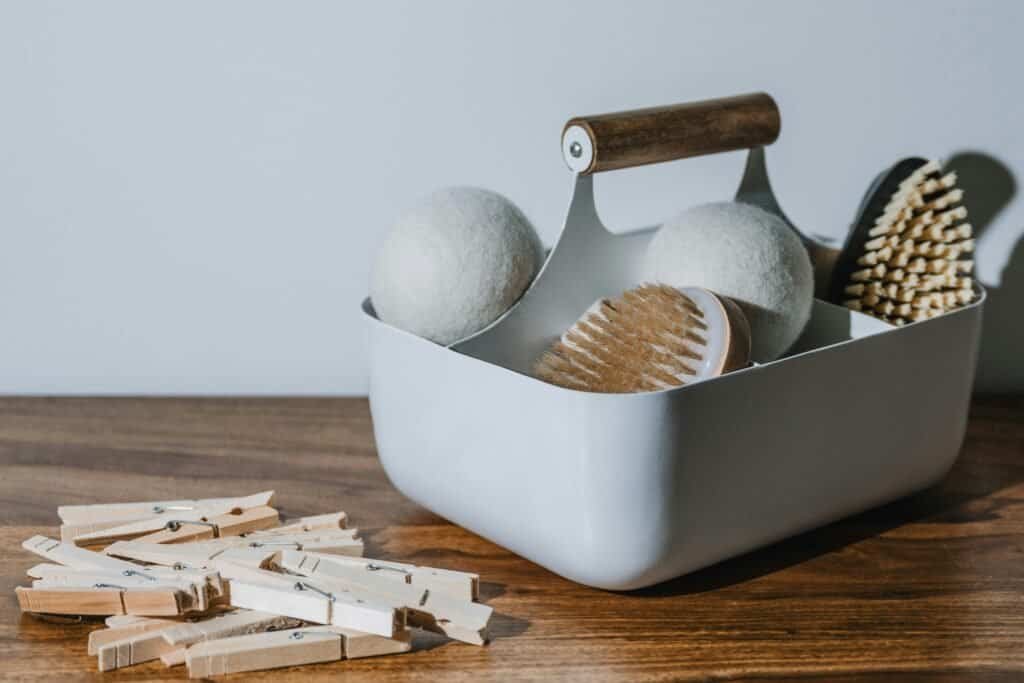
Most pillows can be washed in hot water with a small amount of plant-based detergent. Two pillows per load to keep the washing machine balanced. Dry on low heat with two clean tennis balls (or wool dryer balls) to fluff them back up.
Ceiling Fan and Light Fixtures
Use an old pillowcase. Slip it over each fan blade and wipe the dust into the pillowcase as you pull it off. Same trick works for ornate light fixtures.
Baseboards and Trim
Run a damp microfiber cloth along all baseboards. Use the old toothbrush for the corners and the spot where carpet meets the baseboard. This is the most overlooked deep cleaning step in the entire house.
Floors
Vacuum thoroughly (under the bed, behind dressers). For wood floors, mop with a damp microfiber and a 1:8 castile soap to water mix.
Living Areas
Upholstered Furniture
Vacuum the cushions, then flip them over and vacuum the bottoms. Pull cushions off and vacuum the frame underneath.
For deodorizing fabric, mix 1 cup baking soda with 5 drops of lavender essential oil. Sprinkle across cushions. Let sit for 30 minutes. Vacuum.
For stains, blot (don’t rub) with a 1:1 mixture of warm water and white vinegar. Test in a hidden spot first.
Rugs and Carpet
Same baking soda and essential oil mix as above. Sprinkle across the entire surface. Wait 30 minutes. Vacuum thoroughly.
For deep stains on lighter carpet, mix 1 part hydrogen peroxide with 2 parts water. Test first.
Hard Furniture (Wood, Laminate)
A damp microfiber cloth with a tiny bit of olive oil rubbed in afterward conditions wood without the silicone in store-bought polish.
Windows (Inside and Out)
Vinegar-water-cornstarch glass spray. Microfiber cloths. Cloudy day if possible (sun dries the cleaner too fast and causes streaks).
Vents and Air Returns
Pull off the covers. Wash in the sink with hot water and castile soap. Vacuum the ducts behind them with a brush attachment. Replace.
Laundry Room
The Washing Machine
Run an empty hot cycle with 4 cups of white vinegar. Let it sit for an hour, then run it through. Run a second hot cycle with 1 cup of baking soda. This dissolves detergent buildup and kills any mildew in the gasket.
For the gasket on a front-loader, wipe with vinegar after the cycle and leave the door open between loads to dry it out.
The Dryer
Vacuum out the lint trap from below (the actual cavity, not just the screen). Pull the dryer out and clean behind it. Vacuum the dryer vent if you can reach it. Once a year, have the full vent line professionally cleaned (it’s a fire safety thing).
Entryway and Mudroom
Shoes
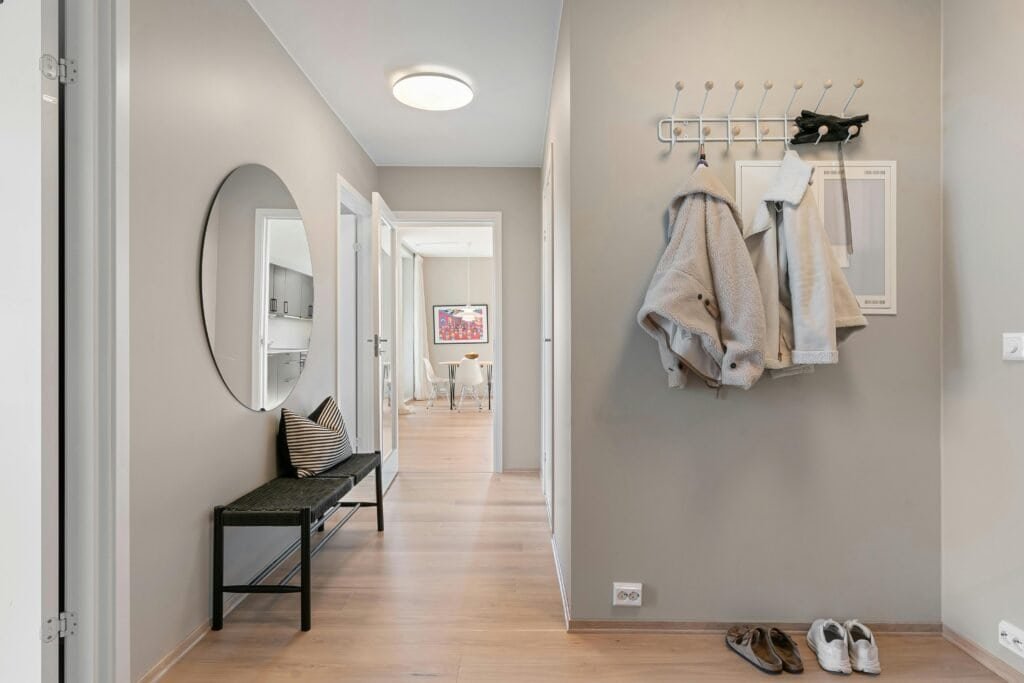
Wipe down all shoes that came in from outside. The dirt on shoe soles is one of the most overlooked sources of indoor pollutants. A baking-soda-and-water paste cleans the rubber. A vinegar wipe handles leather.
Coat Hooks and Bench
Vinegar-water spray, microfiber cloth. Pay attention to the wall behind the coat hooks where backpacks and bags rub.
Rug
Same vacuum-and-baking-soda treatment.
Quick Disinfecting When You Need It
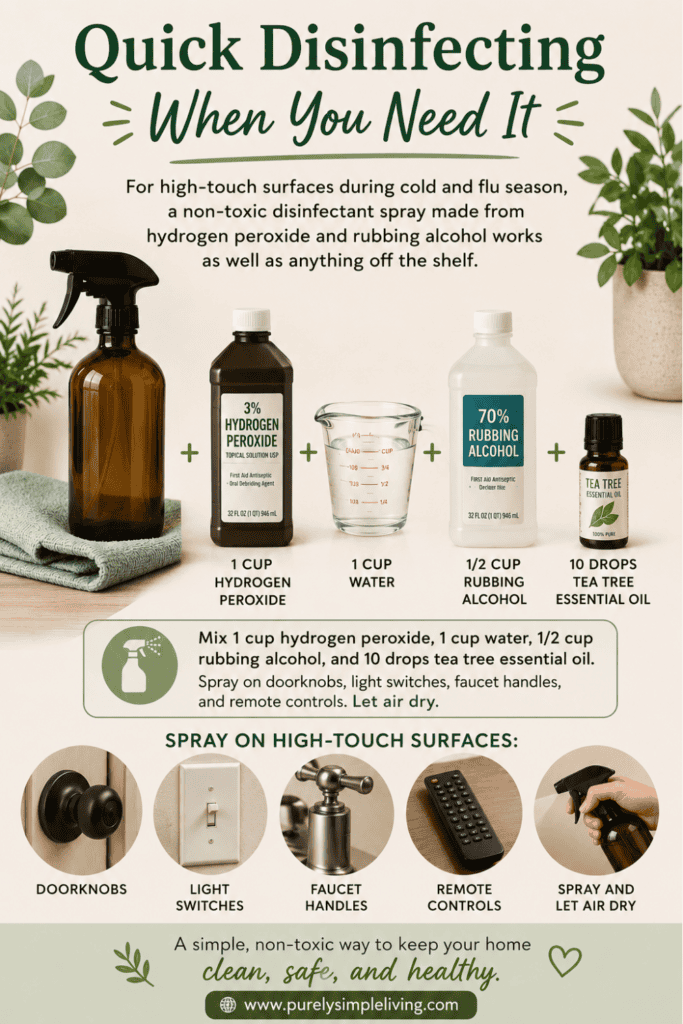
For high-touch surfaces during cold and flu season, a non-toxic disinfectant spray made from hydrogen peroxide and rubbing alcohol works as well as anything off the shelf.
Mix 1 cup hydrogen peroxide, 1 cup water, 1/2 cup rubbing alcohol, and 10 drops tea tree essential oil. Spray on doorknobs, light switches, faucet handles, and remote controls. Let air dry.
For the full breakdown on this recipe (and why it actually works on viruses), see our non-toxic disinfectant spray post.
A Realistic Schedule
Doing a full deep cleaning all in one weekend will burn you out. Here’s how I split it.
Day 1 (3 to 4 hours): Kitchen + bathrooms. Day 2 (2 to 3 hours): Bedrooms + living areas. Day 3 (1 to 2 hours): Laundry room, entryway, windows, baseboards, vents.
Total: 6 to 9 hours over a long weekend, fully spread out. You can also break it into one room a weekend over a month.
For ongoing maintenance, our non-toxic spring cleaning checklist covers the seasonal version of this with a printable PDF.
If you want a head start before you take on the full deep clean, grab the free 7-Day Kickstart. It walks you through one daily swap so the products you’ll be using during the deep clean are already in the cabinet.
A Note on Single-Use Wipes
Disposable cleaning wipes are convenient. They are also one of the worst things you can put in your trash, because they don’t biodegrade and they’re loaded with quaternary ammonium compounds.
Microfiber cloths wash 200 to 300 times. They cost about $1 per cloth. Six of them cover an entire deep cleaning session and rinse out cleanly between rooms.
For more on the swap from disposable to reusable, check our zero-waste cleaning, no single-use guide.
There You Have It!
Deep cleaning isn’t actually about scrubbing harder or buying stronger chemicals. It’s about working through every surface in the house in the right order, with simple ingredients that don’t poison the air on the way through.
Print this checklist. Tape it to the inside of a kitchen cabinet. Work one room at a time, on your own schedule.
Your house will smell like vinegar for about an hour. Then it’ll smell like nothing, which is exactly what a clean house should smell like.
What’s the one part of your house you’ve been avoiding for the deep clean? Drop it in the comments and I’ll tell you the exact non-toxic recipe to use.
—
Your 7-Day Kickstart To A Non-Toxic Home
One swap per day. No overhaul required. Just 7 small changes that make your home a healthier place to live.
No spam. Unsubscribe anytime.