
Sustainable Living for Real Homes: 14 Simple Swaps That Actually Stick
I used to think sustainable living meant a Mason jar for every pantry good and a closet full of beige linen.
Then I had a baby. Then I had two. The Mason jar dream got real comical real fast.
So I stopped trying to be the Pinterest version of sustainable, and I started doing the real-person version. The kind where you swap one thing at a time, keep the stuff you already own, and stop measuring yourself against people whose entire job is making their pantry look pretty.
This is the version that sticks. And it turns out, it’s the version that actually adds up.
Sustainable living is a way of running your home that uses less, wastes less, and chooses products that don’t poison the people inside it. It’s not a perfect lifestyle. It’s a series of small, repeatable swaps that add up over years.
If you’ve been wanting to start but you keep getting overwhelmed by the all-or-nothing crowd online, this post is for you. Below are 14 swaps that have actually held up in our house, organized by room. Pick one. Try it for two weeks. Move on to the next.
That’s the whole strategy.
Why Sustainable Living Doesn’t Have to Mean an Overhaul

The biggest barrier to sustainable living isn’t budget or willpower. It’s the idea that you have to do everything at once.
You don’t.
A 2023 EPA report found that the average American household throws away about 4.9 pounds of trash per person, per day. Most of that comes from packaging, food scraps, and stuff we buy that we didn’t actually need. Cutting even 10 percent of that, household by household, adds up to millions of tons a year.
You getting a reusable water bottle counts. Your neighbor switching to bar soap counts. None of it has to be heroic. It just has to keep happening.
For a closer look at what “less waste” actually looks like day to day, our low waste living guide breaks down the basics in plain language.
Sustainable Living in the Kitchen
As an Amazon Associate, I earn from qualifying purchases. This means if you click an Amazon link and buy something, I may earn a small commission at no extra cost to you.
The kitchen is where most of the daily waste lives, so it’s also where the biggest wins are.
1. Swap Plastic Wrap for Beeswax Wraps or a Plate
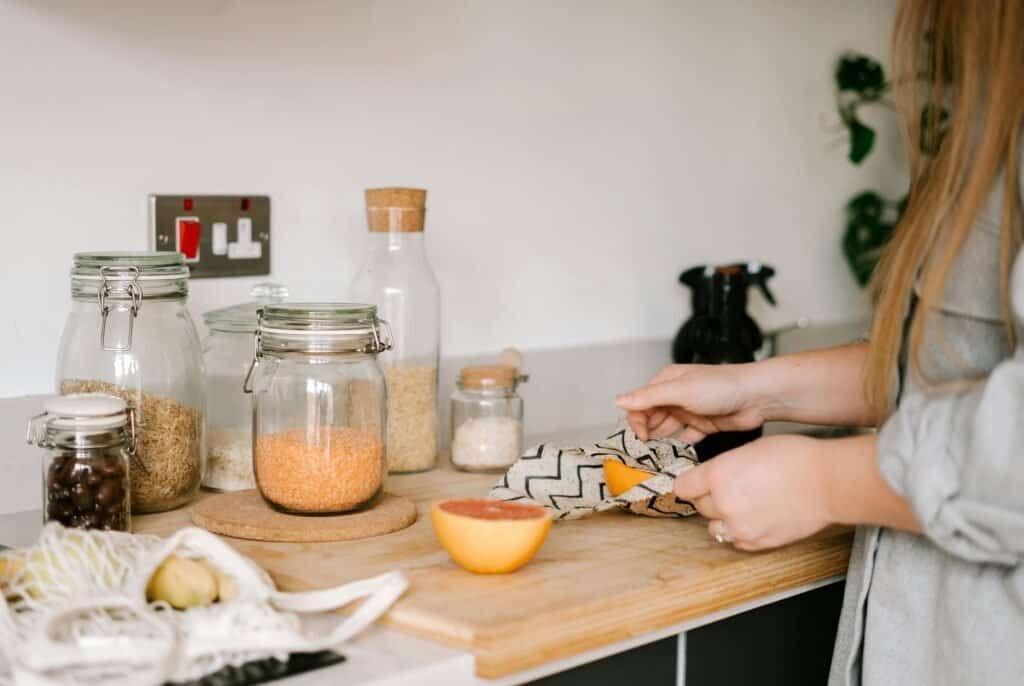
Plastic wrap is the worst offender in most kitchens. You use it once, you throw it out, and it sits in a landfill for the next 500 years.
Beeswax wraps mold to whatever you press them on. They wash with cold water. They last about a year, which sounds short until you remember the average roll of plastic wrap lasts about a month and never decomposes.
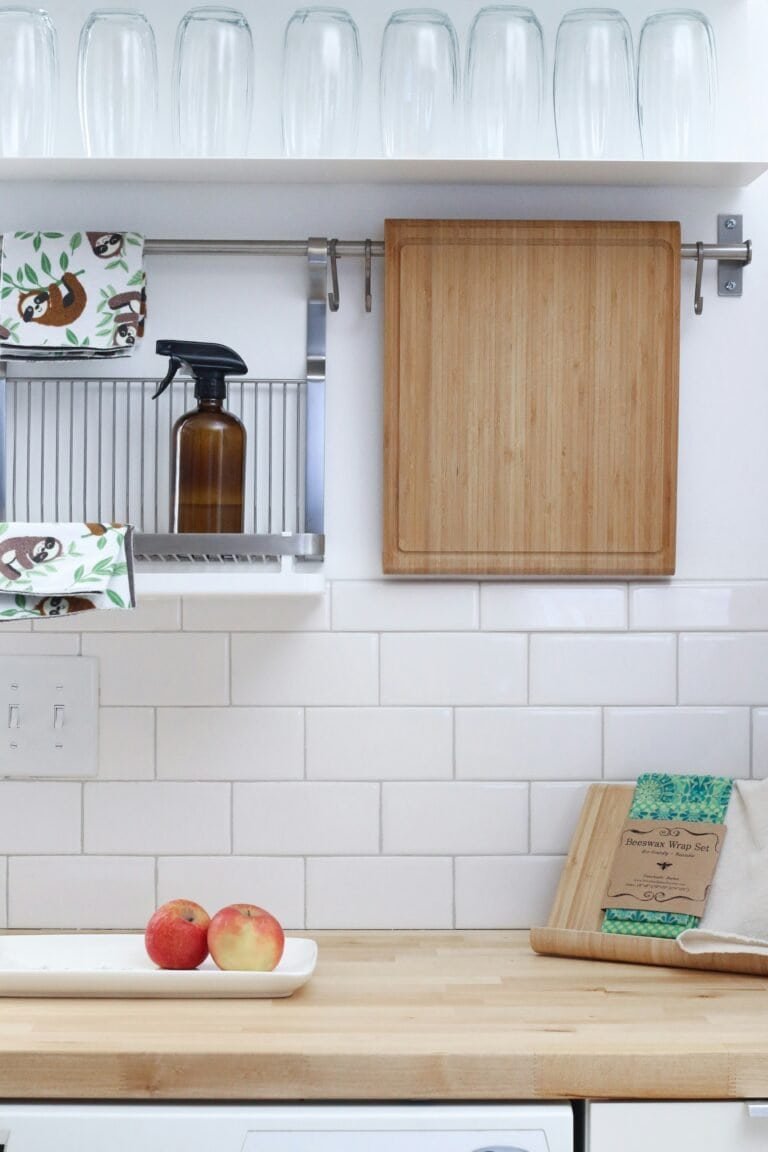
Honestly though? A plate on top of a bowl works just as well for most leftovers. Free, zero waste, no shopping required.
2. Keep One Set of Cloth Napkins You Don’t Hate
I held onto paper napkins for years because I thought cloth ones were too fancy for everyday spaghetti. Then I bought a $12 pack of plain cotton napkins from Target and started using them. My kids don’t ruin them. My washing machine handles them. We saved roughly $80 a year on paper napkins.
The trick is buying ones you don’t mind getting messy. White linen is a setup for failure. Striped cotton or a forgiving terracotta color does the job.
3. Buy Pantry Staples in Bulk
Bulk doesn’t mean Costco-haul bulk. It means buying rice, oats, beans, and flour from the bulk bins at a co-op or natural grocer with your own jars. Less packaging, lower cost per pound, and your pantry starts looking like the Pinterest version without you trying.
If your store doesn’t have bulk bins, just buying the largest size of what you already use cuts packaging waste roughly in half.
Sustainable Living in the Bathroom
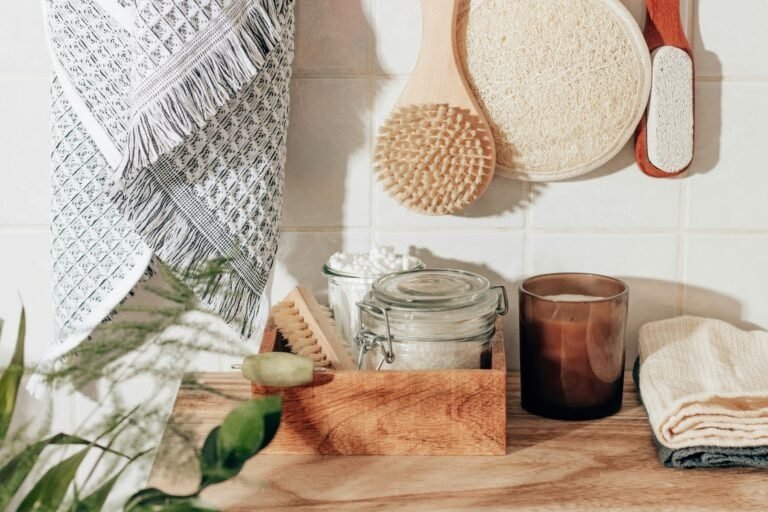
The bathroom is probably the most plastic-heavy room in the average home. Twelve plastic bottles in the shower alone. Let’s start trimming.
4. Switch to Bar Soap
Bar soap lasts longer than liquid soap, costs less per use, and skips the plastic bottle entirely. A good bar of castile or goat milk soap runs you about $5 and lasts a month or more.
If you’ve been using liquid hand soap because it feels more “hygienic,” I have good news. Bar soap kills germs the same way liquid soap does. It’s not the soap, it’s the friction and the rinsing that lifts the grime off your skin.
5. Try a Safety Razor
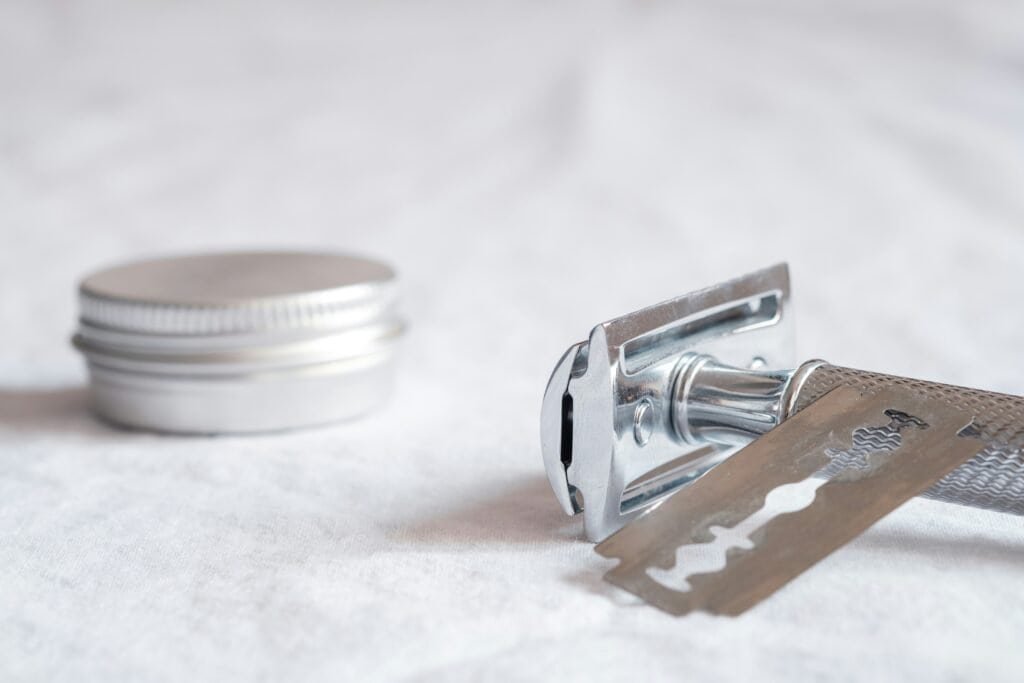
Disposable razors are one of the most wasted items in the bathroom. The average person tosses about 25 of them a year.
A safety razor (the old-school kind with replaceable blades) costs $30 to $40 up front. The blades cost about 20 cents each and last 5 to 10 shaves. Within a year, you’ve saved money. Within two years, you’ve kept dozens of plastic razors out of the trash.
6. Refill Your Cleaners Instead of Replacing Them
Most bathroom cleaners are 95 percent water. You’re paying to ship water across the country in a plastic bottle, and then you throw the bottle out.
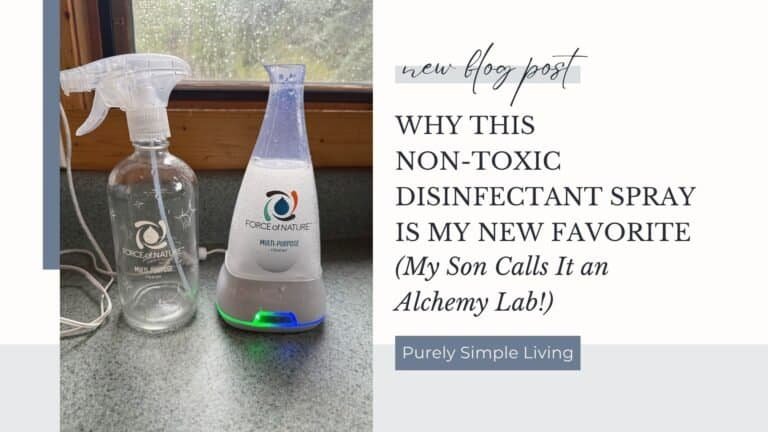
Refill brands like Branch Basics or Blueland send you a tablet or concentrate, and you mix it at home in a bottle you already own. Same cleaning power. Roughly a third of the cost. None of the plastic.
For a deeper dive into swap-by-swap home upgrades, our non-toxic swaps every room post walks through every space in the house.
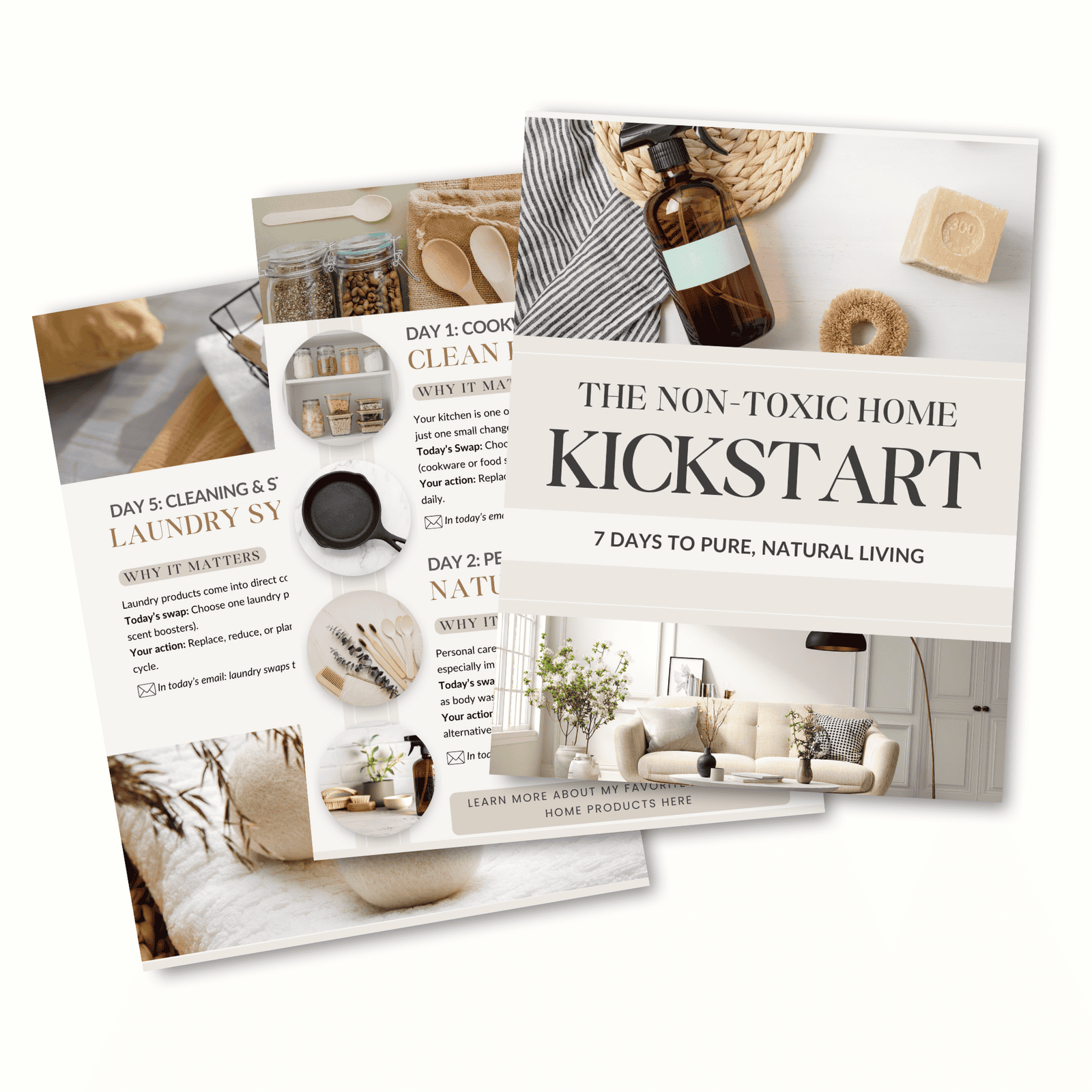
Your 7-Day Kickstart To A Non-Toxic Home
One swap per day. No overhaul required. Just 7 small changes that make your home a healthier place to live.
No spam. Unsubscribe anytime.
Sustainable Living in the Laundry Room
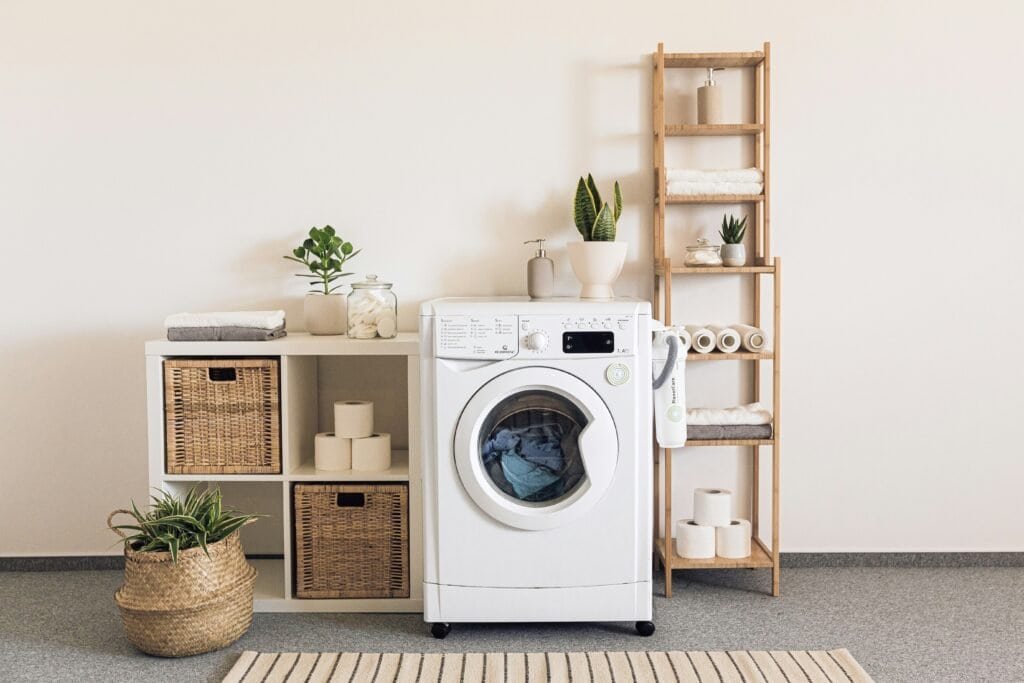
7. Wash on Cold
About 90 percent of the energy a washing machine uses goes to heating water. Switching to cold cuts your laundry energy use roughly in half. Modern detergents are formulated to work in cold water, and your clothes will last longer too.
The exception: bedsheets and towels every few months in hot, to keep dust mites in check. The rest of the time, cold is fine.
8. Skip the Dryer Sheets
Dryer sheets are coated in synthetic fragrances and quaternary ammonium compounds, which are not great for your skin or your lungs.
Wool dryer balls last for thousands of loads, soften clothes the same way, and cut drying time by about 25 percent. Add a few drops of lavender essential oil to one of the balls if you miss the scent.
9. Hang-Dry What You Can
A drying rack in the laundry room or a bathroom doorknob saves shocking amounts of energy over a year. Heavier items (jeans, sweatshirts, towels) take 60 to 90 minutes in the dryer. Skipping just half of those loads adds up to roughly $80 a year in saved energy, plus your clothes hold their shape longer.
Sustainable Living in the Living Areas
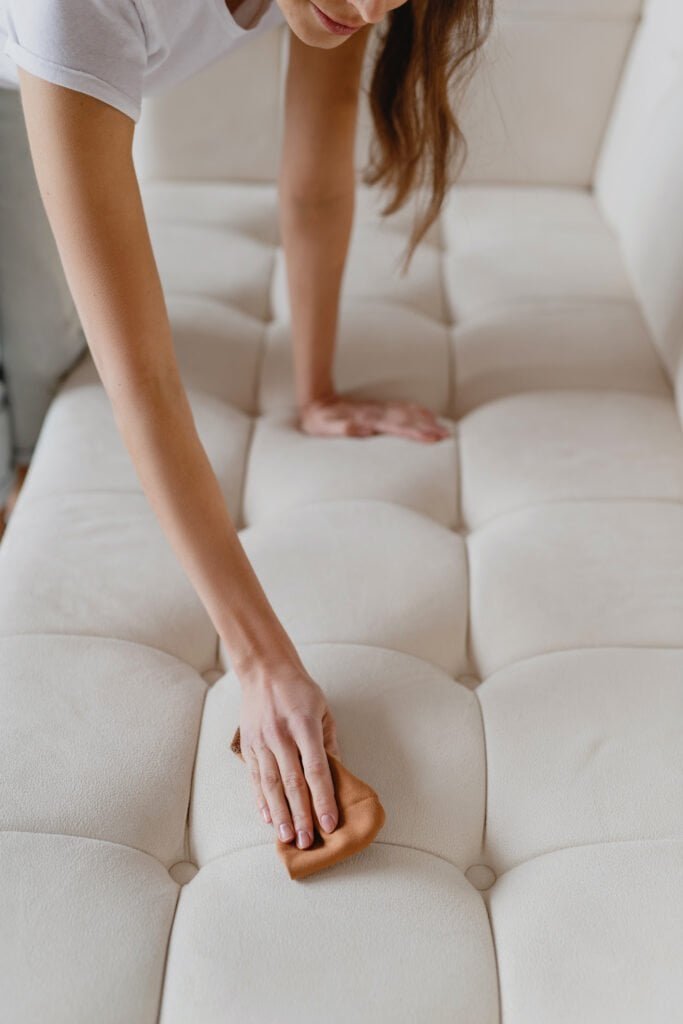
10. Buy Furniture Once
Fast furniture is to your living room what fast fashion is to your closet. Cheap, made of pressed sawdust and toxic glue, falls apart in two years, and ends up in a landfill.
The most sustainable furniture is the furniture you already own. The second most sustainable is secondhand, from Facebook Marketplace, estate sales, or thrift stores. The third is solid wood from a brand that builds for decades.
You don’t need a whole new couch this year. You need to fix the one you have.
11. Switch to LED Bulbs
If you haven’t already, do this in one weekend. LEDs use about 75 percent less energy than incandescent bulbs and last 25 times longer. The math works out to roughly $225 saved per bulb over its lifetime.
Replace as the old ones burn out. You don’t have to swap them all at once.
12. Add Houseplants
Houseplants pull volatile organic compounds out of the air, which is helpful in a sealed-up modern home. They also cut your reliance on store-bought decor (a pothos in a thrifted ceramic pot beats a fake plant from HomeGoods every time).
Pothos, snake plants, and spider plants are the trifecta. All three are nearly impossible to kill, even if you forget about them for two weeks.
Sustainable Living for the Day-to-Day

13. Carry a Reusable Water Bottle and Coffee Cup
This one is so basic it feels silly to include. But the average American throws away 156 plastic water bottles and 500 disposable coffee cups a year. Replacing both with one stainless steel bottle and one ceramic travel mug eliminates roughly 650 pieces of trash per person, per year.
A lot of coffee shops will give you a discount if you bring your own cup, too. Worth asking.
14. Stop Buying What You Don’t Need
This is the meta-swap. The most sustainable choice is almost always the thing you already own.
Before you buy something new, ask: do I have one of these already? Can I borrow it? Can I find it secondhand? Can I wait two weeks and see if I still want it?
About half the time, you won’t.
What to Expect When You Start
A few things will surprise you.
You’ll save more money than you expected. Most sustainable swaps look more expensive on the front end and end up cheaper over a year. The dryer balls, the safety razor, the LED bulbs, all of them pay back fast.
You’ll feel a little weird at first. Bringing your own jars to the store, asking the barista to use your cup, hanging laundry on a rack in the bathroom. It’s all a little new. After a few weeks, it just feels normal.
You’ll start noticing the waste in places you didn’t see it before. Once you’ve cut your kitchen waste in half, the gift wrap aisle starts looking ridiculous. That’s the right direction.
For more starter swaps and a printable checklist, check out eco swaps for beginners. It’s our most-used roundup for people just getting started.
A Quick Note on the “Aesthetic” Part

Pinterest will sell you a sustainable living aesthetic that involves $400 linen aprons and a fiddle leaf fig. That’s not what this is.
Real sustainable living looks like a slightly chaotic kitchen counter, a row of mismatched glass jars, a Pyrex from your mom’s wedding, and a kid’s drawing taped to the fridge.
It’s not pretty for a magazine. It’s pretty because it’s working.
For more on how to keep this whole thing simple instead of expensive, grab your free 7-Day Kickstart. It’s one swap a day for a week, no overhaul required.
There You Have It!
Sustainable living isn’t a personality. It’s a series of small choices you keep making, in your real kitchen, with your real budget, on the days when you’re tired.
Pick one swap from the list above. Try it for two weeks. Then pick another. In a year, you’ll look around and realize half the room has changed without you noticing.
That’s how this actually works.
Did one of these swaps surprise you? Drop a comment and let me know which one you’re trying first.
Your 7-Day Kickstart To A Non-Toxic Home
One swap per day. No overhaul required. Just 7 small changes that make your home a healthier place to live.
No spam. Unsubscribe anytime.