The 5 Natural Cleaning Ingredients That Replace Every Toxic One in Your House
There are five ingredients sitting in your pantry right now that can replace every cleaning product under your sink.
Not most of them. All of them. All-purpose cleaner, glass cleaner, bathroom scrub, floor cleaner, oven cleaner, drain opener, grout cleaner, stain remover, disinfectant, and deodorizer. Five ingredients. About $15 total. Months of supply.
This isn’t a simplified version of the truth. It’s the actual truth. Commercial cleaning product companies sell you 10-15 different bottles because that’s how they make money, not because your countertop needs a fundamentally different chemical than your bathroom sink. The surfactants, solvents, and disinfectants in most commercial cleaners can be replaced with these diy natural cleaning recipes at a fraction of the cost.
Here are the five ingredients, what each one does, and exactly how to combine them for every cleaning task in your house.
Ingredient 1: White Vinegar
What it does: Cuts grease, dissolves mineral deposits, kills most bacteria, deodorizes, and removes soap scum. It’s a mild acid (about 5% acetic acid), which makes it effective against alkaline buildup like hard water stains and limescale.
Cost: About $3 for a gallon. One gallon lasts 2-4 months of heavy cleaning.
Best for: Glass and mirrors, countertops, stovetops, faucets, showerheads, tile, coffee makers, microwaves.
Where NOT to use it: Natural stone (marble, granite, travertine). The acid etches the surface over time. Also skip it on cast iron (breaks down the seasoning) and egg-based messes (the acid cooks the protein, making it harder to clean).
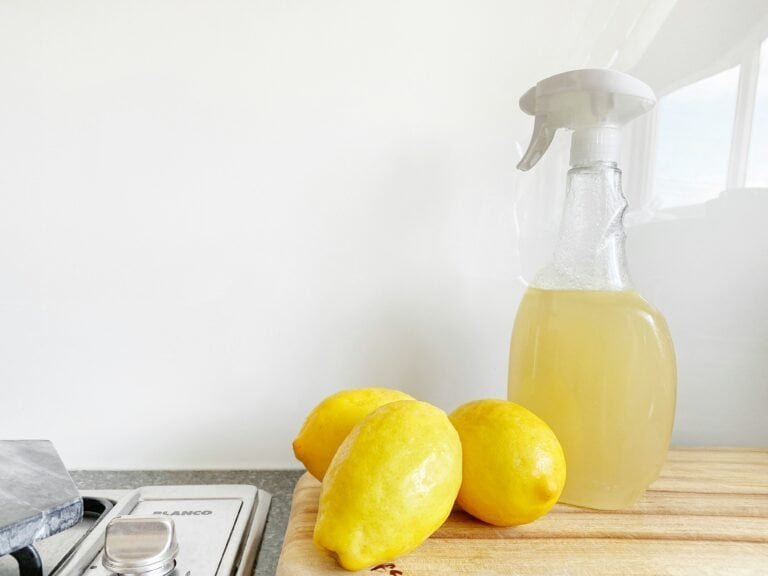
The smell: Yes, it smells like vinegar. For about 10 minutes. Once it dries, the smell disappears completely. If you can’t stand it, add essential oils. Lemon and tea tree work well and add their own cleaning properties.
Pro tip: Keep a 50/50 vinegar and water solution in a spray bottle under the sink. This one bottle replaces your all-purpose cleaner, glass cleaner, and daily bathroom spray.
Ingredient 2: Baking Soda
As an Amazon Associate, I earn from qualifying purchases. This means if you click an Amazon link and buy something, I may earn a small commission at no extra cost to you.
What it does: Mild abrasive for scrubbing, deodorizer, stain lifter, and gentle whitener. It’s a mild alkali (the opposite of vinegar on the pH scale), which means it breaks down grease and organic material.
Cost: About $1 for a box. A box lasts 1-2 months.
Best for: Scrubbing sinks and tubs, deodorizing (fridge, trash cans, carpets, drains), removing baked-on food, whitening grout, cleaning the oven, polishing stainless steel.
Where NOT to use it: Aluminum (it can discolor). Avoid using on delicate surfaces you don’t want scratched (gold-plated fixtures, certain glass cooktops). Test in an inconspicuous spot first if you’re unsure.
As a paste: Mix baking soda with a small amount of water until you get a thick, spreadable consistency. This paste is the base of your oven cleaner, grout cleaner, and heavy-duty scrub. We use it in our oven cleaning guide and grout cleaning guide.
As a deodorizer: Sprinkle on carpets, let sit 15-30 minutes, vacuum. Sprinkle in the bottom of trash cans. Open box in the fridge. It absorbs odors instead of masking them with synthetic fragrance.
Ingredient 3: Castile Soap
What it does: Plant-based surfactant (usually made from olive, coconut, or hemp oil). Surfactants are what make things “soapy.” They lift dirt and grease off surfaces so water can rinse them away. Castile soap does what dish soap, hand soap, floor cleaner, and laundry detergent do, but without synthetic ingredients.
Cost: About $12 for a 32oz bottle of Dr. Bronner’s (the most popular brand). One bottle lasts 3-6 months because you dilute it heavily.
Best for: Mopping floors, washing dishes (diluted), hand soap (diluted), all-purpose cleaning, laundry (small amount), body wash.
Dilution ratios:
- All-purpose cleaner: 1 tablespoon per quart of water
- Floor cleaner: 1 tablespoon per gallon of hot water
- Hand soap: 1 part castile soap to 3 parts water in a foaming pump
- Dish soap: Use at full strength or a 1:1 dilution with water
- Body wash: 1 part castile soap to 2 parts water
What NOT to combine it with: Vinegar. Mixing castile soap directly with vinegar creates a white, curdled mess (the acid in vinegar breaks the soap back into its oil components). Use them separately. Clean with castile soap first, then follow with a vinegar rinse if needed.
Unscented vs. scented: Dr. Bronner’s comes in scented versions (peppermint, lavender, tea tree). These use essential oils, not synthetic fragrance. All are fine for diy natural cleaning recipes. Unscented is the most versatile.
Ingredient 4: Hydrogen Peroxide (3%)
What it does: Disinfects, whitens, removes stains, and kills mold and mildew. The 3% solution sold at drugstores is the one you want (not the stronger concentrations used for hair bleaching).
Cost: About $1 for a bottle. One bottle lasts months.
Best for: Disinfecting cutting boards and countertops, whitening grout, removing blood and organic stains from fabric, killing mold in the shower, sanitizing sponges.
Where NOT to use it: Dark fabrics (it bleaches). Dark grout (it whitens). Test on an inconspicuous area first.
Important: Hydrogen peroxide breaks down in light. Keep it in the brown bottle it comes in. If you transfer it to a spray bottle, use an opaque one, or wrap the bottle in tape. A clear spray bottle exposed to light will turn your hydrogen peroxide into plain water within a few weeks.
As a disinfectant: Spray 3% hydrogen peroxide directly on surfaces. Let it sit for 5-10 minutes. Wipe. It kills bacteria, viruses, and mold spores. The CDC lists hydrogen peroxide as an effective disinfectant for household surfaces.
The one-two punch: For serious disinfecting (raw meat prep, bathroom deep cleaning), spray the surface with vinegar first, then spray with hydrogen peroxide second. Don’t mix them in the same bottle (that creates peracetic acid, which is corrosive). Used sequentially from separate bottles, they’re more effective together than either one alone. A study from Virginia Polytechnic Institute found this method was more effective at killing bacteria than chlorine bleach.
Ingredient 5: Essential Oils (Optional but Useful)
What they do: Add scent, boost cleaning power for specific tasks, and provide mild antimicrobial properties. They’re the “optional upgrade” to every recipe above.
Cost: $5-$15 per bottle. A bottle lasts 6-12 months because you use 5-15 drops at a time.
The starter three: If you buy three essential oils for cleaning, make them these:
Lemon: Cuts grease, deodorizes, adds a fresh clean scent. Best addition to all-purpose and kitchen cleaners.
Tea tree (melaleuca): Naturally antifungal and antibacterial. Best addition to bathroom cleaners and mold-prone areas.
Lavender: Calming scent, mild antimicrobial. Best addition to laundry, linen sprays, and bedroom cleaning.
With those three plus the four base ingredients, your diy natural cleaning recipes cover literally every cleaning scenario in your home.
Five Ingredients Cover Your Cleaning. What About the Rest?
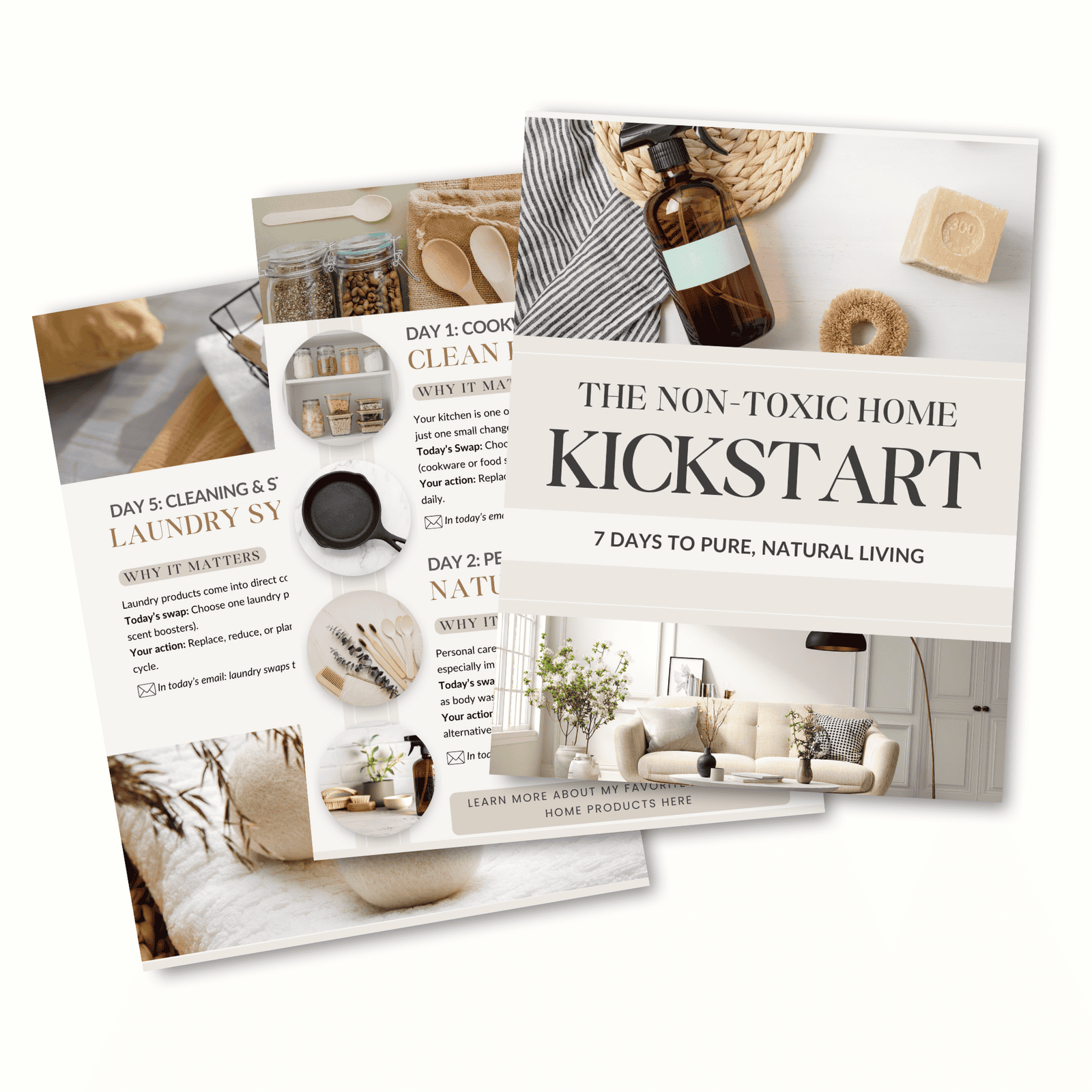
These five ingredients handle everything you spray. But your kitchen, bathroom, and bedroom have toxins that are not in a bottle. The 7-Day Non-Toxic Kickstart covers one simple swap a day across your whole home.
Your 7-Day Kickstart To A Non-Toxic Home
One swap per day. No overhaul required. Just 7 small changes that make your home a healthier place to live.
No spam. Unsubscribe anytime.
The Complete Recipe Cheat Sheet
Here’s every recipe in one place.
All-Purpose Spray: 1 cup water + 1 cup vinegar + 10 drops lemon essential oil. Glass spray bottle.
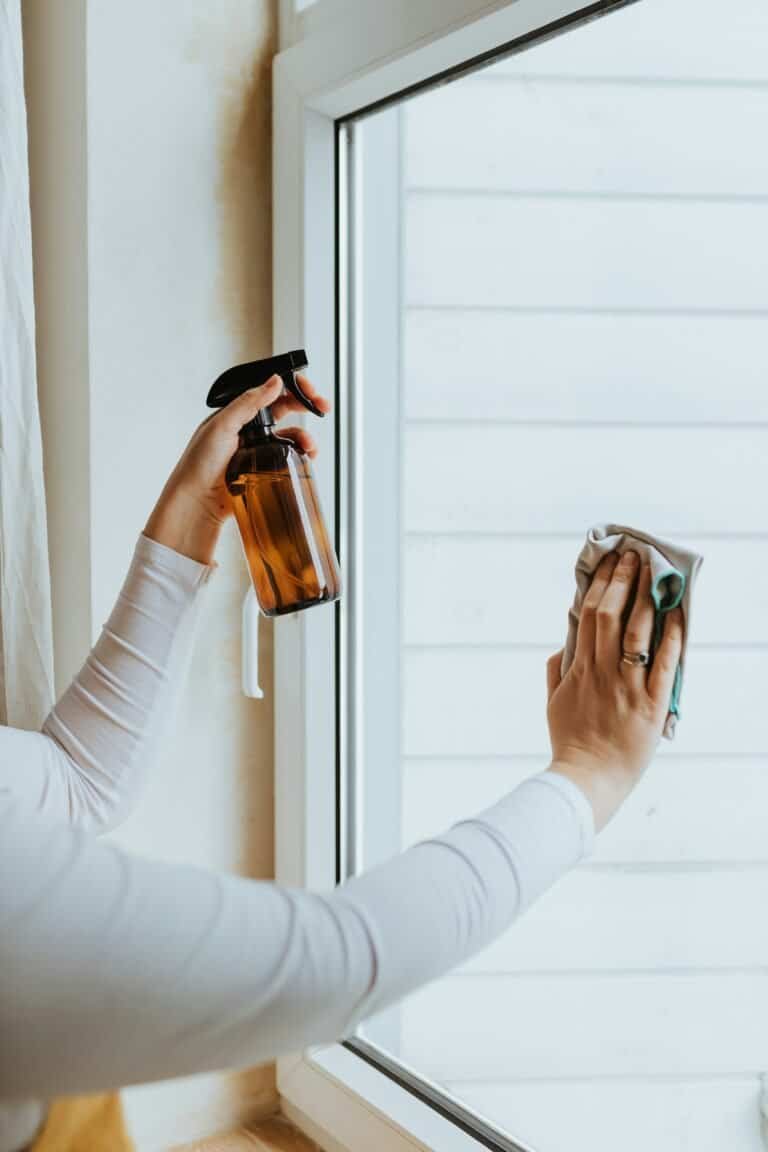
Glass Cleaner: 1 cup water + 1 cup vinegar + 1 tablespoon cornstarch. Shake before use.
Bathroom Scrub: 1/2 cup baking soda + enough castile soap to make a paste + 10 drops tea tree oil.
Floor Cleaner: 1 gallon hot water + 1/4 cup vinegar + 1 tablespoon castile soap. (Skip vinegar for laminate. Skip soap for laminate. Full breakdown in our floor cleaner guide.)
Oven Cleaner: 1/2 cup baking soda + 2-3 tablespoons water to make a paste. Spread inside oven. Wait 12 hours. Spray with vinegar. Wipe. (Full method in our oven cleaner guide.)
Grout Cleaner: 1/2 cup baking soda + 1/4 cup hydrogen peroxide + 1 teaspoon castile soap. Apply. Wait 10 minutes. Scrub. (Three methods in our grout cleaner guide.)
Shower Spray (daily prevention): 1 cup water + 1/2 cup vinegar + 10 drops tea tree oil. Spray after every shower. (Full guide in our shower cleaner post.)
Disinfectant: Straight 3% hydrogen peroxide in an opaque spray bottle. Spray. Wait 5 minutes. Wipe.
Drain Freshener: Pour 1/2 cup baking soda down the drain. Follow with 1/2 cup vinegar. Let fizz for 15 minutes. Flush with hot water.
Carpet Deodorizer: 1 cup baking soda + 10 drops lavender oil. Sprinkle on carpet. Wait 15-30 minutes. Vacuum.
Stain Remover (laundry): Make a paste of baking soda and hydrogen peroxide. Apply to stain. Let sit 30 minutes. Wash normally.
That’s 11 recipes from 5 ingredients. Every surface, every room, every cleaning scenario.
The Startup Shopping List
Everything you need for your first batch of diy natural cleaning recipes:
| Ingredient | Where to Buy | Cost | Lasts |
|---|---|---|---|
| White vinegar (1 gallon) | Any grocery store | $3 | 2-4 months |
| Baking soda (2 lbs) | Any grocery store | $1-$2 | 1-2 months |
| Castile soap (32 oz) | Target, Whole Foods, Amazon | $12 | 3-6 months |
| Hydrogen peroxide (32 oz) | Any drugstore | $1 | 3-6 months |
| Essential oils (lemon + tea tree) | Amazon, Whole Foods, TJ Maxx | $8-$15 | 6-12 months |
| 2 glass spray bottles | Amazon, Target | $8-$12 | Years |
| Total | $33-$45 | 3-6 months |
After the initial purchase (bottles and oils), your ongoing cost is about $5-$8 per month for vinegar, baking soda, and castile soap refills. Compare that to $15-$30 per month on commercial cleaners. The savings add up to $100-$250 per year.
Why This Works as Well as Commercial Products
There’s no magic in commercial cleaning products. The active ingredients are:
Surfactants (to lift dirt) → Castile soap does this.
Acids (to dissolve minerals and cut grease) → Vinegar does this.
Abrasives (to scrub) → Baking soda does this.
Disinfectants (to kill germs) → Hydrogen peroxide does this.
Everything else in a commercial cleaner (synthetic fragrance, dyes, preservatives, thickeners, emulsifiers) exists to make the product smell nice, look appealing on the shelf, and last longer in storage. None of it makes the product clean better. Your diy natural cleaning recipes contain the functional ingredients without the filler.
The difference: commercial products work slightly faster (stronger chemicals = faster reaction). DIY products sometimes need a few extra minutes of contact time. That’s the only real trade-off, and for most people, it’s not a meaningful one.
Save This For Later
Start Here
If this list feels like a lot, start with one recipe: the all-purpose spray. Vinegar, water, and lemon essential oil in a glass bottle. Use it for a week on counters, sinks, and stovetops. Once you see it works, you’ll trust the other recipes too.
One bottle, one week, one decision. That’s how every diy natural cleaning recipes journey begins.
For the full deep-dive on every recipe (with floor-specific, oven-specific, and grout-specific variations), explore our complete guides: DIY Cleaning Products, Oven Cleaner, Grout Cleaner, Floor Cleaner, and Shower Cleaner.
Grab the Printable
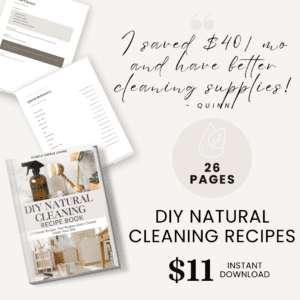
Want all 15 recipes in one printable guide? Grab the DIY Natural Cleaning Recipe Book.
Recommended products
Want the Easy Version?
Get the free 7-Day Non-Toxic Home Kickstart, one simple swap a day, delivered to your inbox.
Your 7-Day Kickstart To A Non-Toxic Home
One swap per day. No overhaul required. Just 7 small changes that make your home a healthier place to live.
No spam. Unsubscribe anytime.