DIY Floor Cleaner for Every Floor Type (Tile, Wood, Vinyl, Laminate)
Mopping should be simple.
Fill a bucket. Mop the floor. Done. Instead, you’re standing in the cleaning aisle trying to figure out which of 15 different floor cleaners is safe for your specific floor type. Pine-Sol, but not on laminate. Swiffer WetJet, but it leaves residue. Murphy’s Oil Soap, but only for sealed hardwood. Maybe.
Forget all of that. A diy floor cleaner uses a handful of pantry ingredients, works on every floor type, and costs about $1-$2 per batch. You just need to know which recipe matches your floor.
Why Commercial Floor Cleaners Are Overkill
Most commercial floor cleaners contain synthetic fragrance, surfactants, and chemical preservatives. Floors get the highest skin contact of any surface in your home if you walk barefoot (and most of us do indoors). Kids and babies crawl on them. Pets sleep on them.
The residue from conventional floor cleaners doesn’t fully evaporate. That’s actually how many of them work. They leave a thin film that makes the floor look shiny. Over time, that film builds up. It attracts dirt, dulls the finish, and creates that sticky feeling on tile or that hazy look on hardwood.
A diy floor cleaner doesn’t leave residue. Your floors dry clean, not coated.
The All-Purpose Floor Cleaner (Works on Most Floors)
As an Amazon Associate, I earn from qualifying purchases. This means if you click an Amazon link and buy something, I may earn a small commission at no extra cost to you.
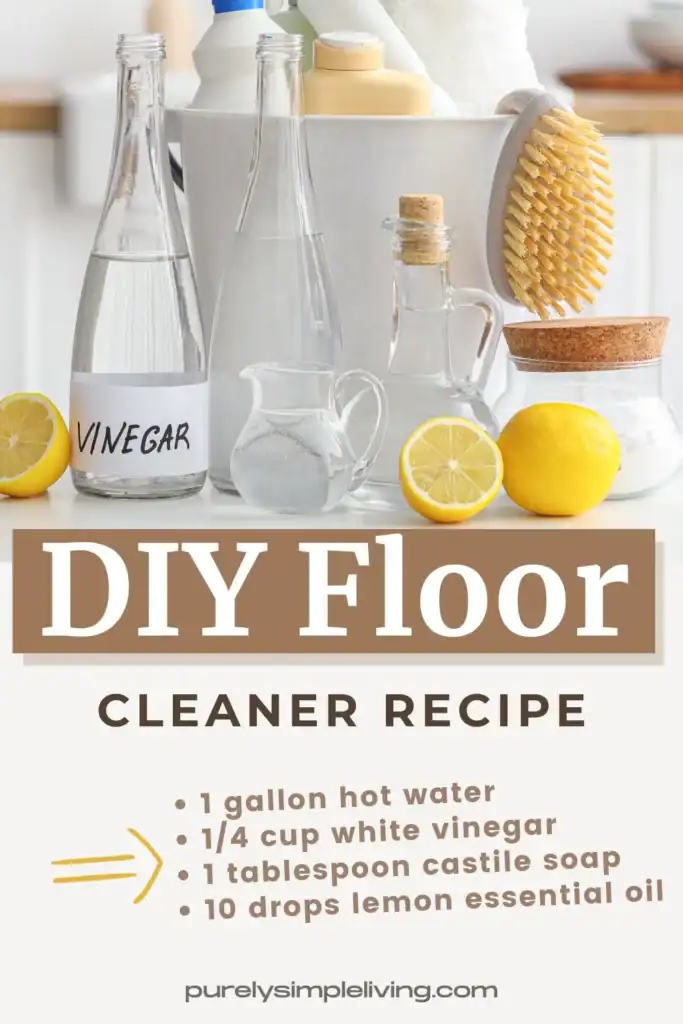
This is the one recipe that covers tile, vinyl, sealed hardwood, and laminate. If you only remember one formula, make it this one.
What you need:
- 1 gallon hot water
- 1 tablespoon castile soap (Dr. Bronner’s unscented)
- 1/4 cup white vinegar
- 10 drops lemon essential oil (optional, for scent and extra grease cutting)
How to use it: Mix in a bucket. Mop as usual. No rinsing needed at this dilution. Floors dry without residue or streaks.
Cost per batch: About $0.75. Compare that to $4-$8 per bottle of Bona or Pine-Sol.
Floor-by-Floor Recipes
The all-purpose works for most situations. But some floors have specific needs. Here’s the breakdown.
Tile Floors (Ceramic, Porcelain, Stone)
Tile is the most forgiving floor type. It handles vinegar, soap, and water without issues.
Best recipe: The all-purpose formula above. No modifications needed.
For heavy grease (kitchen tile near the stove): Add an extra tablespoon of castile soap. The soap cuts grease better than vinegar alone.
For the grout: The mop handles the tile surface, but grout between tiles needs targeted attention. Check our grout cleaner guide for dedicated methods.
What to avoid on tile: Steel wool and harsh abrasives that scratch the glaze. Stick with a soft mop or microfiber pad.
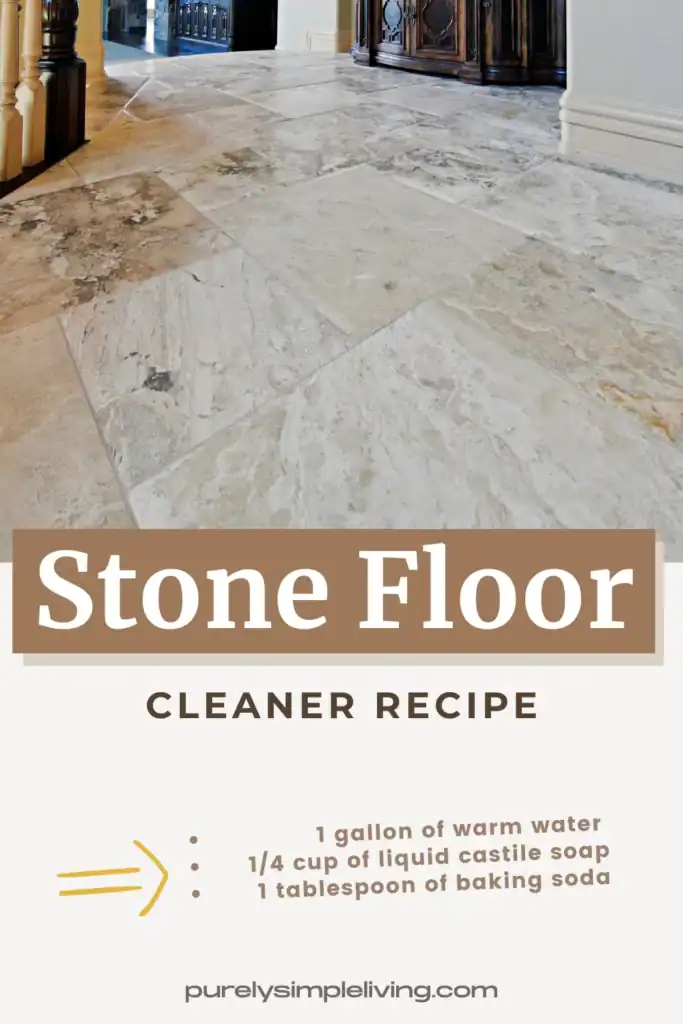
One exception: natural stone tile (slate, travertine, marble). Skip the vinegar entirely. Use the stone-safe recipe below.
Floors Are Just One Surface
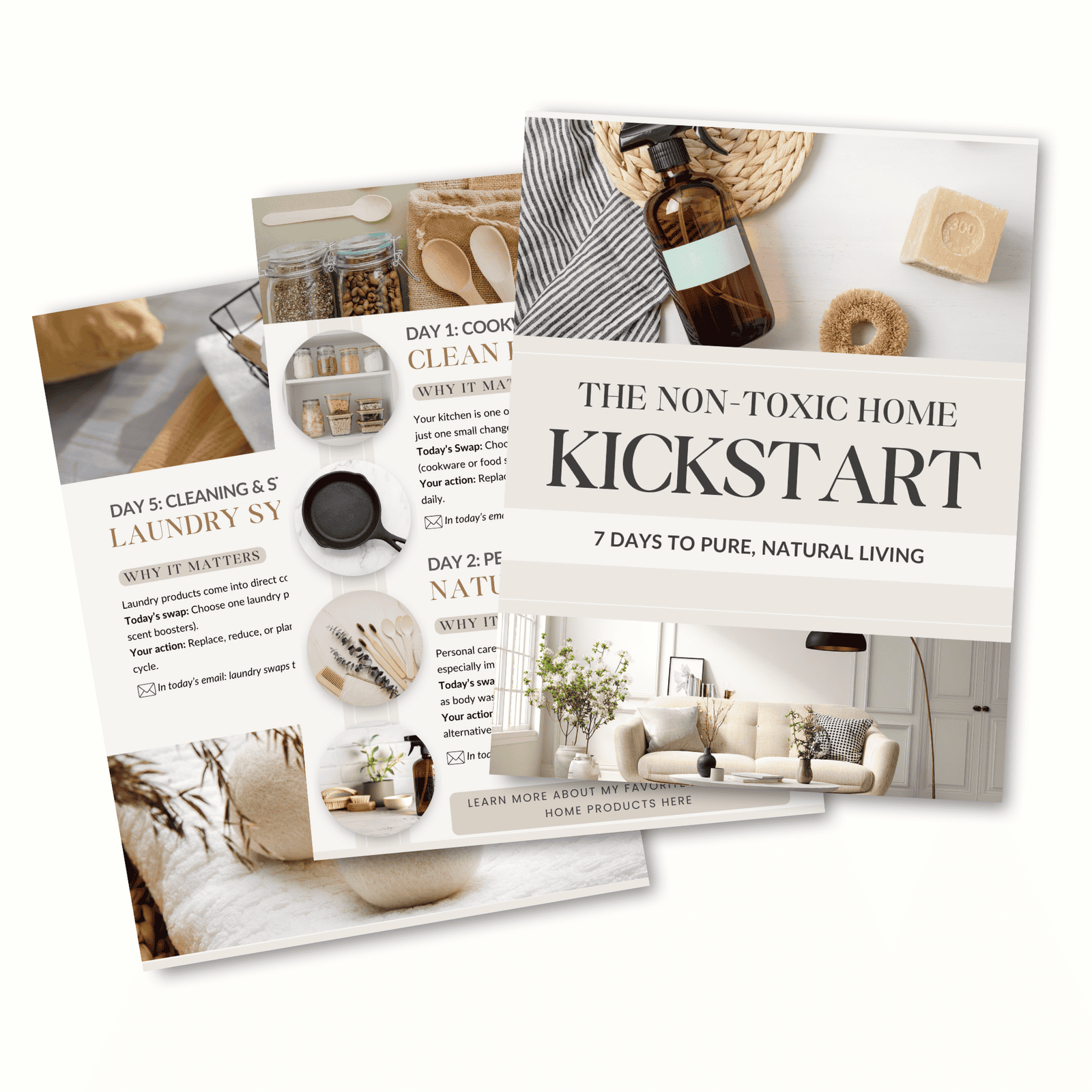
Your floor cleaner is done. Every room in your home has 3-4 more products worth swapping. The 7-Day Non-Toxic Kickstart gives you one simple change a day, delivered to your inbox.
Your 7-Day Kickstart To A Non-Toxic Home
One swap per day. No overhaul required. Just 7 small changes that make your home a healthier place to live.
No spam. Unsubscribe anytime.
Hardwood Floors
Hardwood is where people get nervous. Here’s what you need to know.
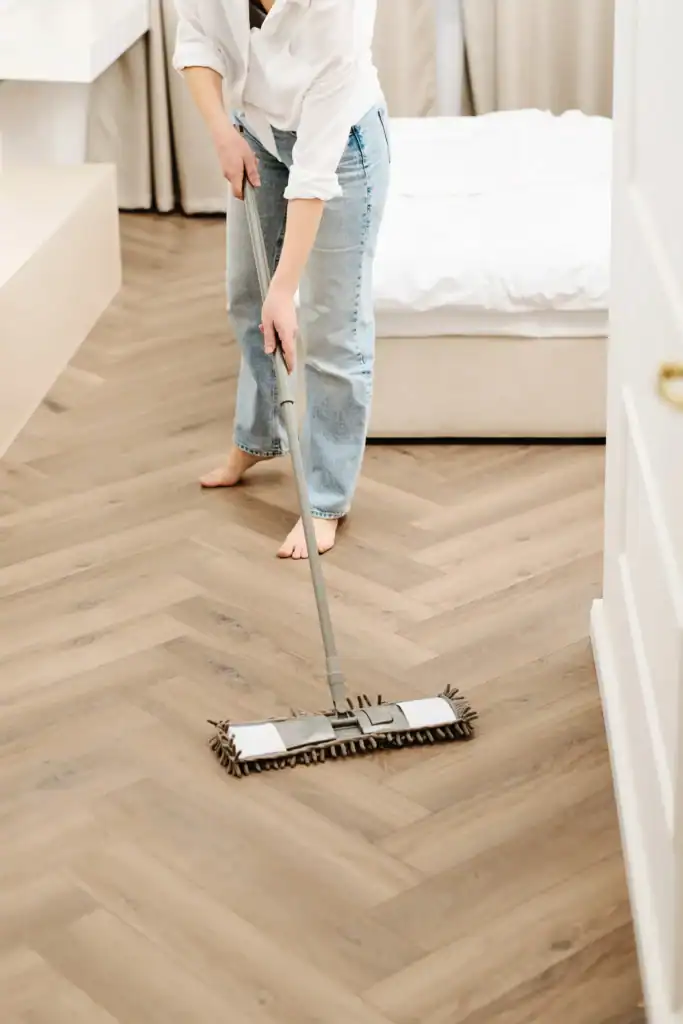
Sealed hardwood (most modern hardwood floors have a polyurethane seal): The all-purpose diy floor cleaner works fine at this dilution. The vinegar concentration is too low to damage the seal. We’ve used it for years without issues.
If you’re cautious about vinegar on wood: Drop the vinegar entirely. Use this instead:
Vinegar-free hardwood recipe:
- 1 gallon hot water
- 1 tablespoon castile soap
- 5 drops lemon essential oil (optional)
That’s it. The castile soap cleans without leaving residue, and there’s no acid to worry about.
Wax-finish hardwood (common in older homes, pre-1970s): Definitely skip the vinegar. Acid dissolves wax. Use the vinegar-free recipe above, and use as little water as possible. Wring your mop until it’s barely damp. Excess water warps wax-finished wood.
What to avoid on hardwood:
- Steam mops (the heat and moisture can warp boards and delaminate the finish)
- Excess water (damp mop only, never soaking wet)
- Murphy’s Oil Soap (despite the marketing, it leaves buildup over time)
- Wax-based polishes on poly-finished floors (they create a slippery film)
How to tell if your hardwood is sealed or waxed: Drop a small amount of water on the floor in an inconspicuous spot. If it beads up, the floor is sealed (polyurethane). If it slowly absorbs, it’s waxed or unfinished.
Vinyl and Linoleum Floors
Vinyl is practically indestructible from a cleaning perspective. Almost anything works. That said, the wrong product can dull the surface over time.
Best recipe: The all-purpose formula. Works perfectly on vinyl and linoleum.
For scuff marks: Sprinkle baking soda directly on the scuff. Rub with a damp cloth. The mild abrasive lifts the mark without scratching the vinyl surface.
What to avoid on vinyl:
- Abrasive scrub pads (they scratch and dull the surface)
- “Mop and shine” products (they leave a waxy buildup that yellows)
- Straight vinegar at full strength (the acidity can dull certain vinyl finishes over long-term use. Always dilute.)
Laminate Floors
Laminate is the most water-sensitive floor type. The top layer is waterproof, but the seams are not. Water that seeps between planks causes swelling and bubbling. Less is more.
Laminate-specific recipe:
- 1 gallon hot water
- 1/4 cup white vinegar
- No soap (soap leaves a haze on laminate)
How to use it: Spray the solution onto a flat microfiber mop pad, or wring your mop until it’s barely damp. Mop in the direction of the planks. The floor should be dry within 1-2 minutes. If it takes longer, you’re using too much liquid.
Why no soap on laminate? Castile soap (and most soaps) leave a thin film on laminate that causes streaking and hazing. Vinegar and water alone clean without residue. It’s the one floor type where the simplest recipe is the best recipe.
What to avoid on laminate:
- Steam mops (the moisture penetrates seams and causes warping)
- Excess water of any kind
- Oil-based cleaners (they cloud the surface)
- Abrasives (they scratch the printed top layer)
The Mop Matters
Your diy floor cleaner is only as good as the mop delivering it.
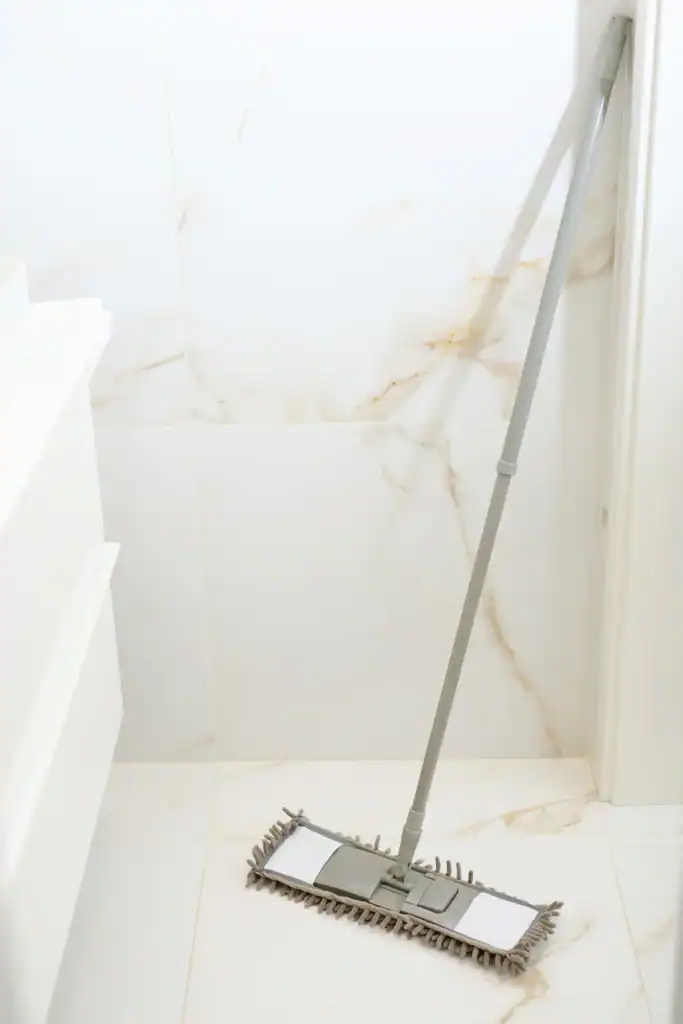
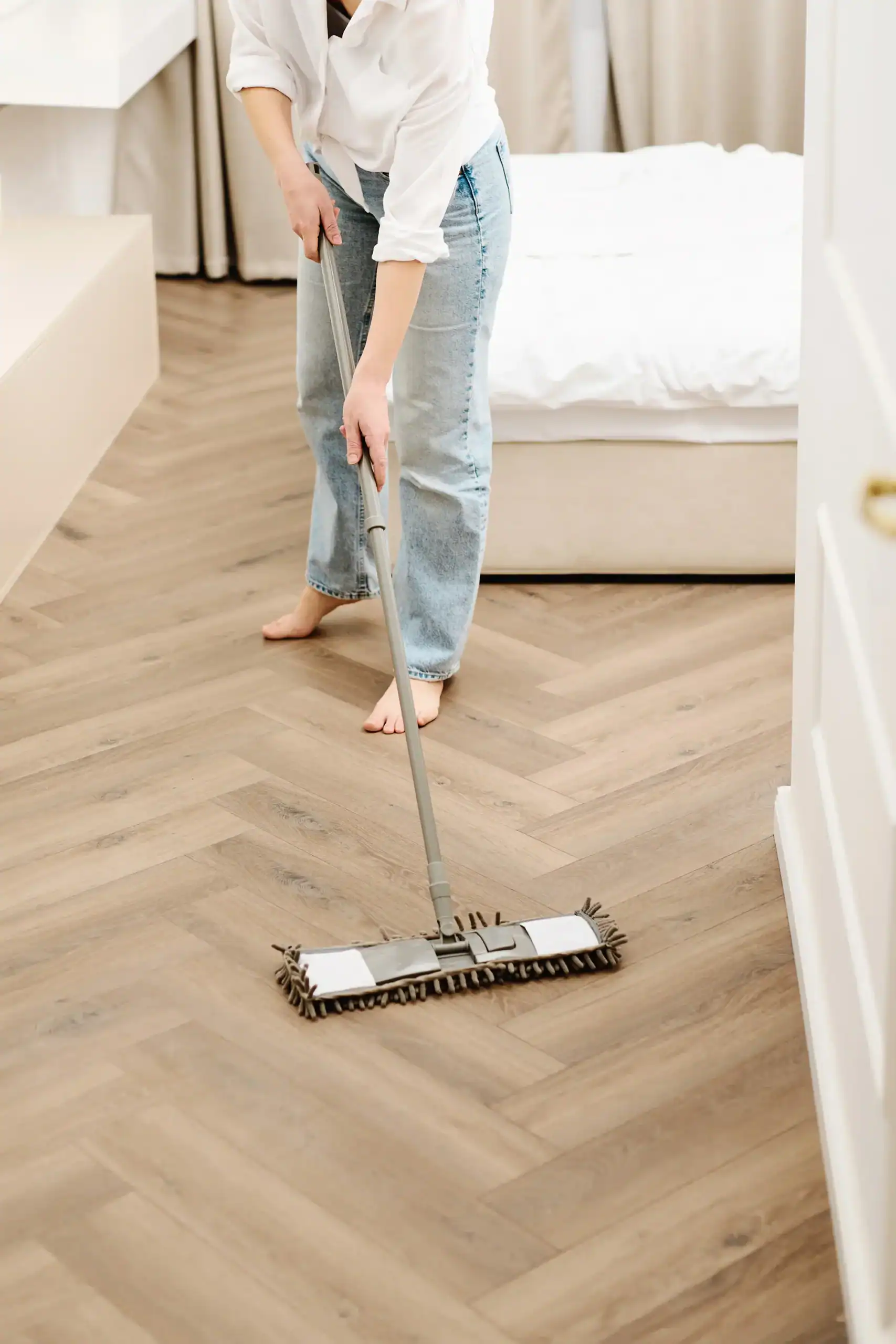
Microfiber flat mops are the best choice for most floors. They pick up dust and debris without pushing it around. They wring out easily (less water on the floor). And the pads are machine washable, so you’re not buying disposable refills.
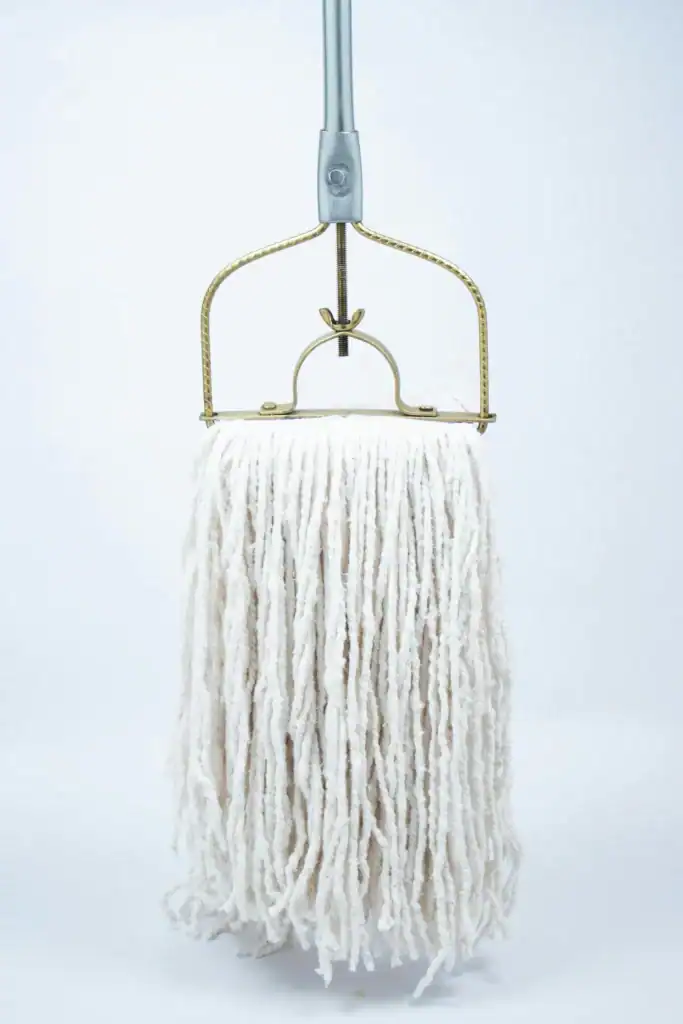
String mops work fine for tile but hold too much water for hardwood and laminate. If you use one, wring it thoroughly.
Swiffer-style mops are convenient but the commercial pads contain synthetic fragrance and chemicals. If you like the format, buy reusable microfiber pads that fit Swiffer heads. Use your diy floor cleaner in a spray bottle instead of the WetJet cartridge.
Steam mops are popular, but we’d skip them. The extreme heat and moisture can damage hardwood, laminate, and some vinyl floors. They’re fine on tile, but so is a regular mop with the diy floor cleaner. Not worth the risk on mixed-floor homes.
A Note on “No Rinse”
At the dilutions in these recipes, no rinsing is needed. The concentrations are low enough that floors dry clean. This is actually an advantage over commercial products, many of which require a rinse cycle to remove residue (that nobody actually does, which is why the buildup happens).
If you ever accidentally use too much soap and the floor feels sticky, mop again with plain hot water and a splash of vinegar. That strips the residue. One pass and you’re back to clean.
The Weekly Routine
Here’s what actually keeps floors clean without making it a project:
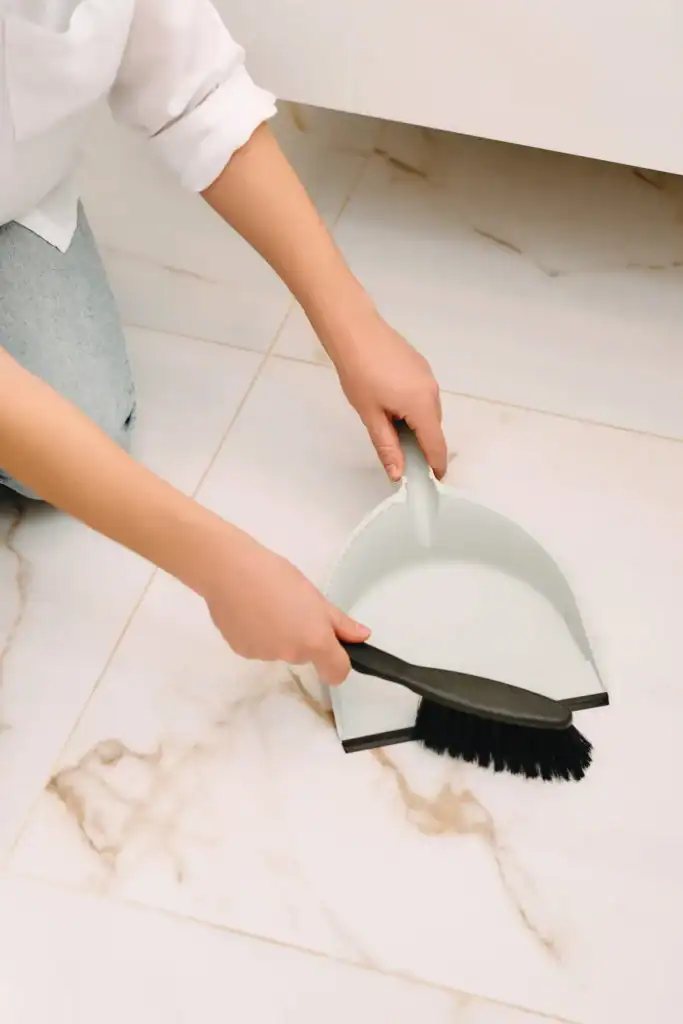
Daily: Sweep or dry-mop high-traffic areas (kitchen, entryway). Takes 2 minutes. Prevents grit from grinding into the finish.
Weekly: Damp mop the whole house with your diy floor cleaner. One bucket handles every room. Takes 15-20 minutes for an average-sized home.
Monthly: Spot-treat grout lines, scuff marks, and any sticky areas. Maybe 10 minutes.
Quarterly: Deep clean, including baseboards and corners. Move furniture, hit the spots you normally skip.
That’s the whole system. One recipe covers 90% of it. For the other 10%, you have a floor-specific version above.
For every other cleaning recipe we use (counters, bathrooms, glass, ovens, and more), check out our complete DIY cleaning guide with tested recipes for every surface.
Grab the Printable
Want all 15 recipes in one printable guide? Grab the DIY Natural Cleaning Recipe Book
Recommended products

Want the Easy Version?
Get the free 7-Day Non-Toxic Home Kickstart, one simple swap a day, delivered to your inbox.
Your 7-Day Kickstart To A Non-Toxic Home
One swap per day. No overhaul required. Just 7 small changes that make your home a healthier place to live.
No spam. Unsubscribe anytime.