The Only Natural DIY Glass Cleaner Recipe You’ll Ever Need (Streak-Free, 4 Ingredients)
I’m going to be honest with you. I went through a lot of streaky windows before I landed on this recipe.
Blue spray from the store? Full of ammonia and synthetic fragrances. The first “natural” recipe I tried from Pinterest? Left a cloudy film on every mirror in my house. I almost gave up and went back to the chemical stuff.
Then I learned the secret that changed everything: cornstarch.
I know. It sounds weird. But a tiny pinch of cornstarch is the difference between a natural DIY glass cleaner that leaves streaks and one that actually rivals the store-bought stuff. It acts as a mild abrasive that cuts through film and grime, then wipes away clean.
This recipe takes about 60 seconds to make, costs pennies per bottle, and it works on windows, mirrors, glass shower doors, and even stainless steel appliances.
A natural DIY glass cleaner is a homemade cleaning spray made from simple, non-toxic ingredients (typically vinegar and water) that cleans glass surfaces without the ammonia, synthetic dyes, or artificial fragrances found in conventional products.
What You’ll Need
Here’s the full ingredient list:
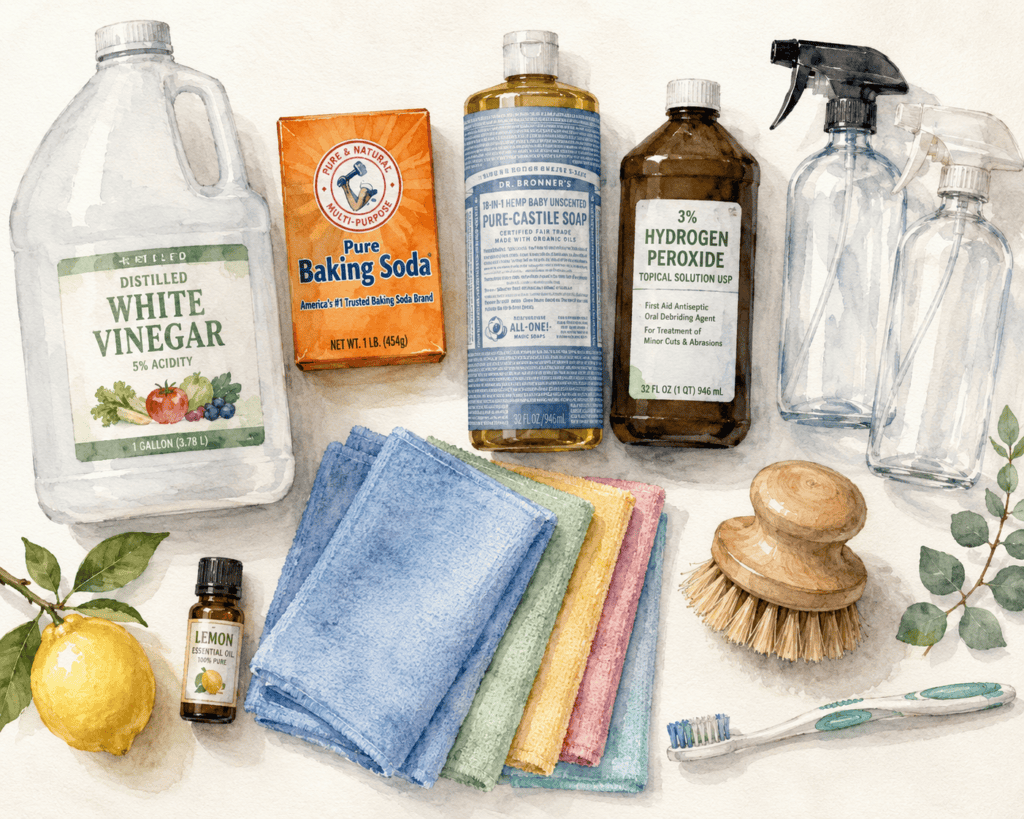
- 1/2 cup white vinegar
- 1/2 cup water (distilled works best, but tap is fine)
- 1 pinch cornstarch
- 1 tablespoon vodka or rubbing alcohol (optional, for extra streak-free power)
- A clean spray bottle
So simple! You probably have everything in your kitchen right now.
Why These Ingredients Work
As an Amazon Associate, I earn from qualifying purchases. This means if you click an Amazon link and buy something, I may earn a small commission at no extra cost to you.
Before we mix, let’s talk about why each ingredient earns its spot in the bottle.
White vinegar is the workhorse. The acetic acid dissolves mineral deposits, grease, and grime. It’s the reason this natural DIY glass cleaner actually cuts through fingerprints and water spots instead of just smearing them around.
Water dilutes the vinegar so it’s safe for all glass surfaces. Distilled water prevents mineral spots in hard-water areas, but honestly, I use tap water and it works fine.
Cornstarch is the secret ingredient most recipes leave out. It adds just enough gentle abrasion to polish the glass as you wipe. A tiny pinch goes a long way. Too much will leave a white residue, so less is more here.
Vodka or rubbing alcohol (optional) speeds up evaporation. That means fewer streaks, especially on mirrors. If you skip it, the cleaner still works great. The alcohol just gives it a little extra polish.
How to Make It
- Add 1/2 cup of white vinegar to your spray bottle.
- Add 1/2 cup of water.
- Drop in a small pinch of cornstarch. Seriously, a pinch. Maybe 1/8 teaspoon at most.
- Add 1 tablespoon of vodka or rubbing alcohol if you’re using it.
- Put the cap on and shake gently before each use (the cornstarch settles).
That’s the whole process. Your natural DIY glass cleaner is ready to use immediately.
How to Use It for Streak-Free Results
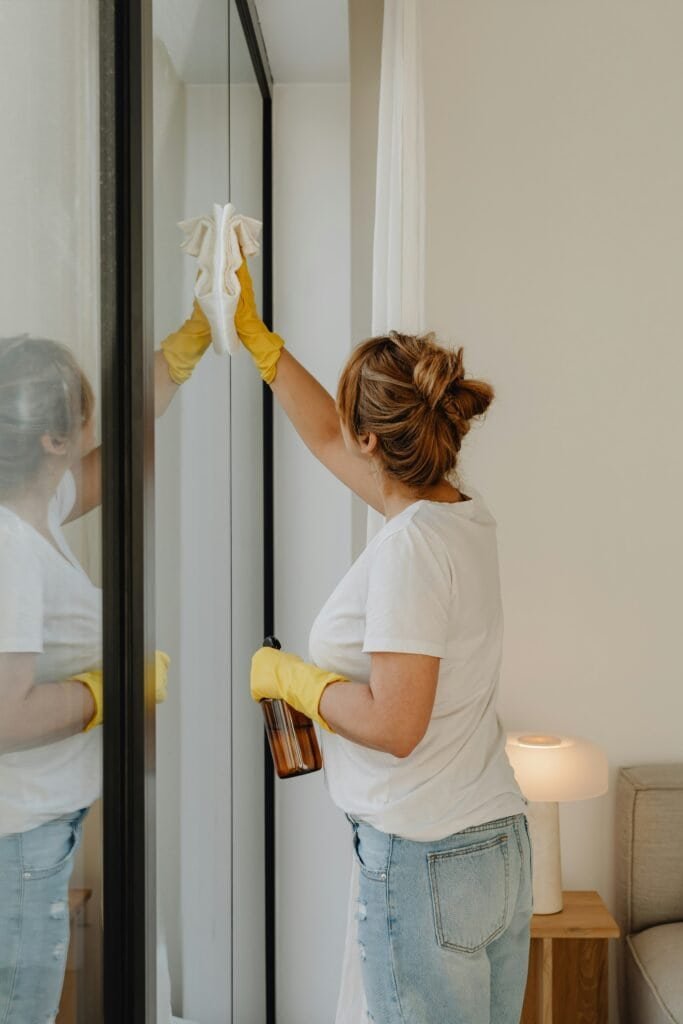
The recipe matters, but the technique matters just as much. Here are a few tips I’ve learned the hard way:
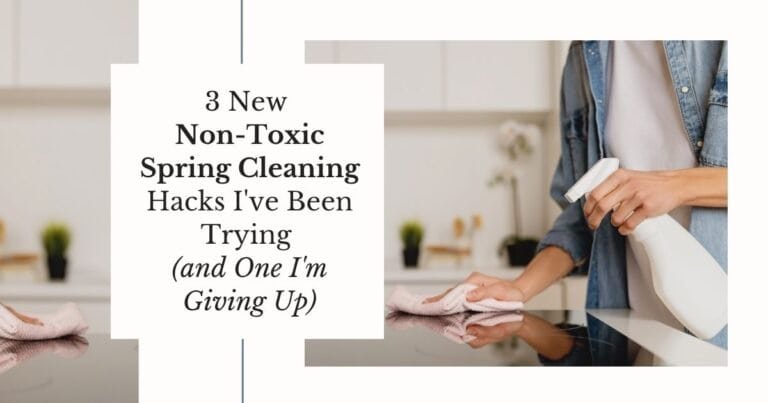
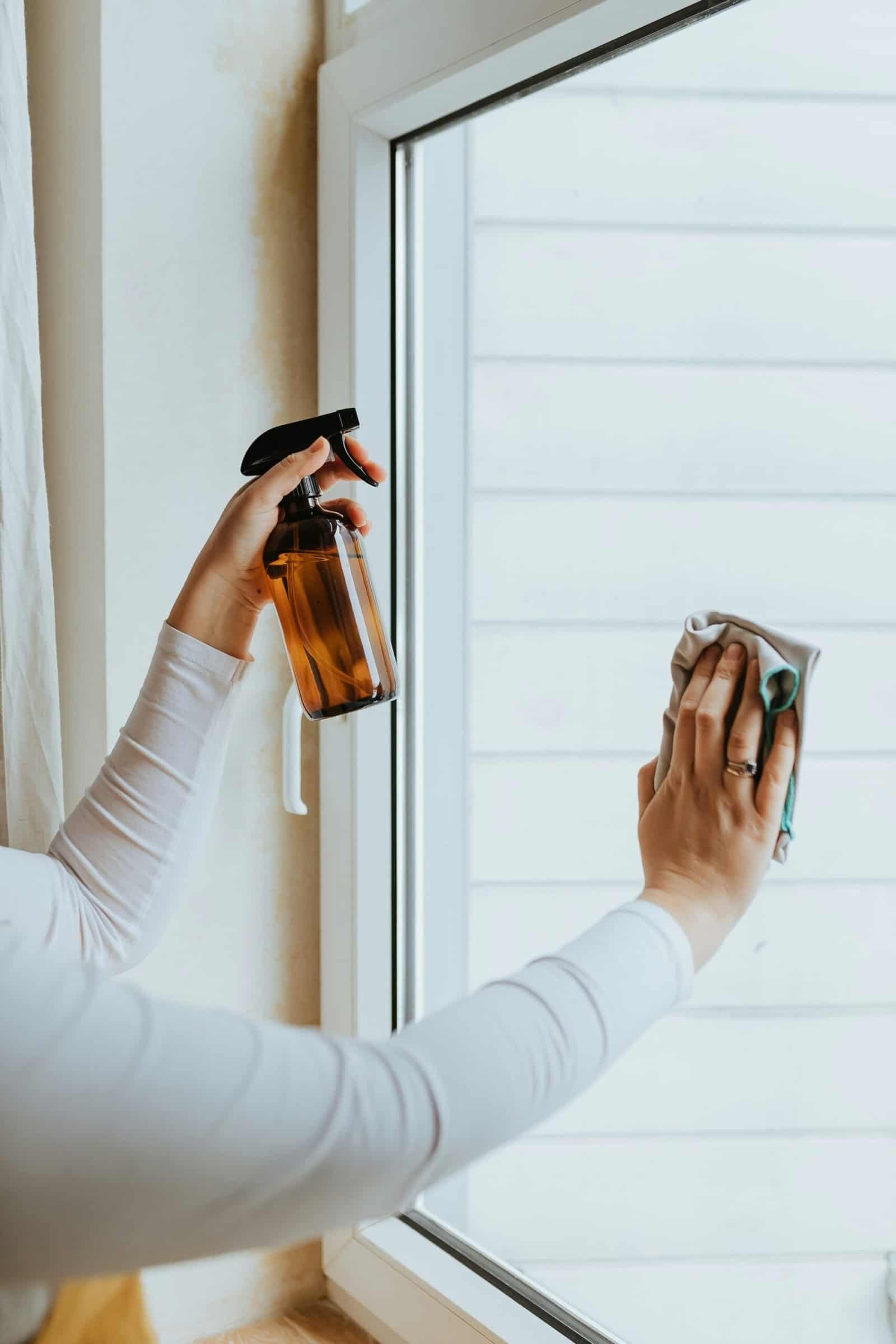
Use a microfiber cloth, not paper towels. Paper towels leave lint. Microfiber cloths grab the moisture and grime without leaving anything behind. This single switch made the biggest difference for me.
Spray the cloth, not the glass. This gives you more control and prevents the cleaner from dripping down into window sills or pooling at the bottom of mirrors.
Wipe in an S-pattern, not circles. Circular wiping redistributes the dirt. An S-shaped motion (side to side, working from top to bottom) moves grime off the surface in one pass.
Clean on a cloudy day. If you’re doing windows, direct sunlight dries the cleaner too fast, which causes streaks. Overcast days give you time to wipe properly.

Your 7-Day Kickstart To A Non-Toxic Home
One swap per day. No overhaul required. Just 7 small changes that make your home a healthier place to live.
No spam. Unsubscribe anytime.
Where to Use This Natural DIY Glass Cleaner
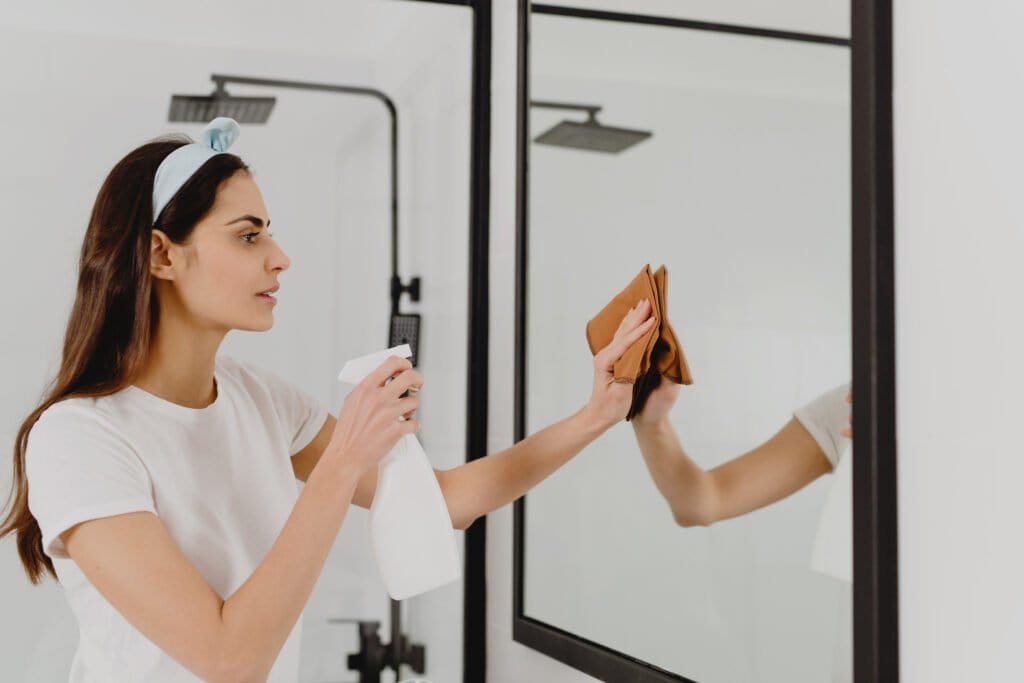
This recipe works on more surfaces than you’d expect:
- Bathroom mirrors
- Windows (inside and outside)
- Glass shower doors
- Glass tabletops
- Stainless steel appliances (spray lightly, wipe with the grain)
- Glass stovetops (when cool)
- Picture frame glass
One surface to avoid: natural stone. If your bathroom counter is granite or marble, be careful not to overspray. Vinegar can etch natural stone over time.
What About the Vinegar Smell?
Let’s address this, because I know it’s the first thing people worry about.
Yes, it smells like vinegar when you spray it. No, your house will not smell like a pickle jar. The scent disappears completely within 5 to 10 minutes as the solution dries.
If the smell really bothers you, add 5 to 10 drops of lemon or orange essential oil. It helps in the moment, though honestly the vinegar smell fades so fast that I stopped bothering with essential oils after the first few batches.
How Long Does It Last?
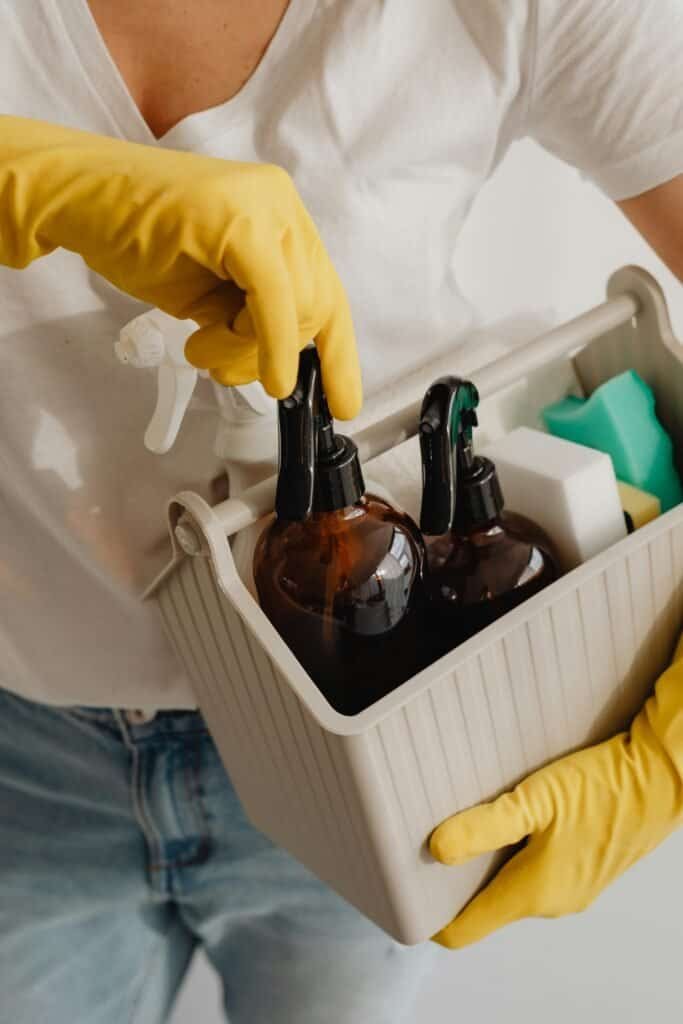
This natural DIY glass cleaner keeps for about 1 to 2 months in a sealed spray bottle at room temperature. Since it’s so cheap and quick to make, I usually just whip up a fresh batch every month.
Remember to shake gently before each use. The cornstarch settles to the bottom, and you want it evenly distributed for the best clean.
The Cost Breakdown
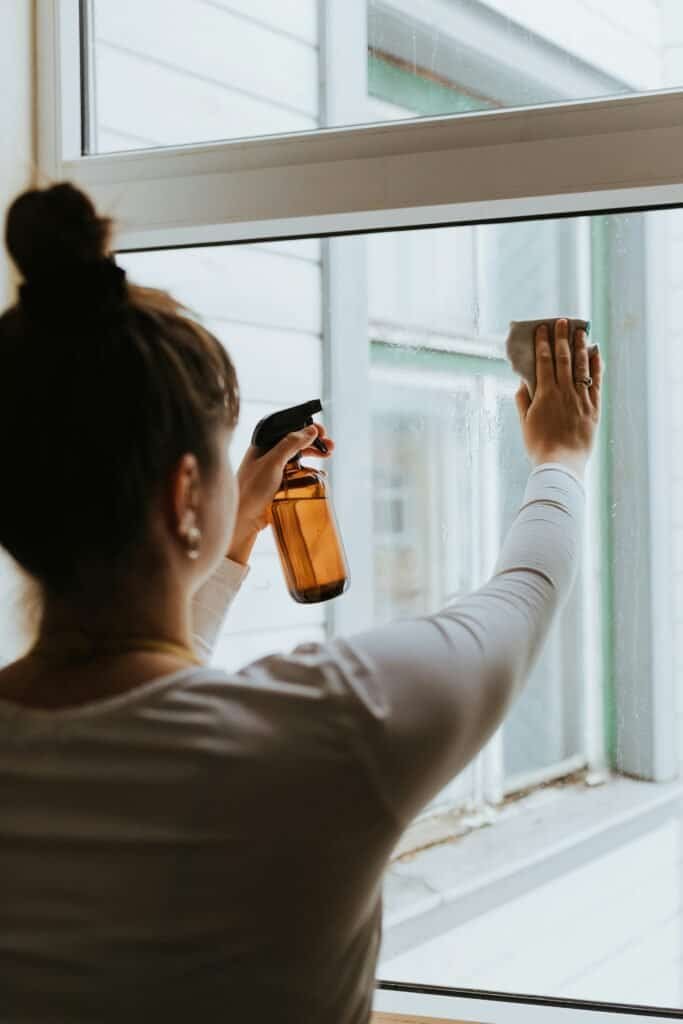
Let’s do the math, because this is one of the best parts.
A 32-ounce bottle of conventional glass cleaner costs around $4 to $6. This natural DIY glass cleaner costs roughly $0.15 to $0.25 per bottle, depending on whether you add the alcohol.
Over a year, that’s about $3 total instead of $24 to $36 on store-bought spray. And you’re not bringing ammonia or synthetic fragrances into your home.
If you want to expand your DIY cleaning collection beyond glass, check out our 5-ingredient natural cleaning recipes that cover everything from all-purpose spray to bathroom scrub.
One Simple Recipe, Every Glass Surface in Your Home
You don’t need five different glass cleaners for five different rooms. You need this one recipe, a microfiber cloth, and 60 seconds.
That’s really the whole point of making your own cleaning products. It’s not about becoming a DIY expert. It’s about finding what works, keeping it simple, and actually sticking with it.
If you want to explore more non-toxic cleaning swaps beyond glass, we have a full roundup of non-toxic cleaning products you can make at home to get you started.
Your 7-Day Kickstart To A Non-Toxic Home
One swap per day. No overhaul required. Just 7 small changes that make your home a healthier place to live.
No spam. Unsubscribe anytime.