
Natural Fiber Clothing: A Beginner’s Guide to Building a Wardrobe That Breathes
I cleaned out my closet when I had my second baby and noticed something I’d never paid attention to before.
Almost every item I’d bought in the previous five years had the same flag on the label. Polyester. Polyester blend. Acrylic. Nylon. A few rayons sneaking in. The natural cotton tees I’d had since college were still the ones I reached for, and the cheap synthetic stuff I’d bought to “refresh my wardrobe” was already pilled, stretched out, or smelling weird after one wash.
That’s when the natural fiber clothing thing finally clicked for me.
It’s not just an aesthetic choice. It’s a comfort thing, a longevity thing, and (when you start reading the science) a microplastic thing too. Every wash of synthetic fabric sheds plastic fibers into the water supply. The clothing on your body affects the air around you and the planet you’re trying to clean up.
Below is the breakdown I wish I’d had two years ago. What natural fibers actually are, which ones are worth the price tag, and how to start swapping without throwing out your whole closet.
Natural fiber clothing is clothing made from materials that come from plants or animals (cotton, linen, hemp, wool, silk) instead of plastic-based synthetics like polyester, nylon, or acrylic. It breathes, biodegrades, and doesn’t shed microplastics into the wash.
Why Natural Fiber Clothing Matters More Than the Brand on the Label

Most of the “sustainable fashion” conversation online is about brands. Which company is ethical, which one is greenwashing, which one to follow on Instagram.
Brands matter, sure. But the fastest, least-stressful way to start is just learning to read a clothing tag.
A 2022 study from the University of California found that synthetic fabrics shed an average of 1,900 microplastic fibers per garment, per wash. Those fibers end up in rivers, oceans, and (eventually) drinking water. They also sit against your skin all day and trap heat and odor in a way natural fibers don’t.
Switching to natural fiber clothing isn’t a moral test. It’s just a comfort and longevity upgrade that happens to also help the planet.
For more on this kind of slow-and-steady swap approach, our low waste living guide covers the same philosophy applied across the home.
The Five Natural Fibers Worth Knowing
As an Amazon Associate, I earn from qualifying purchases. This means if you click an Amazon link and buy something, I may earn a small commission at no extra cost to you.
There’s a long list of fabric names out there, but five do most of the heavy lifting in a real wardrobe.
1. Cotton

The default natural fiber. Cotton is breathable, washable, and inexpensive. The trick is knowing what kind of cotton you’re buying.
Conventional cotton is sprayed heavily with pesticides during growth. It’s still better than polyester from a comfort and biodegradability standpoint, but the farming side has issues.
Organic cotton is grown without synthetic pesticides or fertilizers. Look for the GOTS (Global Organic Textile Standard) seal on the tag. Pima and Egyptian cotton are longer-staple cotton varieties, which means softer fabric and longer-lasting garments.
If you can only swap one thing, swap your basics (t-shirts, underwear, baby clothes) to organic cotton first. These are the items closest to your skin most of the day.
2. Linen

Linen is made from the flax plant. It’s the workhorse of summer wardrobes for a reason: it cools you down, lasts decades, and gets softer with every wash.
It also wrinkles like crazy. That’s the trade. If you can make peace with the lived-in look, linen will outlast almost anything else in your closet.
A 100 percent linen dress or shirt costs more up front (usually $80 to $150) but a good linen piece will easily last 10 years if you take care of it.
3. Hemp

Hemp clothing is finally having its moment. It’s slightly rough at first, then breaks in beautifully (think old denim that gets better with wear). Hemp also requires far less water than cotton to grow, no pesticides, and produces about three times more fiber per acre.
Hemp tees, button-downs, and dresses run a similar price to organic cotton. The fabric is more durable than both cotton and linen, and it has natural antimicrobial properties that mean less stink after a long day.
If you’ve never tried hemp, start with a basic tee. Many of the brands now blend hemp with organic cotton for a softer feel out of the gate.
4. Wool

Wool is a winter staple, and it’s also the fiber most people misunderstand.
Cheap wool itches because it’s coarse. Merino, alpaca, and cashmere are softer because the fiber diameter is finer. A merino wool base layer can be worn for 10 days straight without smelling, regulates your body temperature in both cold and warm weather, and dries faster than cotton.
Wool also has a much longer life than synthetic fleece. A merino sweater bought once should last 10 years or more with reasonable care.
For ethics, look for “RWS certified” (Responsible Wool Standard) or “mulesing-free” on the label.
5. Silk

Silk is the luxury natural fiber, but it’s also one of the most temperature-regulating fabrics available. It keeps you warm in winter and cool in summer.
It’s hand-wash or dry-clean only, which is the deal-breaker for most people. If you do want a piece or two, a silk camisole or scarf is a low-stakes way in.
What to Avoid (and Why)
Now the flip side. These are the fabrics worth dialing back, and the reasons why.
Polyester is plastic. It’s the most common fabric in the world right now, makes up about 60 percent of all clothing produced, and sheds microplastics with every wash. It also traps heat and smells faster than natural fibers.
Nylon is also plastic. Same microplastic story, used heavily in activewear and tights.
Acrylic is plastic again, used to mimic wool. It pills easily, holds odor, and is one of the worst microfiber offenders in laundry water.
Rayon and viscose are technically made from plant cellulose (often bamboo or wood pulp), but the manufacturing process uses heavy chemicals that strip out a lot of the “natural” benefit. Lyocell or Tencel is a better version of the same idea, made with a closed-loop chemical process that recycles 99 percent of the solvent.
You don’t have to throw out everything synthetic in your closet. Just stop buying more of it. The next time you replace a tee, a pair of leggings, or a sweater, check the tag.
How to Build a Natural Fiber Wardrobe Without Going Broke

Here’s the part nobody talks about: natural fiber clothing costs more than synthetic clothing in the moment, and less than synthetic clothing over a year.
A $20 polyester tee from a fast fashion brand lasts 6 to 12 months. A $40 organic cotton tee lasts 3 to 5 years. The cost-per-wear math favors the natural fiber every time.
That said, here’s how to make it work on a real budget.
Start with Your Most-Worn Items
Audit what you actually wear. For most people it’s:
- A few t-shirts
- One or two pairs of pants
- Underwear and socks
- One sweater
- One pair of pajamas
Swap the items in your weekly rotation first. Closet pieces you wear once a month can wait.
Buy Secondhand First
Thrift stores, Poshmark, ThredUp, eBay, and estate sales are full of high-quality natural fiber pieces from brands that no longer exist. A $200 wool sweater can show up for $15. A linen dress in perfect condition can be $25.
Train your eye to feel the fabric. The label tells you what it is. Once you’ve handled a few pieces, you’ll know the difference between a good cotton tee and a synthetic blend by touch alone.
Buy Less, Buy Once
The most sustainable wardrobe is the smallest one. A capsule of 30 to 40 pieces in natural fibers will outlast a closet of 200 fast fashion items, and you’ll wear all of it.
Save the $80 you would have spent on three polyester tops, and put it toward one organic cotton dress you’ll actually wear weekly.
For more on the bigger philosophy of buying less and choosing better, our non-toxic swaps every room guide walks through the same logic applied to the rest of the house.
How to Care for Natural Fiber Clothing So It Lasts

A few habits make a huge difference.
Wash less often. Most natural fibers (especially wool and linen) don’t need washing after every wear. Air them out on a hanger overnight, spot-clean if needed, and wash every 4 to 6 wears for shirts and pants.
Wash on cold. Hot water shrinks natural fibers and breaks down the fibers faster. Cold cleans just as well for everyday dirt.
Skip the dryer when you can. Air drying is the single best thing you can do for the lifespan of a natural fiber garment. Lay knits flat. Hang shirts and dresses on a drying rack.
Use a gentle, plant-based detergent. Conventional detergents are formulated for synthetic fibers and can break down natural ones over time. A simple, fragrance-free liquid or powder works better for cotton, linen, hemp, and wool.
Store wool with cedar. Cedar blocks (or cedar oil on a cotton ball) repel moths without the chemical mothballs.
Brands and Labels to Look For
Without endorsing specific companies (the landscape changes constantly), here are the labels and certifications worth searching for.
- GOTS (Global Organic Textile Standard) — certifies organic cotton and other natural fibers
- OEKO-TEX Standard 100 — certifies the fabric is free of harmful chemicals
- Responsible Wool Standard (RWS) — certifies humane sheep treatment
- Fair Trade Certified — certifies fair labor practices
- B Corp — broader certification of company-wide ethical practices
For online searching, try filtering by fabric content (100% cotton, 100% linen, 100% wool) instead of by brand. You’ll catch brands you’ve never heard of that meet the standard without making a fuss about it.
A Quick Note on the “Slow Fashion” Aesthetic

Pinterest will show you slow fashion as a beige linen dress on a willowy person standing in a sunlit doorway. That’s a vibe, not a wardrobe.
Real natural fiber clothing looks like a wrinkled linen shirt under a wool cardigan, jeans you’ve owned for six years, and one good cotton tee that fits exactly right. It’s not perfect. It’s just made of better stuff.
Build it slowly. Replace as you go. Stop measuring yourself against catalog pages.
If you want a no-pressure starting point on the bigger picture of how to phase out synthetics across your home (not just your closet), grab the free 7-Day Kickstart. One small swap a day, and your house feels different by Sunday.
There You Have It!
Natural fiber clothing isn’t an aesthetic. It’s a fabric content line on a tag.
Once you train your eye to look for it, you start seeing the difference everywhere. The tees that hold their shape, the linen pants that get softer every year, the wool sweater that outlasts three of its synthetic cousins.
Pick one swap from the list above. Audit your most-worn items. Read one tag today.
That’s enough to start.
What’s the oldest piece of natural fiber clothing in your closet? Tell me in the comments. The longest-lasting items in mine are a 100 percent cotton tee from 2014 and a wool blanket I inherited from my grandmother, and I’d love to hear yours.
—
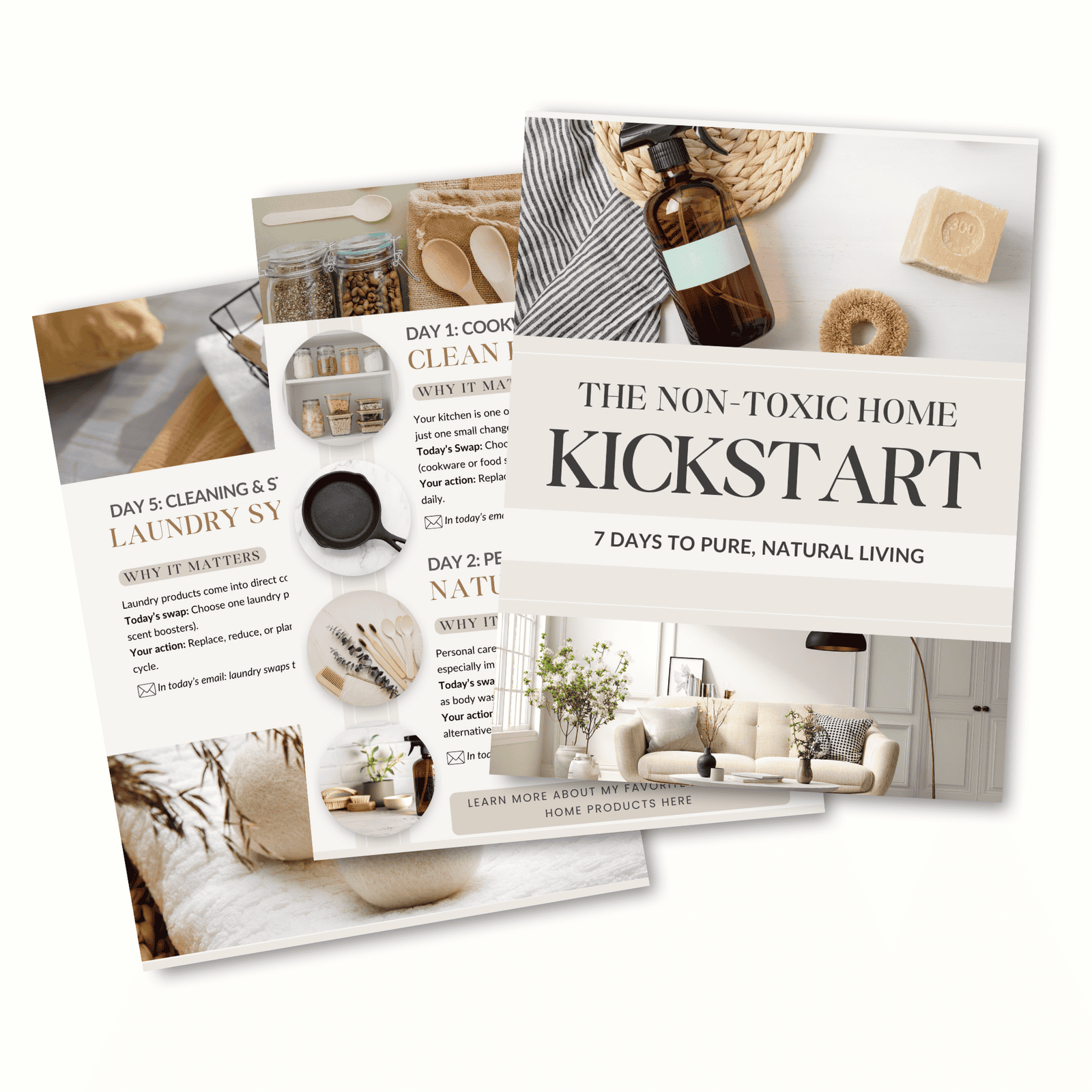
Your 7-Day Kickstart To A Non-Toxic Home
One swap per day. No overhaul required. Just 7 small changes that make your home a healthier place to live.
No spam. Unsubscribe anytime.