6 Best Non-Toxic Baking Sheets (Safe Picks for 2026)
You pull a batch of cookies out of the oven, and there it is. The nonstick coating is scratched. A few gray flecks near the corner.
And you think, wait, have I been baking on this the whole time?
If that is you, you want the same thing I did: one of the safest non-toxic baking sheets, the kind you buy once and stop thinking about. Below are six good ones, ranked by material, at every budget.
Quick backstory. Cookies were my kitchen nemesis for years. I owned a cafe and bakery, and I still bought the cookies from someone else because mine never came out right.
Then one winter, with my kids at 3, 5, and 8, I decided they deserved a real homemade cookie memory. I found a recipe that finally works in this cookbook, and now chocolate chip cookies are the treat I bring to almost every church potluck.
The funny part? The pan mattered more than I expected. Once I had a good baking sheet, I stopped fighting my own oven.
What makes a baking sheet non-toxic, plainly
Non-toxic baking sheets are pans made from surfaces that will not shed synthetic nonstick chemicals into your food, most often uncoated stainless steel, uncoated aluminum, cast iron, glass, or a mineral-based ceramic or silicone coating instead of the PTFE (Teflon) family.
Cut through the label noise and it comes down to one thing: the coating.
Most cheap nonstick cookie sheets are coated in PTFE, the chemical family that includes Teflon. Older or lower-grade versions were historically made with PFAS, the “forever chemicals” that do not break down and that researchers have linked to a range of health concerns.
PTFE coatings are generally considered fine at normal baking temperatures. The catch: they can start to off-gas if an empty pan gets very hot, roughly above 500°F, and a scratched coating can flake into food.
So the honest takeaway is not “throw everything out.” It is “when you buy new, skip the coating question entirely and you never have to wonder again.”
The other, milder concern is bare aluminum. Uncoated aluminum pans bake beautifully, but they can leach small amounts of aluminum, mostly when they touch acidic foods like tomatoes, lemon, or vinegar.
For everyday cookies and roasted vegetables the amounts are minor. And lining the pan with unbleached parchment removes the contact issue completely. If you want the fuller picture, our guide to non-toxic cookware and kitchen swaps walks through the whole kitchen, pan by pan.
The safest materials, ranked
As an Amazon Associate, I earn from qualifying purchases. This means if you click an Amazon link and buy something, I may earn a small commission at no extra cost to you.
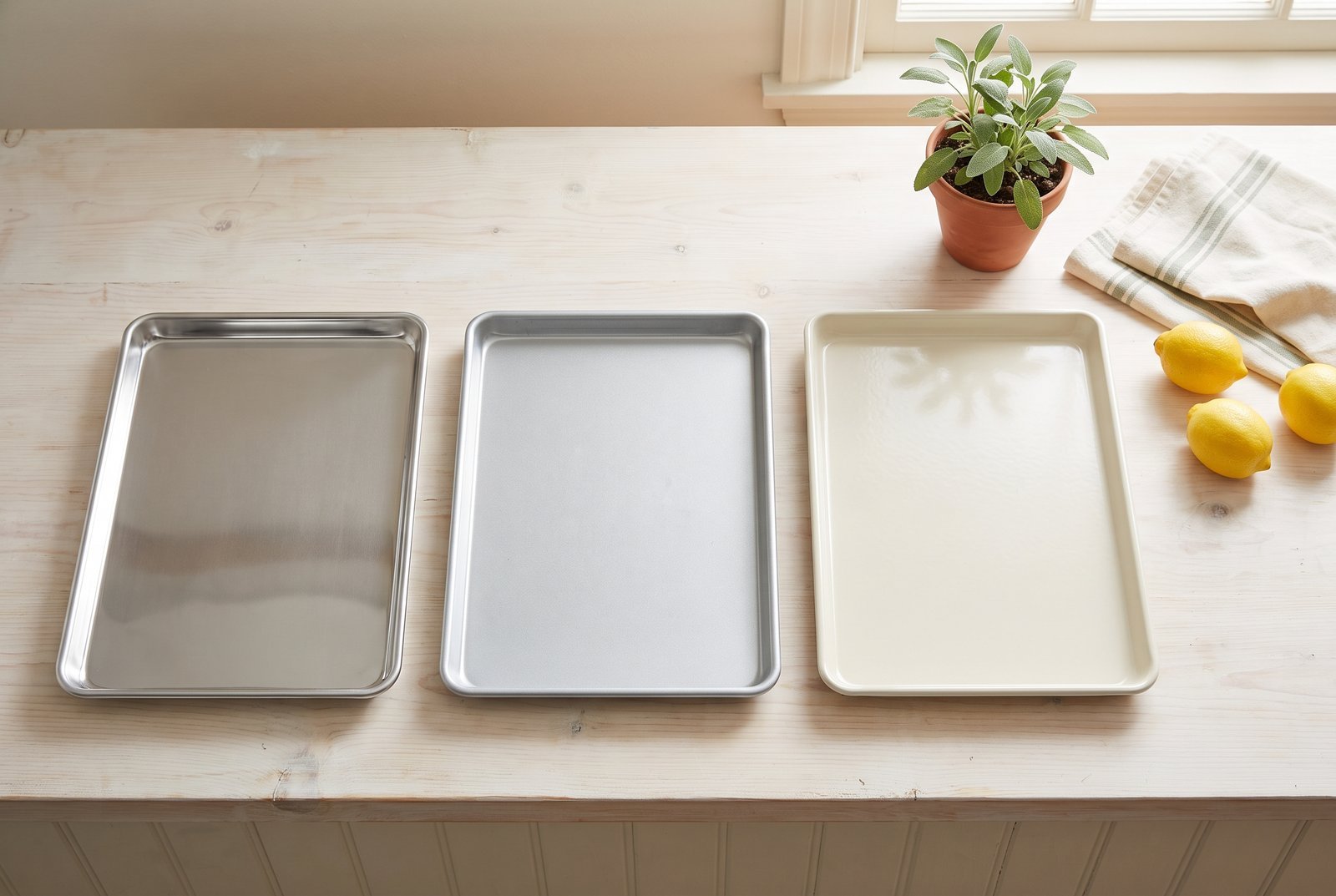
Before the specific picks, here is the quick mental model. All of the best non-toxic baking sheets fall into a handful of materials, and any of these surfaces gives you a genuinely safe pan. Pick the one that matches how you cook and what you want to spend.
- Uncoated stainless steel. Inert, basically nothing to leach, lasts decades. The buy-it-once option.
- Uncoated aluminum. Bakes evenly, cheap, a real bakery favorite. Just line it with parchment for acidic foods.
- Cast iron and tempered glass. No synthetic coating, naturally nonstick-ish once seasoned (cast iron) or easy to clean (glass).
- Mineral-based ceramic or silicone coating. Easy release without the Teflon family. The trade-off is that these coatings wear over years.
The buy-it-once pick: 360 Cookware Stainless Steel Cookie Sheet
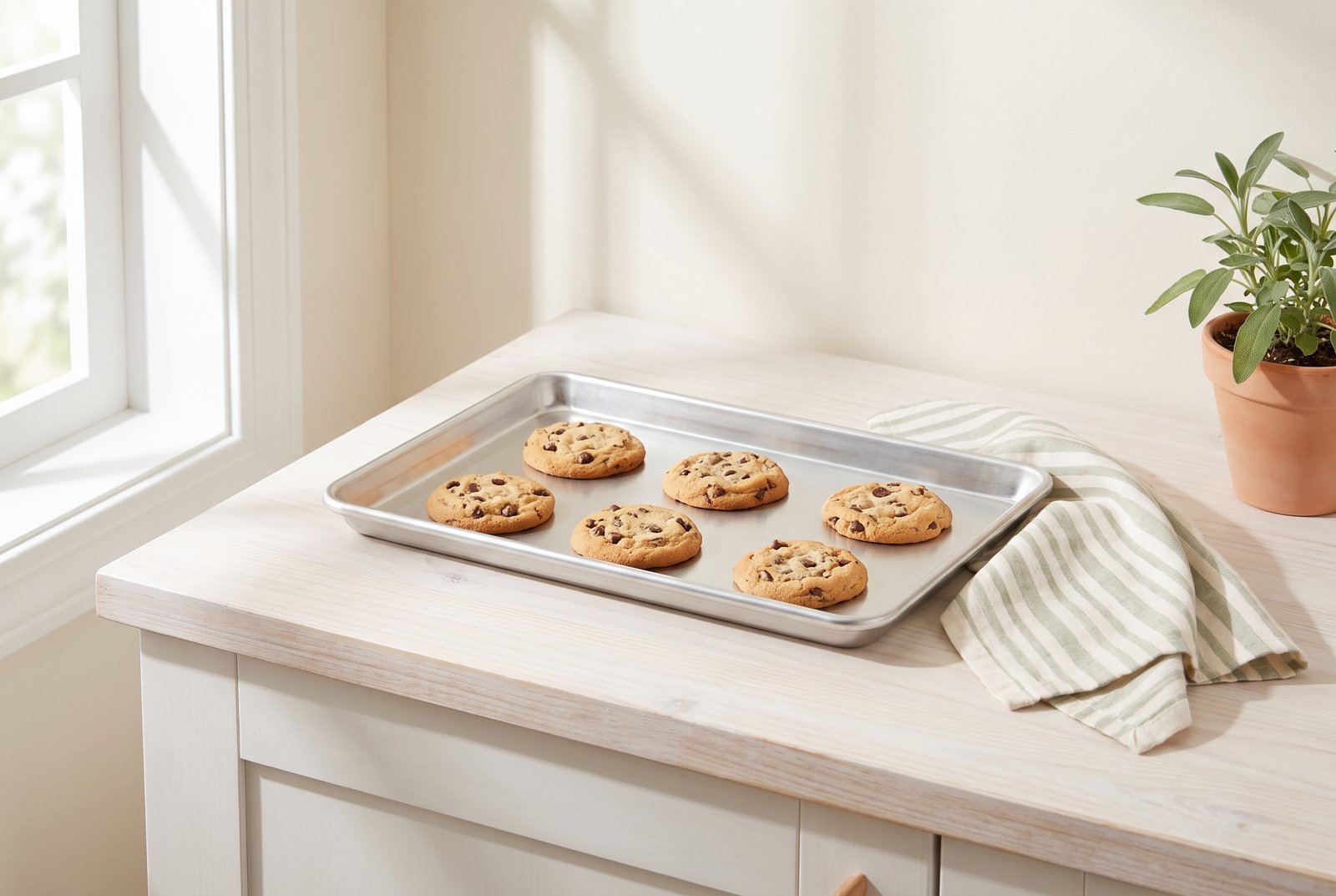
If you want to solve this once and never think about a pan again, the 360 Cookware Stainless Steel Cookie Sheet is the one. It is 5-ply surgical-grade stainless steel with an aluminum core, made in the USA, with no coating at all.
Nothing to scratch off. Nothing to off-gas. Bare stainless is inert, so it will not leach even when you roast lemony chicken or a tray of tomatoes.
The honest downside is price. A single large sheet runs around $60 to $80, which is a lot more than a basic pan. But you are buying a pan your kids could inherit. If you only upgrade one baking sheet this year, this is the one I would point you to.
The best value: Nordic Ware Naturals Half Sheet
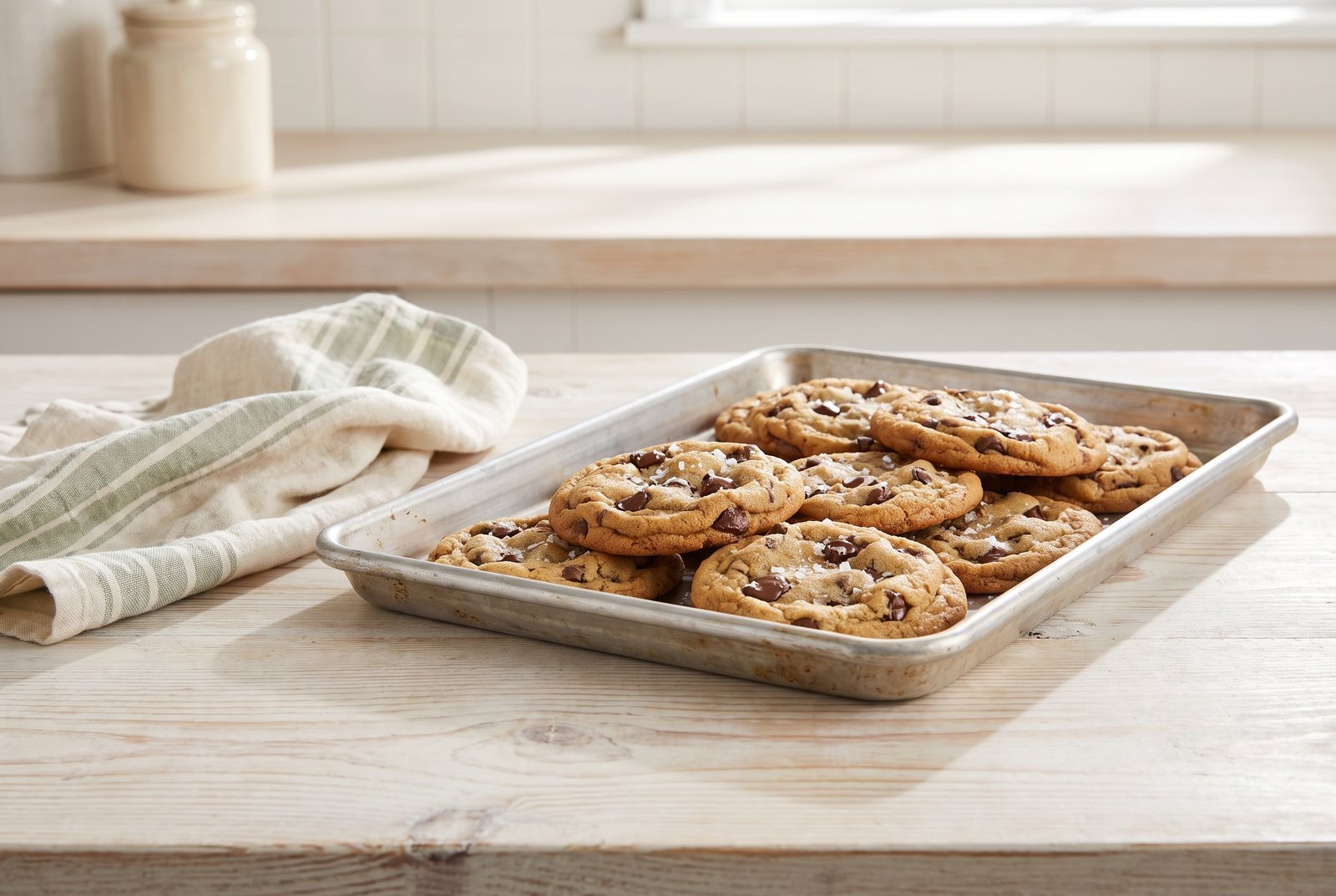
The Nordic Ware Naturals Half Sheet is the workhorse, and genuinely a bakery favorite. Pure uncoated aluminum with an encapsulated steel rim so it will not warp, made in the USA, with no PTFE, PFOA, or Teflon coating.
It bakes cookies evenly and browns roasted vegetables the way you want. Around $15 to $20 for one, or roughly $30 for a two-pack.
The one nuance: it is bare aluminum, so for acidic recipes (anything with citrus, tomato, or vinegar) line it with unbleached parchment. That single habit removes the only real concern.
For most families, a couple of these plus a box of parchment is the simplest, cheapest way to a shelf full of non-toxic baking sheets. If cutting plastic is your bigger goal, pair this with our tips on how to reduce plastic in the kitchen.
Easy release without Teflon: Caraway and USA Pan
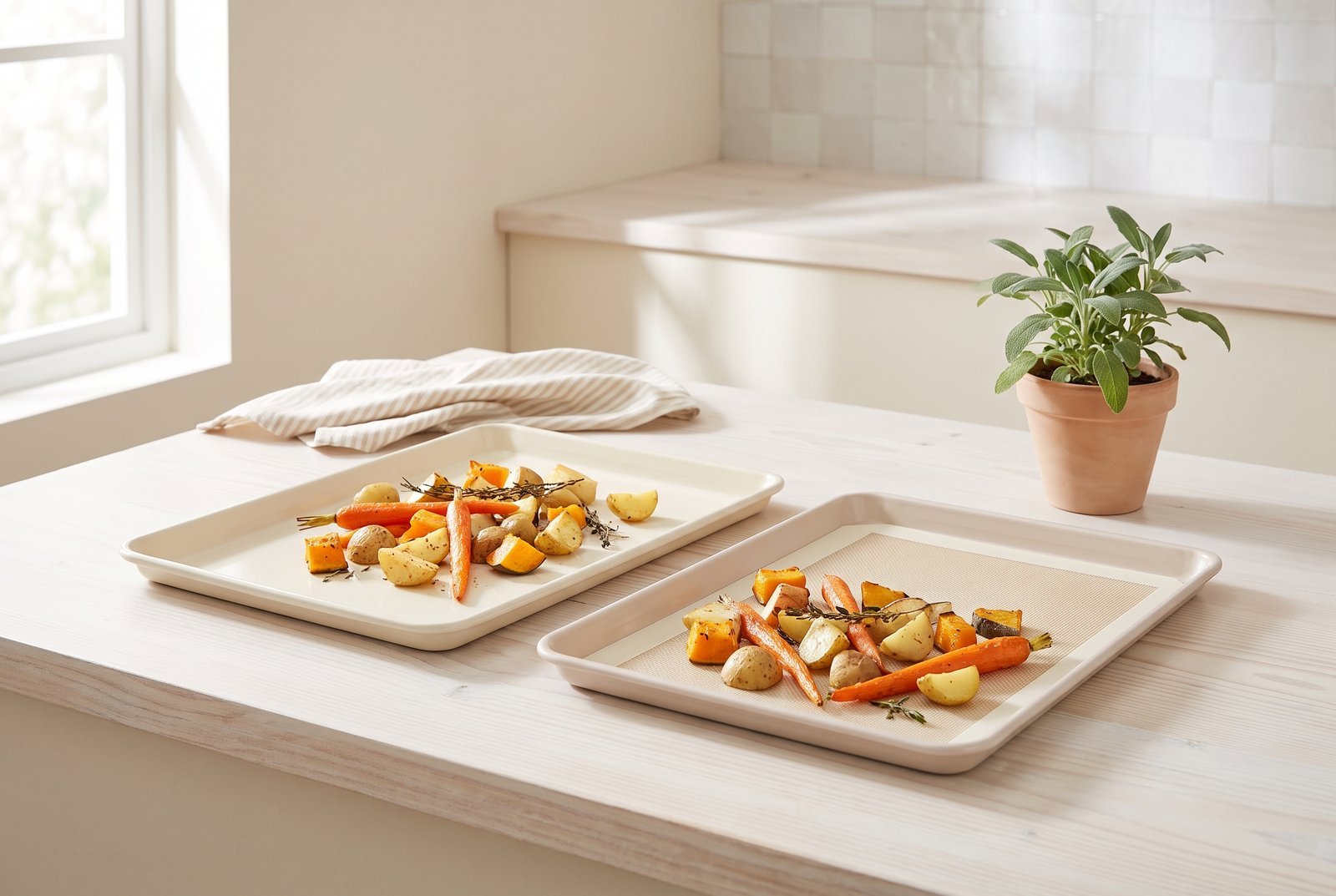
Maybe you love the way nonstick just slides food off, and you do not want to give that up. Good news: you can get easy release without the Teflon question. Two picks cover different budgets.
The Caraway Baking Sheet is an aluminized steel core with a mineral-based ceramic coating, free of PTFE, PFOA, PFAS, lead, and cadmium, and stable to 550°F. It gives you clean release and looks lovely on the counter. Around $45 to $65 for one.
The nuance with any ceramic coating is that it wears over the years, so treat it gently and skip metal utensils.
The USA Pan Half Sheet is the mid-price everyday choice. It is aluminized steel with Americoat, a silicone-based coating with no PFAS, no PTFE, and no BPA. You get nonstick release without the Teflon family, made in the USA, for around $25 for one or $49 for a two-pack.
This is the pan I would hand someone who wants “just a good, safe, nonstick-feeling sheet” and does not want to fuss.
Two more solid non-toxic baking sheets
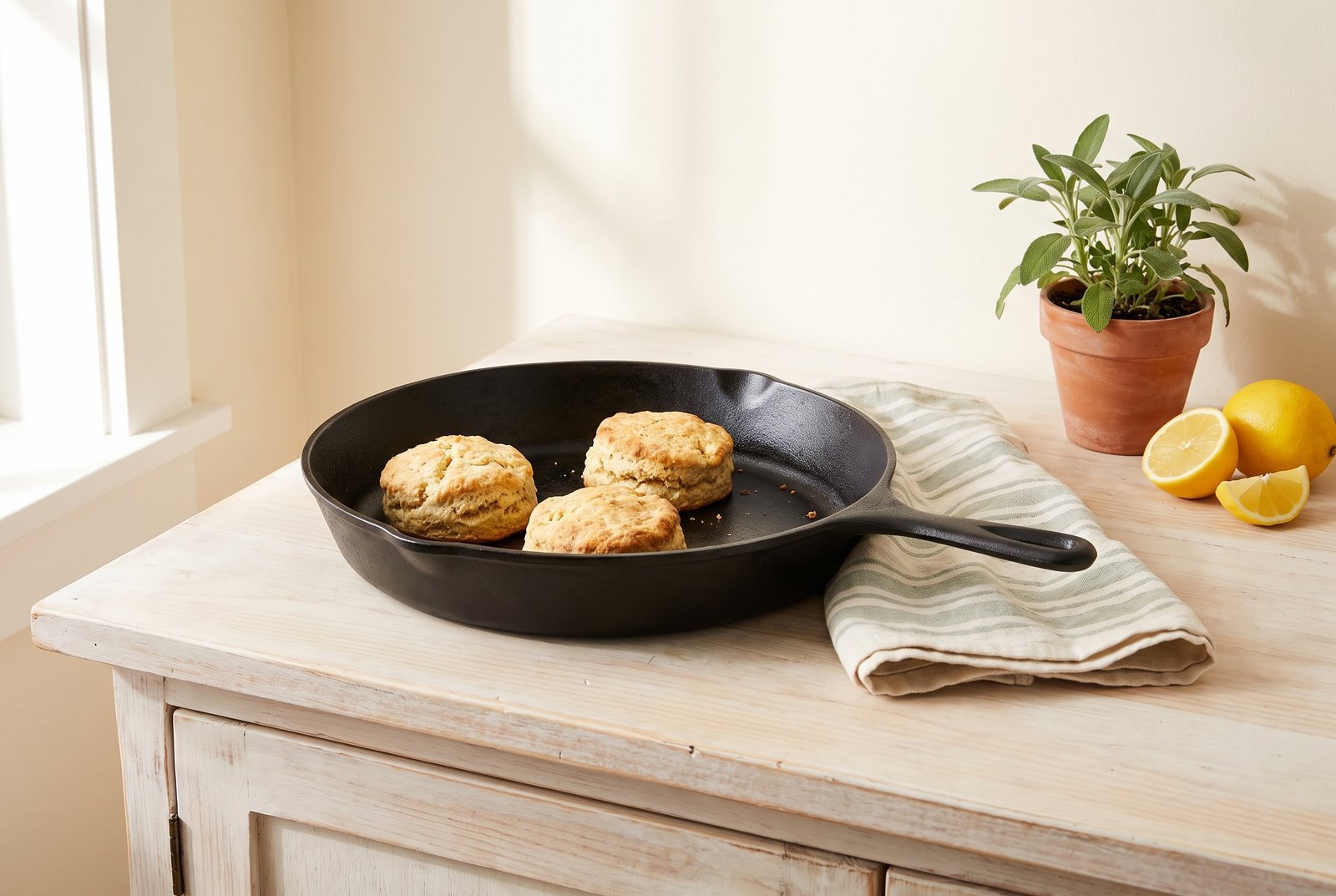
A couple of picks round out the list for specific cooks.
- Lodge Seasoned Cast Iron Baking Pan (~$40 to $50). Naturally nonstick once seasoned, no synthetic coating, made without PFAS, and essentially lasts forever. It is heavy and needs hand-washing and occasional re-seasoning, so it is best for people who already love cast iron.
- GreenPan Reserve Ceramic Bakeware Sheet (~$30 to $50). A PFAS-free ceramic nonstick coating (their Thermolon mineral surface), Prop 65 compliant. A nice ceramic-coated alternative to Caraway at a similar tier, with the same nuance that the release fades over years of heavy use.
Any pick on this list is a real non-toxic baking sheet. There is no single “best” for everyone, only the best for how you cook.
Swapping one pan at a time? Get the simple non-toxic kitchen swaps that make the biggest difference, sent straight to your inbox.
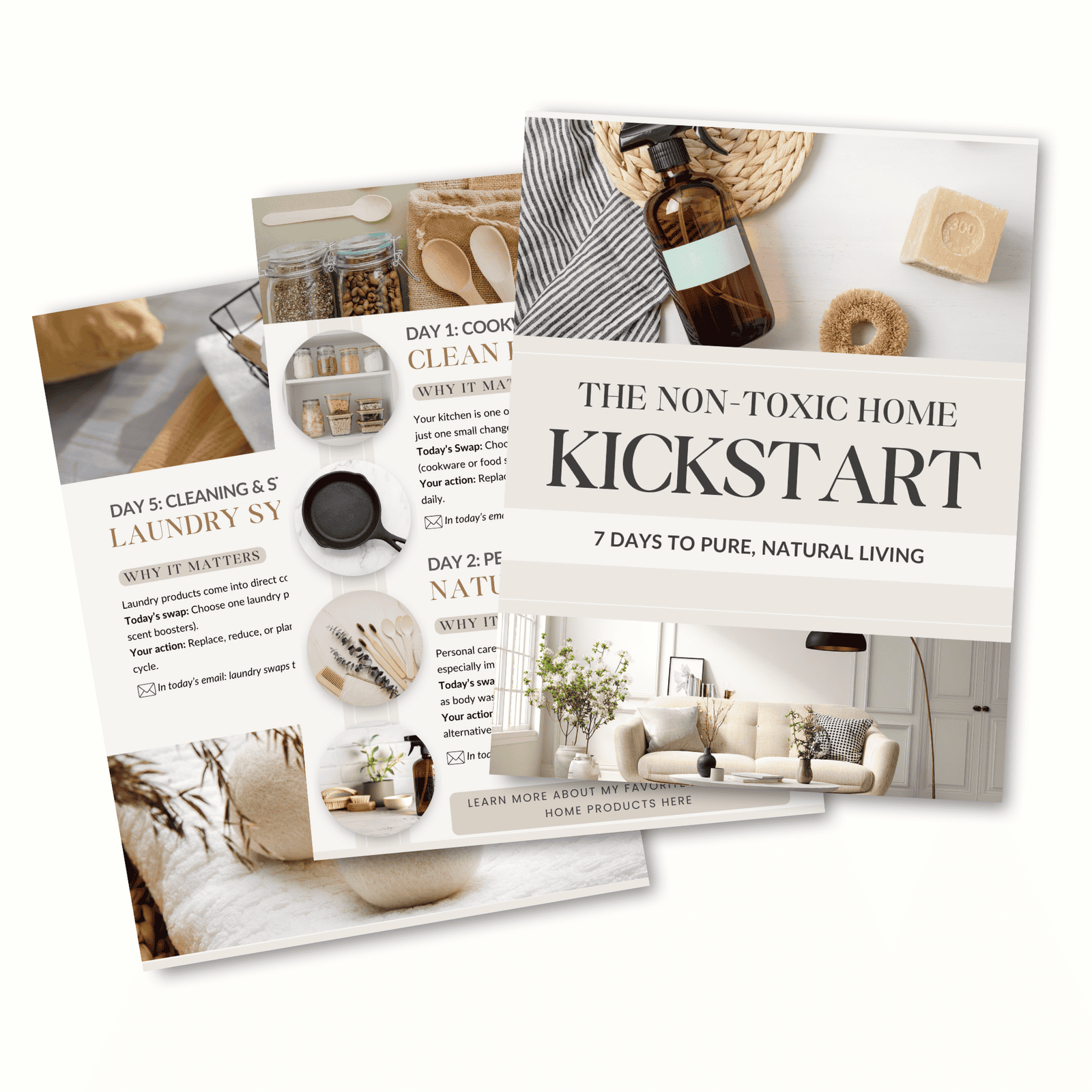
Your 7-Day Kickstart To A Non-Toxic Home
One swap per day. No overhaul required. Just 7 small changes that make your home a healthier place to live.
No spam. Unsubscribe anytime.
How to choose your non-toxic baking sheet
Do not overthink this. Match the pan to your real life, not to a spec sheet.
- Want to buy once and forget it? Go stainless steel (the 360 sheet).
- Want the cheapest safe option that bakes great? Go uncoated aluminum (Nordic Ware) and keep parchment on hand.
- Do not want to give up easy release? Go ceramic (Caraway) or silicone-coated (USA Pan).
- Already a cast iron person? The Lodge pan fits right in.
And here is what to skip. Any pan simply labeled “nonstick” with no material or coating named is a pass. If a brand will not tell you what the surface is made of, that is your answer.
The same goes for dark, heavily coated sheets with mystery coatings, and anything with vague “greener eco coating” marketing that has no PFAS-free or PTFE-free statement to back it up. Reading a label like this gets easier fast, and our post on reading labels on a non-toxic food list uses the same skill you will use on bakeware.
Care tips so your pan actually lasts
The right care keeps any of these non-toxic baking sheets safe and out of the landfill for years. A few simple habits do most of the work.
- Line with unbleached parchment for acidic foods on bare aluminum, and honestly for easy cleanup on anything.
- Skip metal utensils and steel wool on coated pans. Scratches are what actually retire a nonstick surface, not age.
- Do not preheat an empty coated pan to very high heat. Put food or parchment on it first.
- Season cast iron after washing with a thin layer of oil so it stays naturally nonstick.
- Retire the truly flaking pans. If your old nonstick sheet is peeling into food, that is the real reason to replace it. Not fear, just flaking.
If you are slowly making cleaner swaps across your whole home, our beginner guide to non-toxic living lays it out one small step at a time.
The bottom line on non-toxic baking sheets
So, that scratched pan in your hand at the start? You do not have to feel bad about the cookies you already baked on it.
You just get to make one easy upgrade the next time you replace a sheet anyway. Pick stainless if you want it to last forever, aluminum for the best value, or a ceramic or silicone-coated pan if you love easy release.
One swap. No guilt. Done.
Want the rest of the safer-kitchen swaps without the label-reading rabbit hole? Grab the free guide and take it one small step at a time.
Your 7-Day Kickstart To A Non-Toxic Home
One swap per day. No overhaul required. Just 7 small changes that make your home a healthier place to live.
No spam. Unsubscribe anytime.