
Low Waste Living: What It Actually Looks Like (Hint: It’s Not What You Think)
We used to live in a city that took recycling seriously. Curbside compost. Color-coded bins. We separated everything, rinsed everything, felt good about everything.
Then we moved to the mountains.
There is no recycling here. No compost pickup. We load our trash into the truck and haul it to the local dump ourselves. When people come to visit, they look around and ask, “Wait, you don’t recycle?”
Here’s the thing nobody expects: we produce a fraction of the waste we made in that city. Not because we found a better system. Because we changed what we bring into the house in the first place.
Low waste living isn’t about having the right bins. It’s about what you source, how you store it, and what’s left over when you’re done.
What Low Waste Living Actually Means
Most people picture mason jar pantries and bamboo everything. Or they assume it requires a bulk store, a farmers market within walking distance, and a reusable container for every occasion.
It doesn’t.
Low waste living means producing less garbage. Less packaging coming in. Less single-use material going out. Fewer things that need to be thrown away in the first place. You don’t need a recycling program for that. You don’t even need a compost bin (though it helps). You need to look at where your waste is actually coming from.
For most households, the answer is the same: food.
Your Kitchen Is the Biggest Waste Source (and the Easiest to Fix)
As an Amazon Associate, I earn from qualifying purchases. This means if you click an Amazon link and buy something, I may earn a small commission at no extra cost to you.
The USDA estimates that the average American family discards 30-40% of its food supply. That’s not just wasted groceries. It’s wasted packaging, wasted fuel, wasted resources from farm to trash can.
There are two shifts that make the biggest difference: sourcing locally and preserving seasonally. Not everyone can do both. But almost everyone can do some version of one.
Source Locally Where You Can
When food travels shorter distances, it needs less packaging. That’s the simple math behind local sourcing.
Our meat comes from our own land or a farm down the road. The beef goes from a local farm to a butcher a couple miles away, then into our freezer. No styrofoam trays. No shrink wrap. No warehouse distribution center.
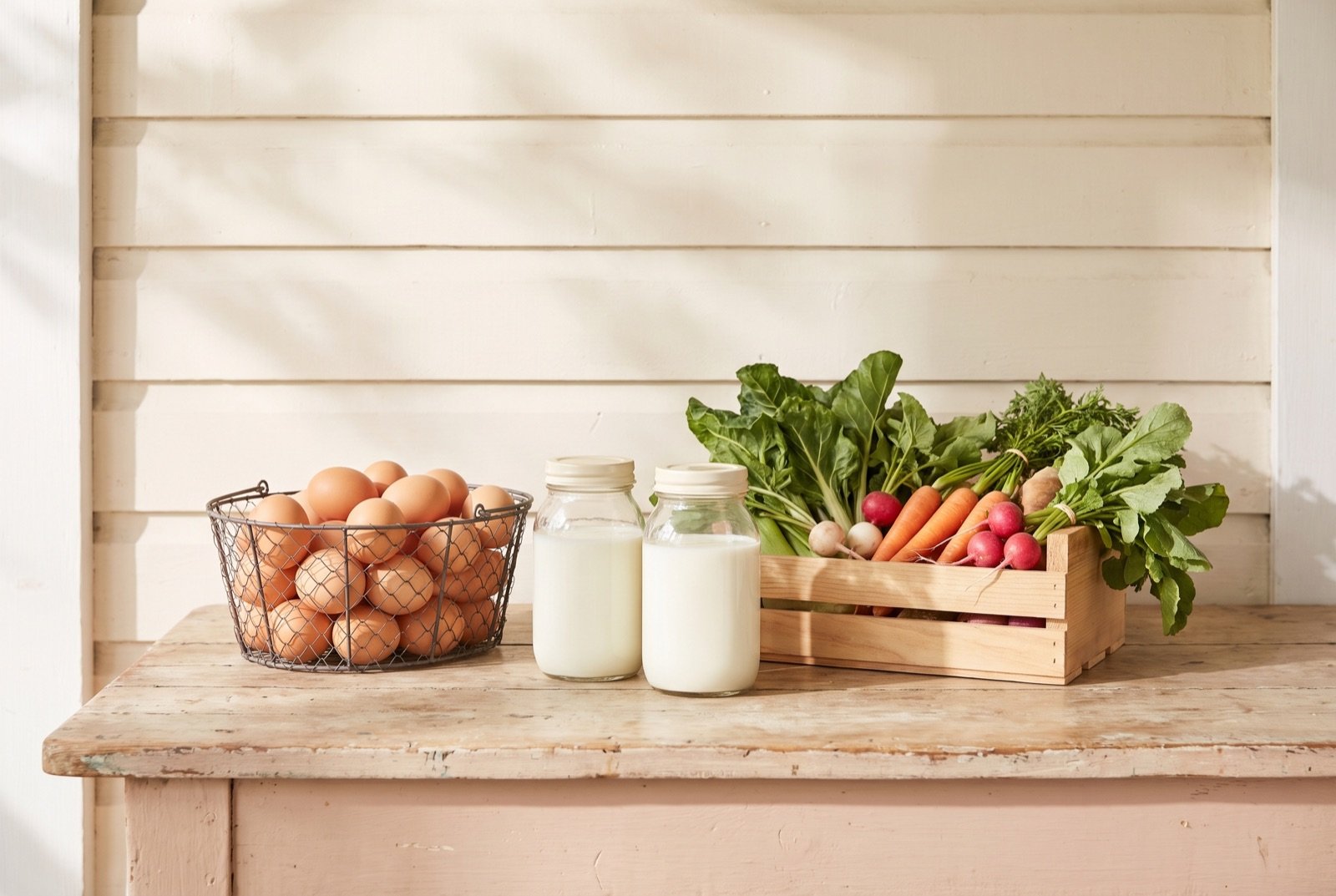
Our eggs come from the yard (the girls collect them every morning) or from a neighbor when we’re low. Our milk comes from a friend who shows up at the door with raw milk from her cow while I leave glass jars in a cooler on the porch.
You don’t need land to do this. Most areas have:
- Local butcher shops that source regionally (ask where the meat comes from, if they can’t tell you, that’s your answer)
- Farm stands and co-ops for seasonal produce
- Community Supported Agriculture (CSA) boxes delivered weekly
- Farmers markets (even mid-size cities have them)
- Egg shares from backyard chicken owners (check local Facebook groups)
One important note about grocery store meat: beef labeled “Product of USA” doesn’t always mean the cow was raised here. It can be raised in Australia or New Zealand, shipped overseas, and if it’s processed or packaged in the US, it qualifies for that label. Knowing your farmer eliminates that guesswork entirely.
Sourcing locally and preserving seasonally are two of the fastest ways to cut household waste. If you want to keep going room by room, the free 7-Day Non-Toxic Home Kickstart walks you through one simple swap a day.

Your 7-Day Kickstart To A Non-Toxic Home
One swap per day. No overhaul required. Just 7 small changes that make your home a healthier place to live.
No spam. Unsubscribe anytime.
Preserve What’s in Season
Canning changed our kitchen more than any other single habit.
When produce is in season and local, we buy it and put it up in glass jars. Right now, asparagus is available from a farm stand about two miles from our house for a couple dollars a pound. I can it in glass jars, and those last through winter. In late summer, peaches from a local orchard get the same treatment. Those become our sweet fruit for the year.
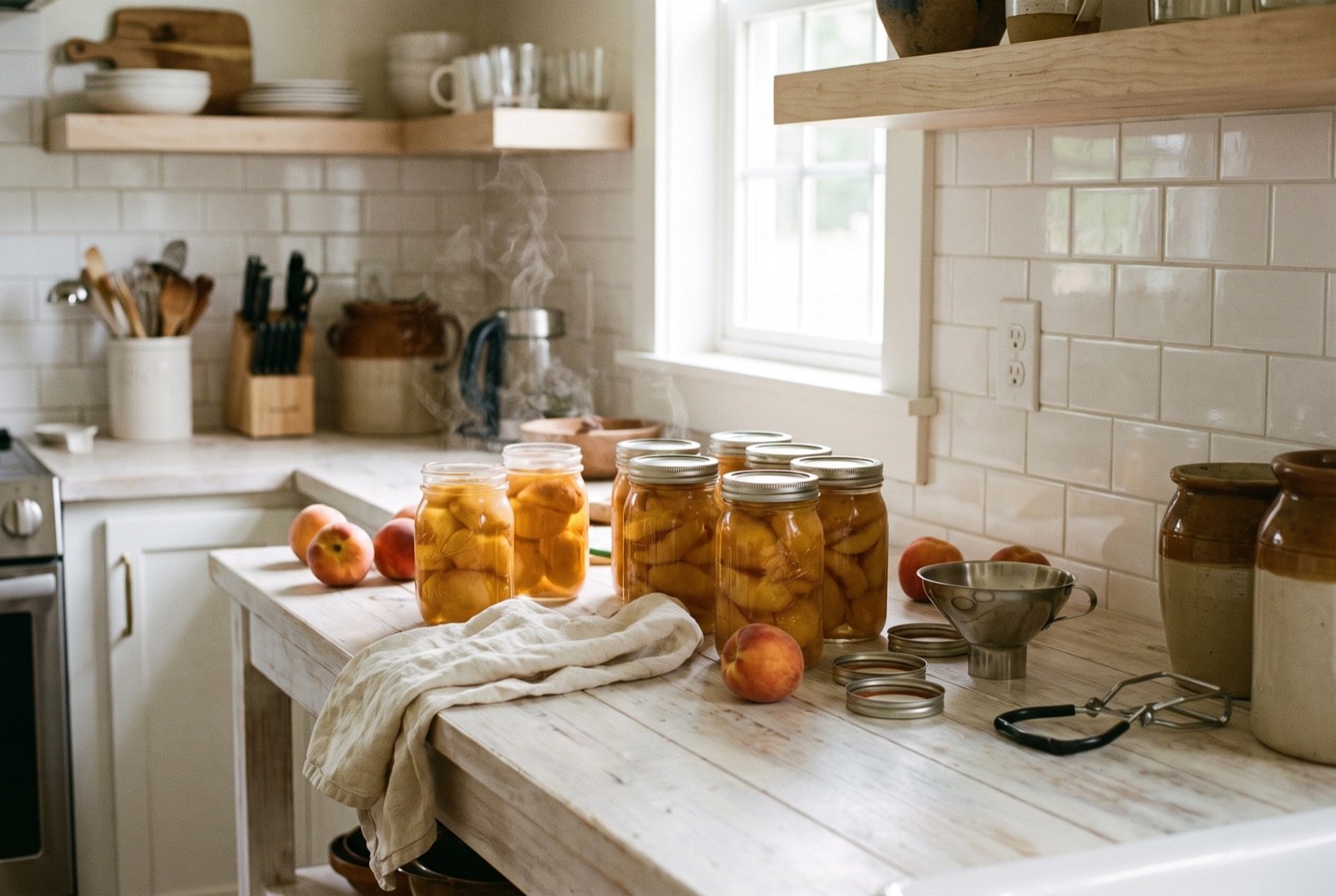
One trip to a local farm replaces months of grocery store produce that’s been picked early, shipped hundreds of miles, and wrapped in plastic.
Getting started with preserving is simpler than it sounds:
- Water bath canning handles high-acid foods (fruits, pickles, tomatoes, jams). Entry cost: about $30 for a starter kit.
- Pressure canning handles low-acid foods (vegetables, meat, soups). Entry cost: about $80-$120 for a canner.
- Freezing requires nothing you don’t already own. Buy seasonal produce, wash, portion into reusable bags or containers, freeze.
Even freezing local produce in season beats buying shipped, packaged produce year-round.
7 Low Waste Living Swaps Beyond the Kitchen
Food is the biggest lever, but the rest of the house adds up too. These are the changes that actually stick because they’re easier than what they replace.
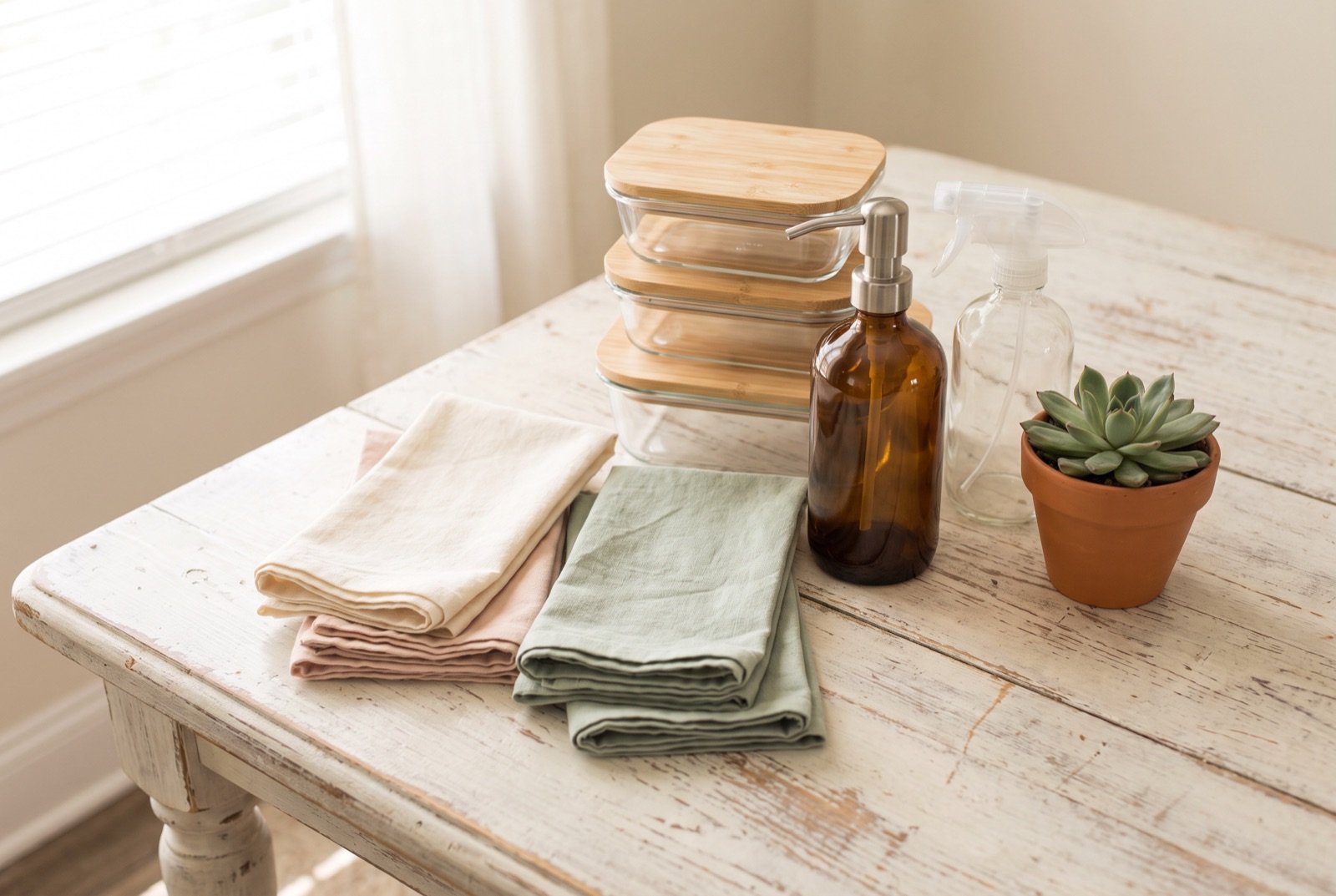
1. Reusable Cleaning Products
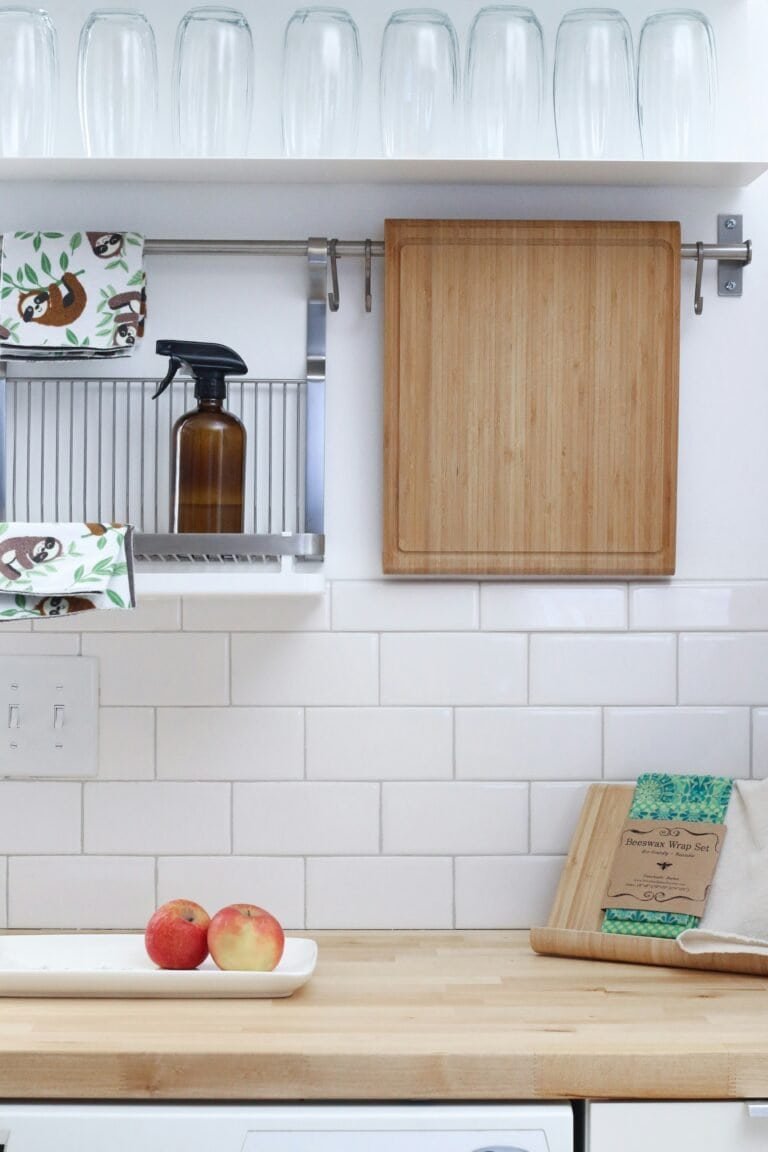
Single-use cleaning bottles are one of the most wasteful household habits. We covered how to clean your whole house with five ingredients and reusable spray bottles. Total cost: about $15 for months of cleaning supplies.
2. Cloth Over Paper
Cloth napkins and microfiber towels replace paper towels entirely. Toss them in the wash with your regular laundry. The average household burns through 80+ rolls of paper towels a year. Cloth cuts that to zero. (Our eco swaps guide has the full breakdown.)
3. Glass Storage Over Plastic
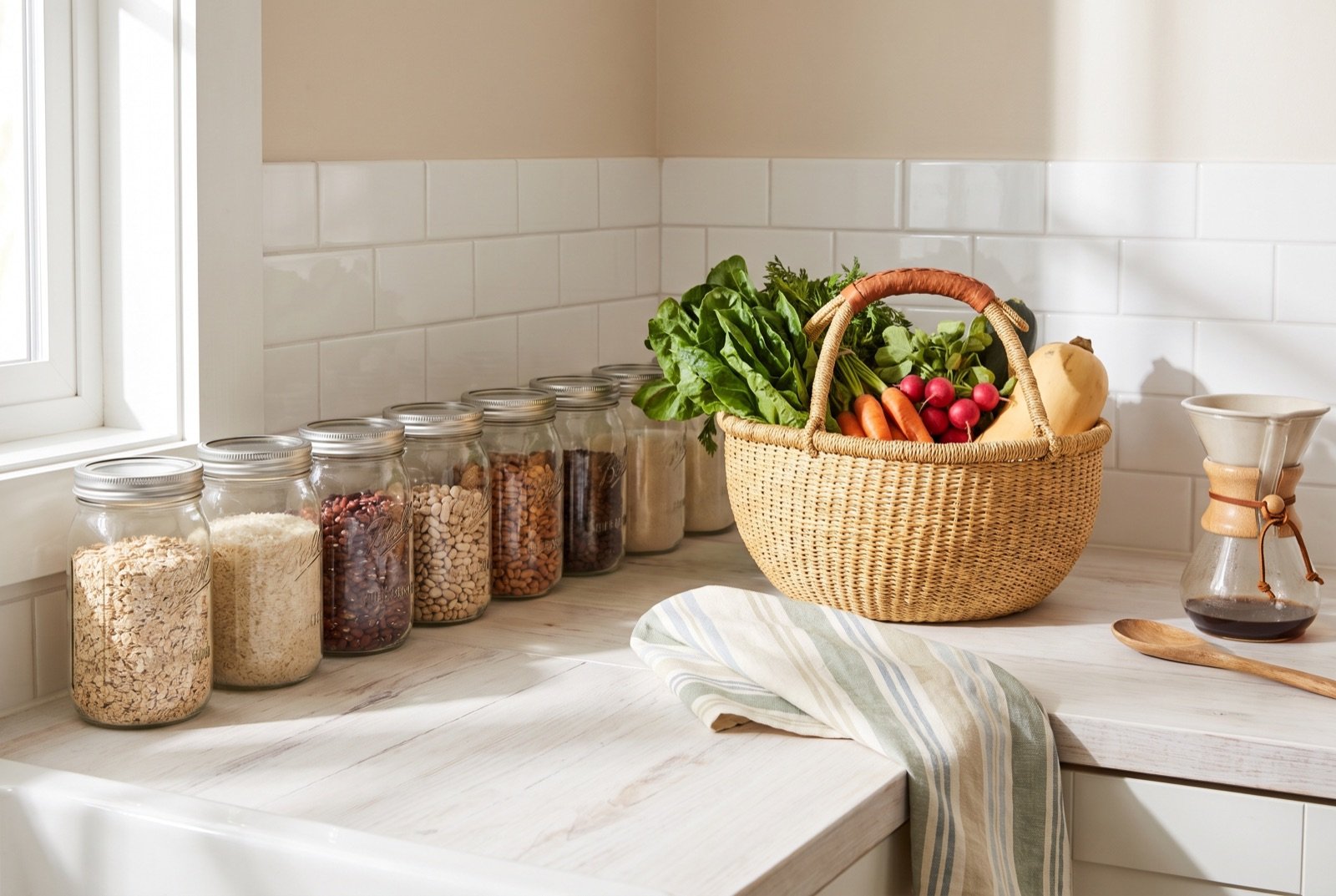
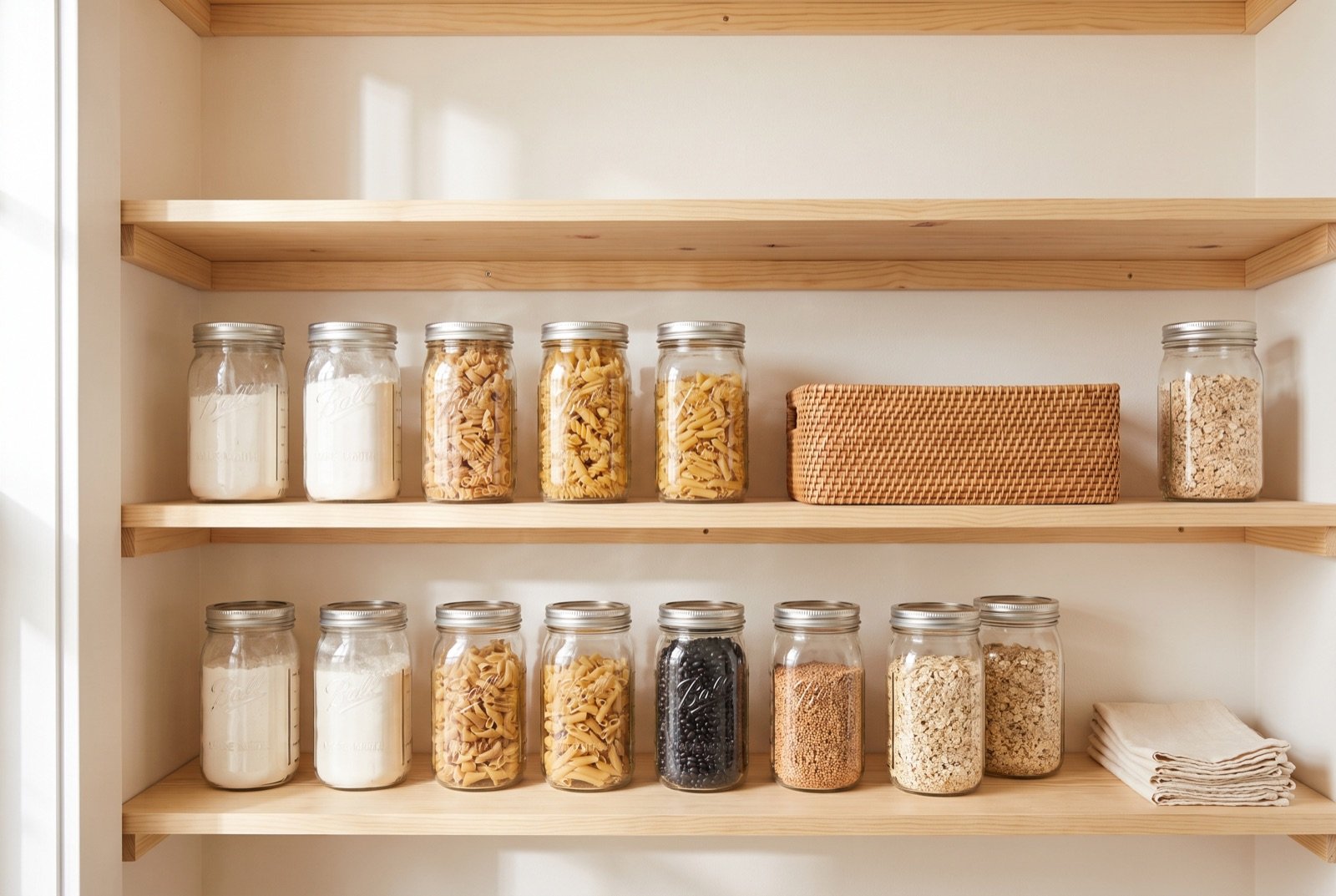
Glass containers don’t stain, don’t warp, don’t leach chemicals into food, and they last for years. Mason jars cost next to nothing. This is one of those swaps where the “eco” option is also the cheaper long-term option.
4. Refillable Products
Whether it’s cleaning supplies, hand soap, or beauty products, buying one container and refilling it eliminates dozens of plastic bottles per year. Branch Basics sells a single concentrate that replaces five cleaning products. Blueland uses tablets that dissolve in water.
5. Conscious Packaging Choices
The products you buy are part of the equation. One example: Crunchi, a clean beauty brand, ships almost everything in glass containers rather than plastic. Their formulas are packaged hot, which means glass isn’t just an aesthetic choice. It prevents microplastics from leaching into the product the way heated plastic can. Even their shipping materials skip the plastic wrap and peanuts. (We have a full list of clean beauty brands that prioritize packaging.)
6. Creative Cardboard Reuse
Here’s our imperfect area: we live in a small mountain town, which means we rely on Amazon more than we’d like. But the cardboard gets a second life. Our kids have a Chomp Saw (a kid-safe saw designed for cutting cardboard) and they build things out of every box that comes through the door. Forts, ramps, robots. It’s become one of their favorite activities.
7. Buy Less, Period
The lowest-waste product is the one you never buy. Before purchasing anything new, a quick “do I actually need this, or can I borrow it, find it used, or make do without it?” eliminates more waste than any reusable product ever will.
The Real Cost of Low Waste Living
Low waste living saves money. That part surprises people.
Where you save:
- Fewer cleaning products ($50-$100/year)
- No paper towels or napkins ($80-$160/year)
- Less food waste from seasonal preserving
- Fewer impulse buys from the “buy less” mindset
- Local sourcing often costs the same or less than grocery store equivalents (especially for meat bought in bulk)
Where it costs more:
- Upfront investment in reusable tools (glass bottles, cloths, canning supplies): $50-$100 one-time
- Some eco-friendly products carry a small premium
Most households break even within 2-3 months and save $200-$400 per year after that.
Where to Start (Pick 2)
Don’t try to overhaul everything. Pick two things from this list and do them for a month:
If you want the biggest impact: Find a local source for one staple food (meat, eggs, or seasonal produce). One change in how you source food reduces more waste than switching every product in your bathroom.
If you want the easiest start: Replace paper towels with cloth. Zero learning curve. Noticeable difference in your trash can within a week.
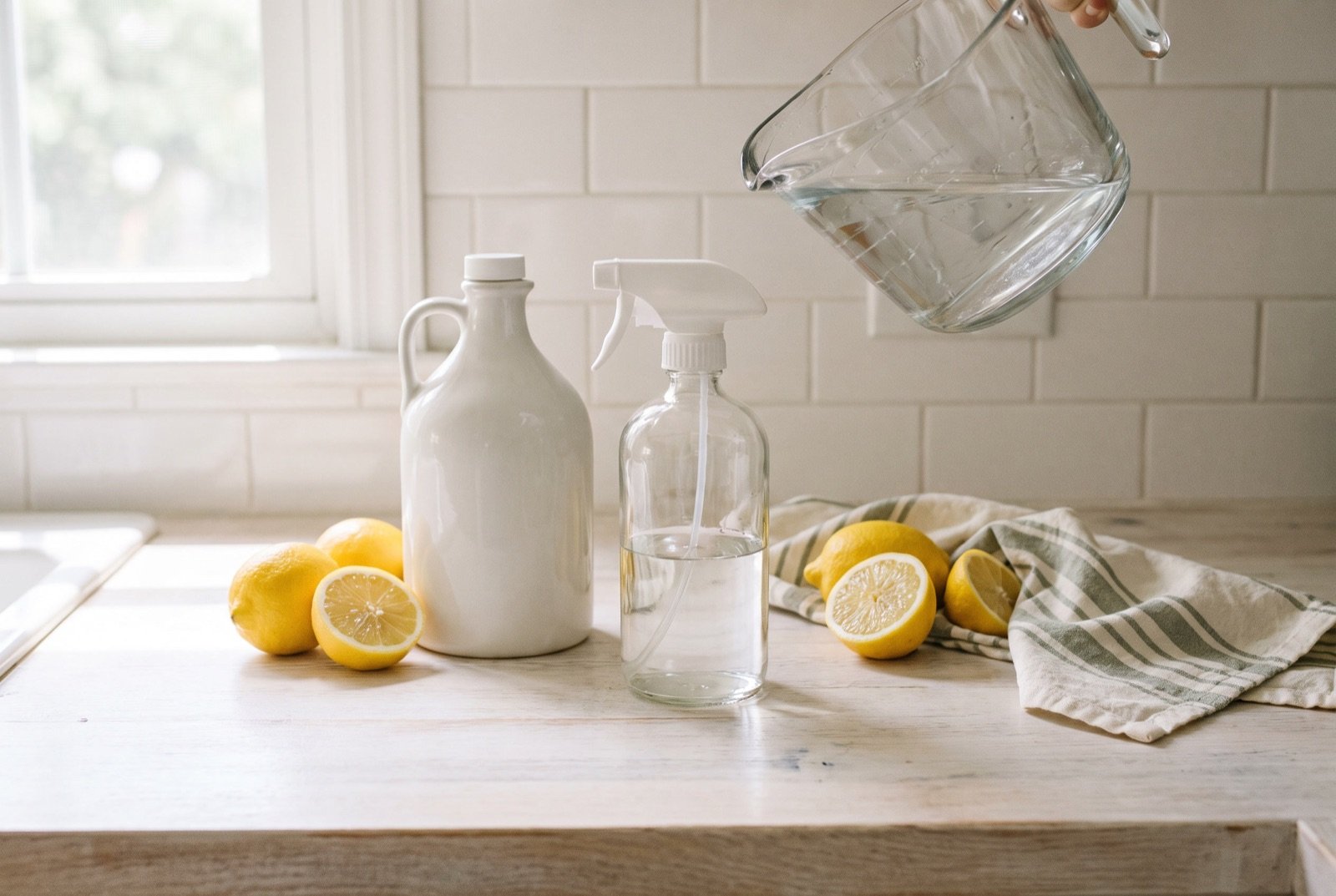
If you want to save money fastest: Make your own all-purpose cleaner (vinegar + water + spray bottle). Costs $0.25 per refill and replaces $5-$8 bottles from the store.
Low waste living isn’t a standard to reach. It’s a direction to move. You don’t need to do it all. You just need to start somewhere.
Want the Easy Version?
Get the free 7-Day Non-Toxic Home Kickstart. One simple swap a day, delivered to your inbox.
Your 7-Day Kickstart To A Non-Toxic Home
One swap per day. No overhaul required. Just 7 small changes that make your home a healthier place to live.
No spam. Unsubscribe anytime.
Related reads: