Homemade Carpet Cleaner: 3 Natural Recipes That Actually Lift Stains
There is a specific kind of dread that comes with a juice cup tipping over onto a light carpet. Or the dog tracking in half the backyard. We have a house full of little girls and a lot of dirt that follows us in from the mountains, so I have made my peace with it. What I have not made peace with is the smell of conventional carpet shampoo, the kind that lingers for two days and makes the whole room feel coated.
A homemade carpet cleaner is a DIY cleaning solution made from easy-to-get household ingredients like white vinegar, baking soda, and hydrogen peroxide that lifts stains and neutralizes odors without synthetic fragrance or harsh surfactants. It is one of those swaps that pays for itself almost immediately. You probably have most of the ingredients already, and you control exactly what soaks into the fibers your kids roll around on. Below are the three recipes I actually reach for, depending on whether I am running the machine, spot-treating a fresh spill, or just trying to make a tired room smell clean again.
Why make your own carpet cleaner?
Most store-bought carpet solutions are built around synthetic fragrance and surfactants that are tricky to fully rinse out of carpet. Whatever does not rinse stays down in the pile, which is exactly where bare feet and crawling babies spend their time. The Environmental Working Group keeps a database where you can look up your current bottle (search the Guide to Healthy Cleaning).
A homemade carpet cleaner gives you three things: ingredients you can pronounce, a much lower cost per use, and no perfume haze afterward. It is not magic. Set-in stains still take effort. But for everyday life with kids and pets, these recipes hold their own.
The ingredients and why they work
As an Amazon Associate, I earn from qualifying purchases. This means if you click an Amazon link and buy something, I may earn a small commission at no extra cost to you.
Every homemade carpet cleaner leans on the same short list of ingredients. Knowing what each one does makes it easier to mix on the fly when you are missing something.
- Distilled white vinegar. Acidic. Breaks down soap residue, dissolves minerals, deodorizes by neutralizing alkaline odors like urine and smoke.
- Baking soda. Mildly abrasive and alkaline. Lifts grease and odor, especially when given time to sit dry.
- 3% hydrogen peroxide. A gentle oxidizer. Breaks the color bond on organic stains (coffee, wine, juice, blood) and helps with pet odor. Lightens some fibers, so always test first.
- Dish soap. A surfactant. Lifts oil-based stains so they can be blotted away. Use a small amount, since extra soap is what leaves carpet sticky.
- Oxygen booster (sodium percarbonate). Time-released hydrogen peroxide. Great in machine reservoirs for general brightening.
- Essential oils. Optional. Lemon and tea tree add a clean scent without synthetic fragrance.
Recipe 1: Homemade carpet cleaner solution for machines
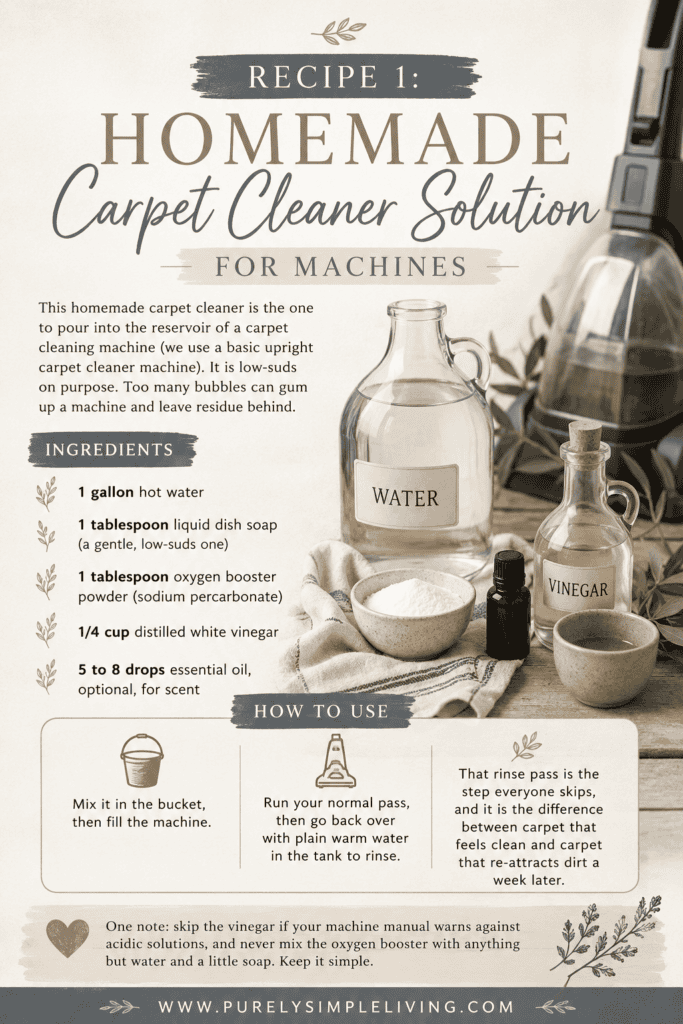
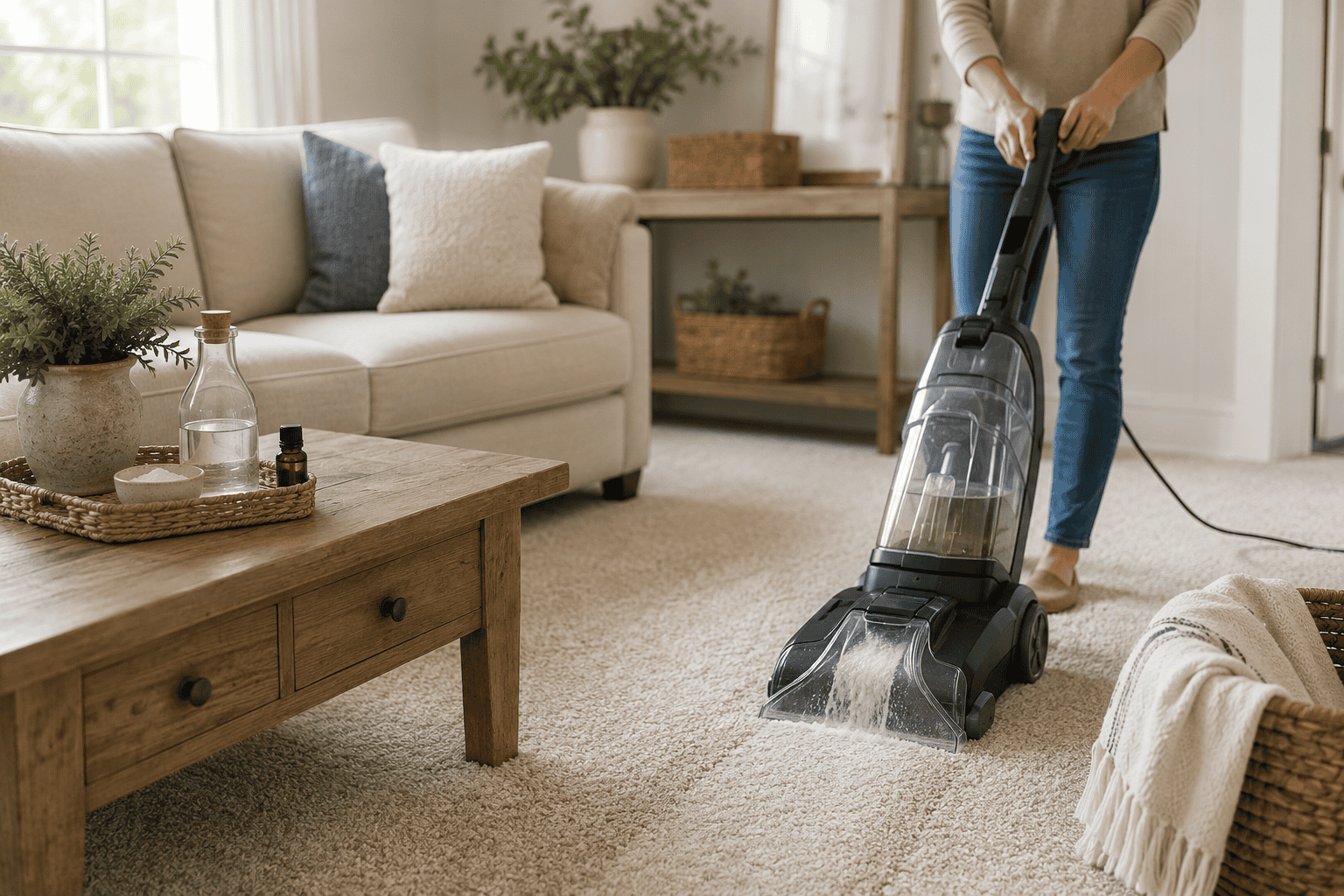
This homemade carpet cleaner is the one to pour into the reservoir of a carpet cleaning machine (we use a basic upright carpet cleaner machine). It is low-suds on purpose. Too many bubbles can gum up a machine and leave residue behind.
- 1 gallon hot water
- 1 tablespoon liquid dish soap (a gentle, low-suds one)
- 1 tablespoon oxygen booster powder (sodium percarbonate)
- 1/4 cup distilled white vinegar
- 5 to 8 drops essential oil, optional, for scent
Mix it in the bucket, then fill the machine. Run your normal pass, then go back over with plain warm water in the tank to rinse. That rinse pass is the step everyone skips, and it is the difference between carpet that feels clean and carpet that re-attracts dirt a week later.
One note: skip the vinegar if your machine manual warns against acidic solutions, and never mix the oxygen booster with anything but water and a little soap. Keep it simple.
Recipe 2: Fresh spill and stain spray
For the cup of juice, the coffee dribble, the muddy paw print, you want a homemade carpet cleaner you can grab fast. Speed matters more than strength with a fresh spill. Blot first, always, before you spray anything.
- 1 cup warm water
- 1 cup distilled white vinegar
- 1 teaspoon dish soap
- 1 tablespoon baking soda (add last, it will fizz)
- Blot up as much of the spill as you can with a dry towel. Press, do not rub.
- Spray the stain until damp, not soaked.
- Let it sit 5 minutes.
- Blot again with a clean damp cloth, working from the outside of the stain inward.
- Lay a dry towel over it and press. Repeat if needed.
I keep this in a labeled amber glass spray bottle under the sink. It also works on upholstery, which I get into more in our DIY upholstery cleaner guide.
Recipe 3: Pet stain and odor treatment
Pet accidents need a different approach because the goal is breaking down the odor, not just lifting color. Enzyme cleaners do this best, but a peroxide mix handles most fresh messes well.
- 1 cup 3% hydrogen peroxide
- 1 teaspoon dish soap
- 1 tablespoon baking soda
Test on a hidden spot first, since peroxide can lighten some carpets. Apply, wait 10 minutes, blot, then rinse with plain water and blot dry. For repeat-offender spots, a dedicated enzyme pet stain cleaner is worth keeping on hand. Enzymes break down the proteins that keep drawing pets back to the same spot.
Want all three homemade carpet cleaner recipes on one page you can tape inside a cabinet? Our printable cleaning guide lays them out, plus the rest of the swaps we use room by room.

Your 7-Day Kickstart To A Non-Toxic Home
One swap per day. No overhaul required. Just 7 small changes that make your home a healthier place to live.
No spam. Unsubscribe anytime.
The dry refresh that takes 10 minutes
Some days the carpet does not need cleaning so much as it needs to stop smelling like a house with three kids and a dog. For that, baking soda is the whole trick.
- Sprinkle baking soda generously over the carpet.
- Add a few drops of essential oil mixed into the box first if you want scent.
- Let it sit at least 20 minutes, longer if you can.
- Vacuum thoroughly.
That is it. It pulls odor out of the fibers and costs almost nothing. We do this on the high-traffic spots once a week, and the whole living room about once a month.
What it costs vs. store-bought
Cost is where a homemade carpet cleaner really wins. A standard 60 oz jug of brand-name carpet shampoo runs $15 to $25. A gallon of homemade carpet cleaner costs about $1.50 to $2 using ingredients you can buy in bulk and reuse for ten other things. The spot spray is even cheaper, roughly 20 cents a bottle. Over a year of regular cleaning, the swap easily pays for the machine itself.
Troubleshooting
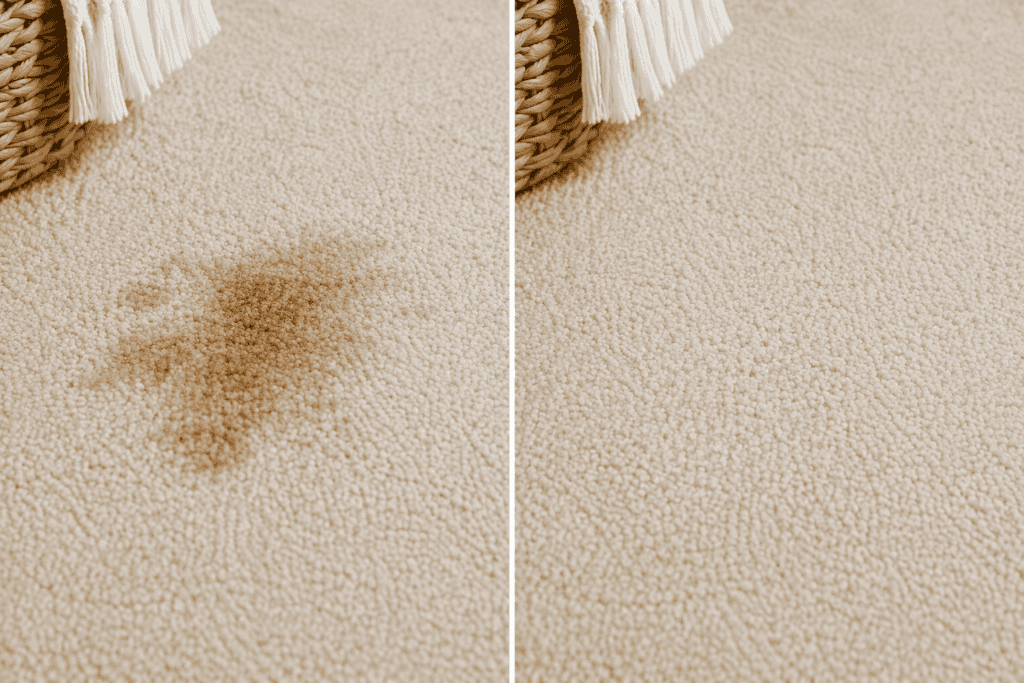
The stain came back after it dried
Classic sign that you did not rinse enough soap out. Detergent residue dries sticky and pulls dirt right back to it. Re-blot the area with plain warm water, then dry with towels and a fan.
There is a faint outline where the spill was
This is wicking. Moisture pulled stain up from the carpet padding as it dried. Re-blot with a vinegar-water mix, press dry towels under a heavy book overnight, and repeat.
The carpet smells worse after cleaning
Usually trapped moisture under the pad. Open windows, run a fan over the area, and check that the room is not humid. Mildew smell after cleaning means the carpet was too wet, too long.
A spot lightened where I sprayed peroxide
Some dyes are not colorfast. Always test in a closet first. If a spot lightens, sometimes a damp cloth dabbed with a tiny amount of mild dye-safe product can blend the edge, but often you have to live with it. The trade-off for natural cleaning.
Frequently asked questions
Are these recipes safe for wool or silk rugs?
No. Wool, silk, jute, and sisal rugs need professional cleaning. Vinegar and peroxide can damage natural protein fibers. For those, vacuum often and call a pro for the deep clean.
How long until I can walk on the carpet?
Spot treatments dry in an hour or two. A full machine cleaning takes 4 to 6 hours with airflow, longer in a humid room. Stay off until completely dry to keep dirt from re-grinding in.
Can I use this in a rented carpet cleaner machine?
Yes, as long as the rental allows non-branded solutions. Skip the essential oil in rentals so you do not leave scent for the next renter.
Will essential oils stain my carpet?
Diluted in water, no. Undiluted, possibly yes, especially citrus oils on light carpet. Always mix into the water first.
How often should I deep clean carpets?
Deep clean with a homemade carpet cleaner every 6 to 12 months for most homes, more often with pets or kids. Spot-treat as needed in between, and stay on top of the dry baking soda refresh.
A few honest tips
- Always blot, never scrub. Scrubbing frays the fibers and pushes stains deeper.
- Test any new recipe on a closet corner first.
- Less liquid is better. Over-wetting carpet can lead to mildew underneath.
- Open a window. Even natural cleaners dry faster with airflow.
- Take your shoes off at the door. The single biggest carpet care upgrade is just less dirt coming in.
If you want every cleaning recipe we use in one spot, our roundup of DIY cleaning recipes has the all-purpose spray, floor cleaner, and more. Start with one homemade carpet cleaner recipe, see how it feels, and build from there.
Want the Easy Version?
If you would rather skip the measuring and just have every recipe in one place, our printable cleaning guide lays it all out, room by room. Grab it free below and start with one bottle this week.
Your 7-Day Kickstart To A Non-Toxic Home
One swap per day. No overhaul required. Just 7 small changes that make your home a healthier place to live.
No spam. Unsubscribe anytime.