Reduce Plastic Kitchen Waste: Simple Swaps That Don’t Require a Full Overhaul
The biggest mistake people make when trying to reduce plastic kitchen waste: they throw everything away and buy all new stuff.
Glass containers. Stainless steel straws. Silicone bags. Bamboo utensils. Beeswax wraps. All at once. That’s $100-$200 in “sustainable” products to replace things that still work perfectly fine. The plastic containers in your cabinet aren’t suddenly more dangerous because you decided to go eco-friendly this week.
The actually sustainable approach? Use what you have until it wears out. Then replace it with something better. That’s how you reduce plastic kitchen waste without creating more waste in the process.
This guide follows that philosophy. Start with the free changes. Then make smarter choices when things need replacing.
The Free Stuff First
These changes reduce plastic kitchen waste starting today. No purchases needed. Small shifts that reduce plastic kitchen clutter over time.
Stop Microwaving in Plastic
This is the one exception to the “use what you have” rule. When plastic is heated, it leaches chemicals into your food at a much higher rate. Even “microwave-safe” plastic still leaches. The label just means it won’t melt or warp, not that it’s chemically inert.
The fix: Transfer food to a glass bowl or ceramic plate before microwaving. Use a damp paper towel or a plate as a cover instead of plastic wrap. If you own any glass or ceramic containers, prioritize them for reheating.
This single change reduces your chemical exposure from plastic more than any product swap.
Stop Storing Hot Food in Plastic
Same principle. Hot soup in a plastic container is leaching more chemicals than cold leftovers in the same container.
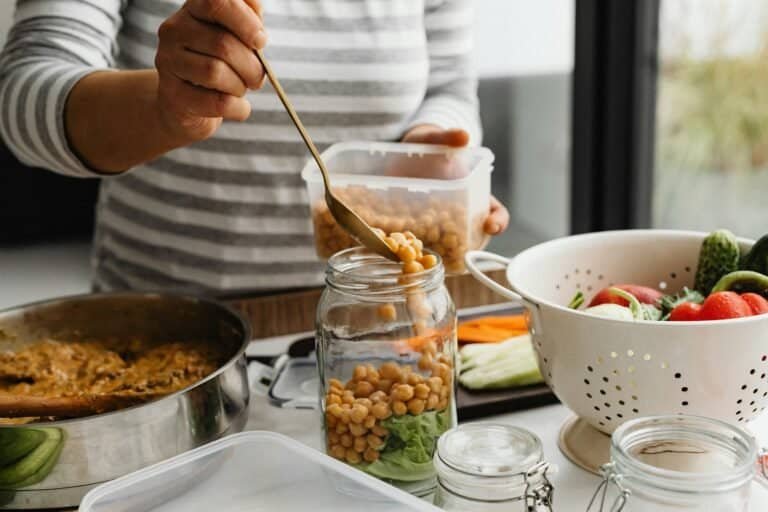
The fix: Let food cool before storing in plastic. Or put hot food directly into glass jars or ceramic bowls with lids. Mason jars are great for this (leave headspace if freezing).
Reuse What You Have
Before buying anything new, look at what’s already in your kitchen.
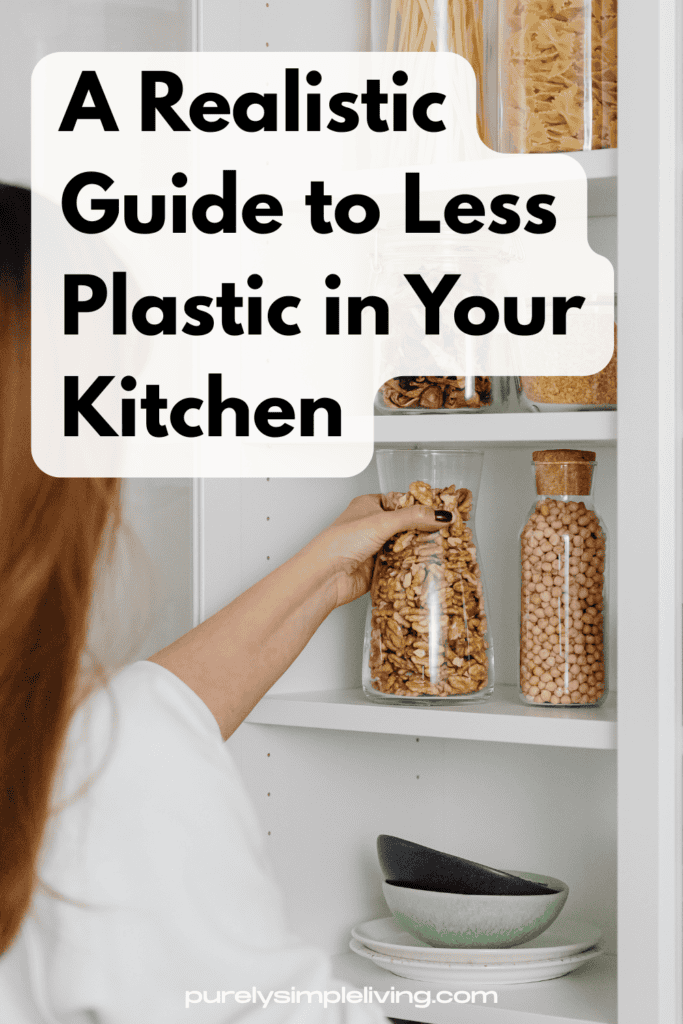
Glass jars from pasta sauce, pickles, and jams make excellent food storage. Clean them, remove the label (soak in hot water with baking soda to remove adhesive), and use them for leftovers, dry goods, or meal prep.
Ceramic bowls with plates on top work as food storage in the fridge. No lid needed. Just a bowl with a plate inverted over it. Your grandmother did this.
Cloth towels replace paper towels for most tasks. Old t-shirts cut into squares work too.
Reusing bread bags and produce bags a few times before tossing them is better than buying new reusable bags you’ll forget to bring to the store.
The goal isn’t a perfectly plastic-free kitchen. It’s less plastic, used more thoughtfully.
Smart Ways to Reduce Plastic Kitchen Items (As Things Wear Out)
As an Amazon Associate, I earn from qualifying purchases. This means if you click an Amazon link and buy something, I may earn a small commission at no extra cost to you.
When your plastic containers crack, stain, or lose their lids (they always lose their lids), replace them with better options.
Food Storage
Glass containers with snap lids are the gold standard. Pyrex, Anchor Hocking, and IKEA all make affordable sets. The glass lasts basically forever. The plastic lids will eventually need replacing, but the containers themselves are a one-time purchase.
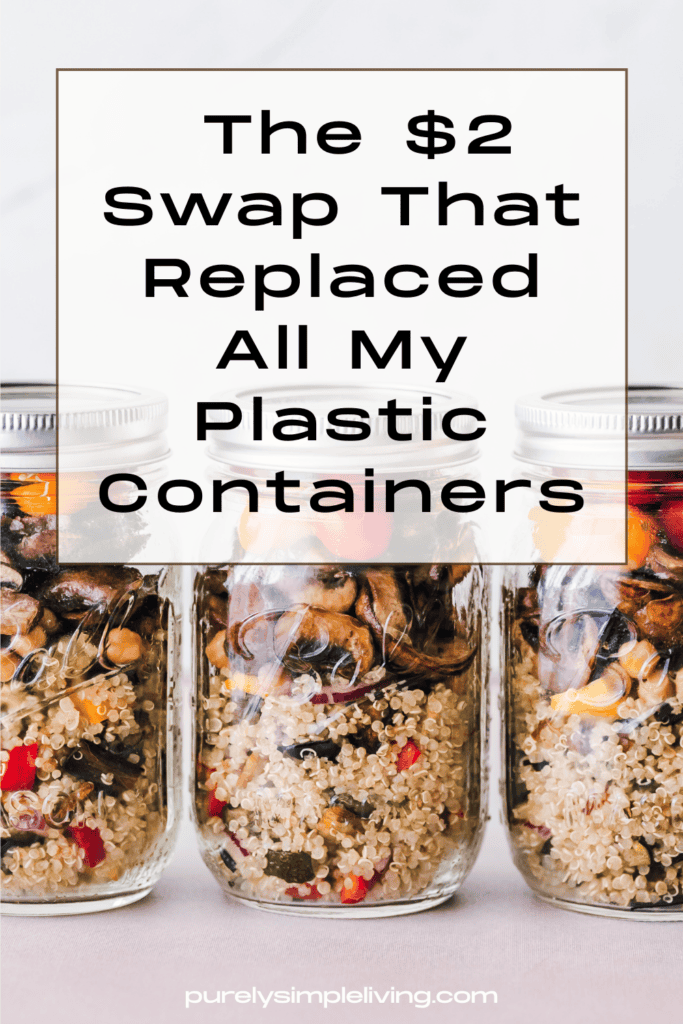
Mason jars in various sizes handle almost everything. Wide-mouth pint jars for leftovers. Quart jars for soups and sauces. Half-gallon jars for dry goods. They cost $1-$2 each at most hardware and grocery stores.
Stainless steel containers are great for kids’ lunches and on-the-go storage. Unbreakable, no leaching, dishwasher safe. More expensive upfront ($15-$30) but they last decades.
What about silicone bags? Stasher bags are popular and fine for most uses. Silicone is more chemically stable than plastic, though some people prefer glass for hot food. They’re a good ziplock replacement for snacks, freezer storage, and lunch packing.
Cutting Boards
Plastic cutting boards develop deep grooves over time where bacteria and microplastics accumulate. When yours is scored and hard to clean, replace it with wood.
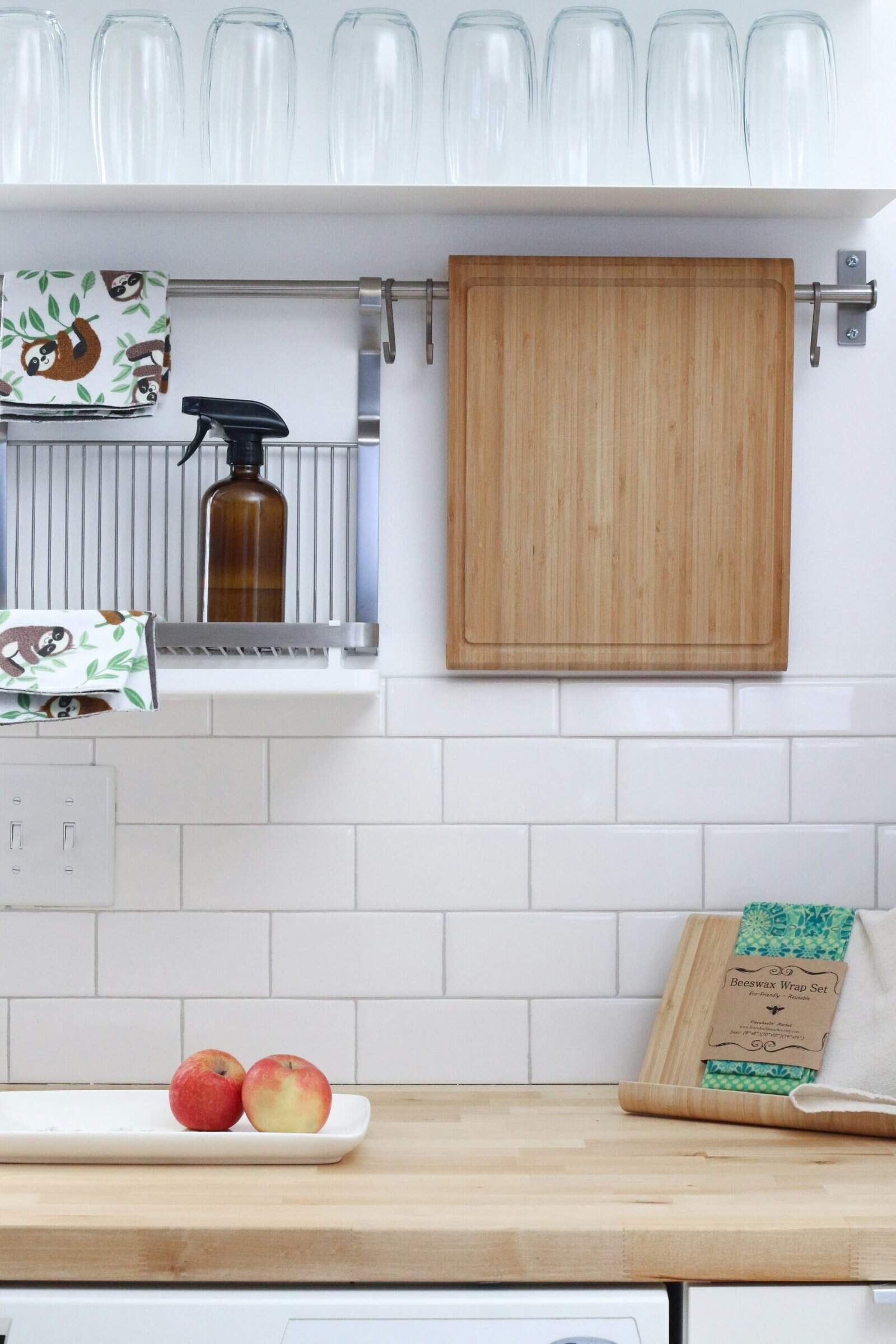
Wood cutting boards (maple, walnut, bamboo) are naturally antimicrobial. Bacteria die on wood surfaces within minutes, while they survive for hours on plastic. Oil them monthly with food-grade mineral oil to keep them sealed and sanitary.
Cooking Utensils
Plastic spatulas, spoons, and turners degrade with heat. Tiny particles flake off into your food over time, especially when you use them in hot pans.
Replace with: Wood, stainless steel, or silicone. Wood is best for non-stick pans (won’t scratch). Stainless steel is best for durability. Silicone is heat-resistant and flexible. A basic set of wood and stainless utensils costs $15-$25.
Water Filtration
Instead of buying plastic water bottles, filter your tap water.
Brita or PUR pitcher ($20-$30): The entry-level option. Filters chlorine, some heavy metals, and particulates. The pitchers are plastic, but you’re eliminating hundreds of disposable bottles per year.
Berkey or AquaTru ($200-$350): Countertop filtration systems that remove nearly everything, including fluoride, lead, and pharmaceuticals. Stainless steel or glass construction. Higher upfront cost, but the filters last 6-12 months. We covered these in detail in our kitchen swaps guide.
Dish Soap and Sponges
Dish soap: Switch from plastic bottles to a dish soap bar (solid, zero packaging) or buy a large refill bottle and reuse a glass pump dispenser. Some stores offer bulk refill stations where you bring your own container.
Sponges: Conventional sponges are plastic (polyester and polyurethane). Replace with cellulose sponges (plant-based, compostable), Swedish dishcloths, or natural bristle brushes. A wood-handled dish brush with replaceable heads lasts years.
Plastic Is One Material. Your Home Has More.
Reducing plastic in the kitchen is a big win. But there are toxin sources in every room that have nothing to do with plastic. The 7-Day Non-Toxic Kickstart covers one swap a day across your whole home.

Your 7-Day Kickstart To A Non-Toxic Home
One swap per day. No overhaul required. Just 7 small changes that make your home a healthier place to live.
No spam. Unsubscribe anytime.
The Plastic to Avoid Most
Not all kitchen plastic is equally concerning. If you’re prioritizing, focus on these first:
1. Anything heated. Plastic that touches hot food or goes in the microwave is the biggest exposure risk. Replace this first.
2. Plastic that touches acidic or fatty food. Tomato sauce, citrus, oil, and cheese cause more leaching than neutral dry goods. Store these in glass.
3. Old, scratched, or worn plastic. Degraded plastic leaches more than new plastic. If a container is scratched, stained, or cloudy, it’s time.
4. Soft, flexible plastic (like cling wrap). Contains plasticizers (often phthalates) to make it flexible. Beeswax wraps, silicone lids, or bowl covers are good replacements.
Lower priority: Hard plastic storage containers holding dry goods at room temperature (flour, rice, pasta). These are lower risk. Replace them eventually, but they’re not urgent.
Grocery Shopping Tips
Reducing plastic in the kitchen also means bringing less plastic home in the first place.
Bring reusable bags. For groceries and produce. Keep them in your car so you don’t forget.
Buy from bulk bins. Oats, rice, nuts, dried fruit, pasta, spices. Bring your own jars or bags. Not every store offers bulk, but the ones that do can significantly reduce packaging waste.
Choose glass or cardboard over plastic. When you have a choice between pasta sauce in a glass jar vs. a plastic container, choose glass. You get the same product plus a free storage jar.
Buy whole produce. An unwrapped head of lettuce has zero packaging. Pre-washed lettuce in a plastic clamshell has a lot. Whole produce is often cheaper too.
Skip individually wrapped everything. Single-serve snack packs, individually wrapped cheese slices, mini bags of chips. Buy the large size and portion at home using your own reusable containers.
A Realistic Timeline
Don’t try to overhaul your kitchen in a weekend. That leads to waste, spending, and burnout.
This week: Stop microwaving in plastic. Start collecting glass jars from food you already buy.
This month: When a plastic container cracks or loses its lid, replace it with glass. Start bringing reusable bags to the grocery store consistently.
Over 3-6 months: Gradually replace cooking utensils, cutting boards, and sponges as they wear out. Consider a water filter if you’re buying bottled water.
Over a year: Your kitchen naturally shifts toward glass, wood, and stainless steel without any dramatic overhaul. The remaining plastic is used for low-risk dry storage and phased out as it fails.
That’s how to reduce plastic in the kitchen sustainably. Not all at once. Not with a big shopping trip. Just smarter choices, one replacement at a time.
For the full guide to non-toxic kitchen swaps (including cookware, food storage, and water filtration), check out our complete kitchen swaps guide.
Save This For Later
Want the Easy Version?
Get the free 7-Day Non-Toxic Home Kickstart, one simple swap a day, delivered to your inbox.
Your 7-Day Kickstart To A Non-Toxic Home
One swap per day. No overhaul required. Just 7 small changes that make your home a healthier place to live.
No spam. Unsubscribe anytime.