Non Toxic List: How to Read a Product Label in 30 Seconds
You’re standing in the aisle. You’ve picked up two versions of the same product. One says “natural.” One says “organic.” Both have green packaging and pictures of leaves. Neither one tells you, clearly, what’s actually in it.
This happens to everyone. Product labels are designed to sell, not to inform. The front of the package is marketing. The back is the truth. And most people never flip it over, or if they do, they don’t know what they’re looking at.
Here’s the good news: you don’t need a chemistry degree. You need about 30 seconds and a simple filter. Consider this your non toxic food list cheat sheet. This guide covers how to read labels on food, cleaning products, and beauty products. Same approach, slightly different red flags for each category. Once you learn this, you’ll never stand confused in an aisle again.
The Front-of-Label Problem
Everything on the front of a product label is marketing. Every word, every image, every color choice exists to make you buy it.
“Natural” has no legal definition in the U.S. for most products. A cleaning spray can contain synthetic chemicals and still say “natural” on the label.
“Green” and “eco-friendly” are equally meaningless without certification.
“Non-toxic” is not regulated on consumer product labels (outside of specific poison control classifications).
“Organic” means something on food labels (USDA Organic certification requires 95%+ organic ingredients). On cleaning and beauty products? It can mean anything. A product with 1% organic lavender oil in a synthetic base can put “made with organic ingredients” on the front.
“Free of [specific ingredient]” is usually accurate but misleading. A shampoo can be “paraben-free” while still containing synthetic fragrance, sulfates, and silicones. Removing one bad ingredient doesn’t make the product clean.
The front of the label is where companies spend their marketing budget. The back is where you spend your 30 seconds.
The 30-Second Label Check
As an Amazon Associate, I earn from qualifying purchases. This means if you click an Amazon link and buy something, I may earn a small commission at no extra cost to you.
This works on food, cleaning products, and beauty products. Three questions. Flip the product over and look at the ingredient list.
Question 1: How Long Is the List?
Shorter is generally better. This isn’t a hard rule (some great products have long ingredient lists of recognizable items), but it’s a useful first filter.
Food: If the ingredient list has more than 10-12 items for a simple product (bread, pasta sauce, granola), there are probably additives you don’t need.
Cleaning products: The best non-toxic cleaners have 5-10 ingredients. If the list is 20+ items long, it’s probably more complex than it needs to be.
Beauty products: These tend to have longer lists because formulation is more complex. But if you can’t pronounce 80% of the ingredients, that’s worth investigating.
Question 2: Can You Recognize the Ingredients?
This is the big one.
On a non toxic food list, you should recognize most items: water, vinegar, olive oil, salt, herbs, spices. On a clean beauty product: shea butter, coconut oil, jojoba oil, beeswax, essential oils. On a non-toxic cleaner: water, vinegar, plant-based surfactant, essential oil.
When names are long, chemical-sounding, and unrecognizable, it doesn’t automatically mean they’re harmful. Some safe ingredients have complex names (tocopherol is just vitamin E). But the ratio matters. If 80% of the list is unrecognizable, dig deeper before buying.
Question 3: Do You See Any Red Flags?
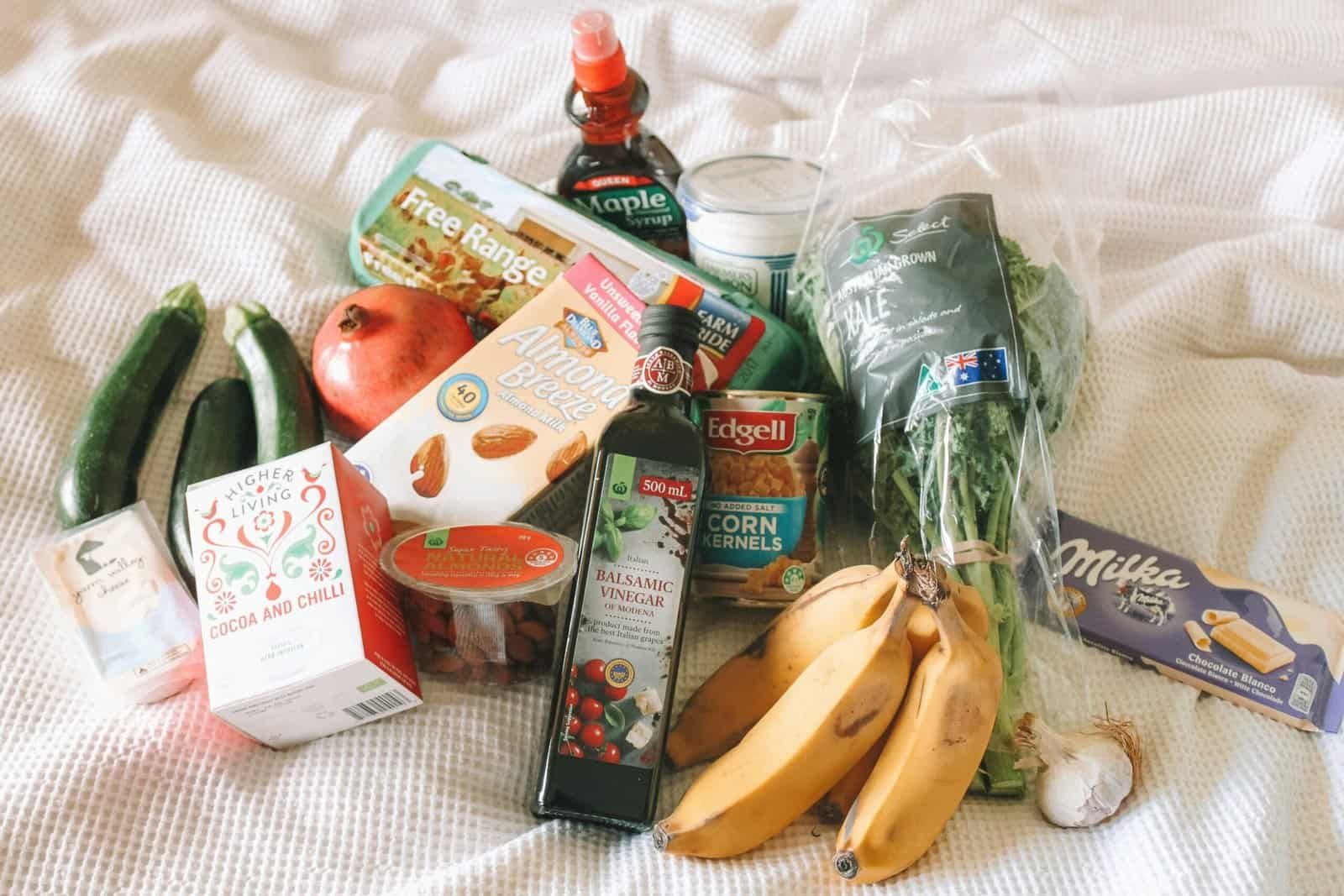
Here’s your non toxic food list of ingredients to watch for, broken down by product type.
Food red flags:
- High fructose corn syrup
- Artificial colors (Red 40, Yellow 5, Blue 1)
- Artificial flavors
- BHA and BHT (preservatives)
- Sodium nitrate/nitrite (in processed meats)
- Partially hydrogenated oils (trans fats)
- Carrageenan (thickener linked to inflammation)
- “Natural flavors” (a catch-all that can contain dozens of undisclosed compounds)
Cleaning product red flags:
- “Fragrance” or “parfum” (undisclosed synthetic chemicals)
- Sodium lauryl sulfate (SLS)
- Triclosan (antibacterial, endocrine disruptor)
- Phthalates
- 2-Butoxyethanol (in glass cleaners and all-purpose sprays)
- Ammonia
- Chlorine bleach
- Formaldehyde
Beauty product red flags:
- “Fragrance” or “parfum” (same loophole as cleaning products)
- Parabens (methylparaben, propylparaben, butylparaben)
- Phthalates (often hidden in “fragrance”)
- SLS/SLES
- Formaldehyde releasers (DMDM hydantoin, quaternium-15)
- Talc (contamination concerns)
- Carbon black (in mascara and eyeliner)
- Chemical UV filters (oxybenzone, octinoxate)
You don’t need to memorize every item. Pick 3-4 from the category that matters most to you and start checking for those. Over time, you’ll naturally learn more.
The “Fragrance” Loophole
This deserves its own section because it’s the single biggest trick in product labeling.
Federal law allows companies to list “fragrance” as a single ingredient, even if it contains 50-300 individual chemical compounds. This is classified as a “trade secret.” The rationale is that fragrance formulas are proprietary and competitors could copy them.
The result: you have no idea what you’re actually getting. “Fragrance” can include phthalates, synthetic musks, allergens, and endocrine-disrupting compounds. And it’s in everything. Shampoo, lotion, cleaning spray, laundry detergent, trash bags, tissues.
What to do: Choose products scented with essential oils (they must be listed individually) or choose unscented options. If a product lists “fragrance” or “parfum” and doesn’t disclose what that includes, treat it as a red flag.
We covered this in depth in our non toxic perfume guide and our shampoo and conditioner guide.
Labels Tell You a Lot. This Tells You Where to Start.
Now you know how to read a label. But which products should you check first? The 7-Day Non-Toxic Kickstart walks you through the highest-priority swaps, one a day.
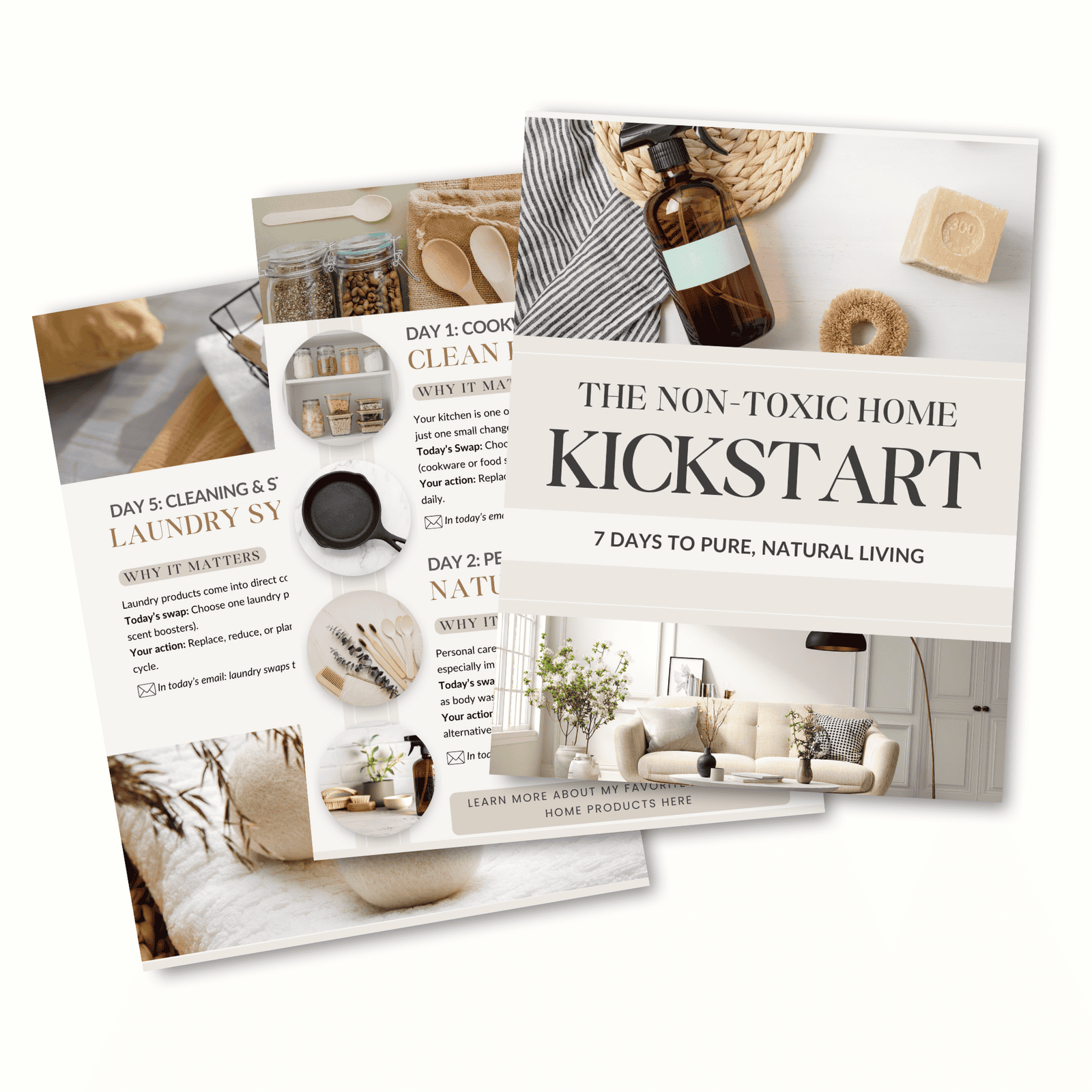
Your 7-Day Kickstart To A Non-Toxic Home
One swap per day. No overhaul required. Just 7 small changes that make your home a healthier place to live.
No spam. Unsubscribe anytime.
Free Tools That Help
You don’t have to do all of this from memory. These resources do the checking for you.
EWG Skin Deep (ewg.org/skindeep): The gold standard for beauty and personal care products. Search by product name or scan the barcode. Each product gets a hazard rating from 1-10. Takes 10 seconds.
EWG’s Healthy Living App (free for iPhone and Android): Scan barcodes in the store. Get instant ratings for food and personal care products. This is the fastest way to check products while shopping.
Think Dirty App (free): Similar concept. Scan the barcode, get a “dirty” rating. Covers beauty, personal care, and household products.
MADE SAFE: Products with the MADE SAFE certification have been screened by an independent organization. If you see this seal, the product has passed rigorous testing.
EWG Verified: Same concept. Products with the EWG Verified mark meet their strictest criteria.
When in doubt, scan it. The apps take the guesswork out of label reading.
A Simple Shopping Strategy
You don’t have to overhaul your entire pantry and bathroom in one trip. Here’s the practical approach:
1. Start with what you use most. What products do you buy every single month? Shampoo, dish soap, laundry detergent, the snacks your kids eat daily. Check those labels first. Swap the worst offenders.
2. Replace as you run out. Don’t throw away perfectly good products. When something runs out, check the label before you repurchase. If it doesn’t pass the 30-second check, find a cleaner alternative.
3. Use the apps in-store. Pull up EWG’s Healthy Living app while you shop. Scan the product you normally buy. If it scores poorly, scan alternatives on the same shelf until you find a better option.
4. Trust certifications. When time is short, USDA Organic (food), EWG Verified, MADE SAFE, and Leaping Bunny (cruelty-free) are reliable shortcuts. A product with these certifications has already been vetted.
Over time, your non toxic food list becomes second nature. You stop checking because you already know which brands pass. Your grocery runs get faster, not slower.
The Real Goal
Label reading isn’t about perfection. It’s not about never buying anything with an ingredient you can’t pronounce. It’s about making informed choices. Knowing what’s in the products you bring into your home and deciding what you’re comfortable with.
Some people will check everything obsessively. Others will scan a few products and call it good. Both approaches are fine. The point is that you have the skill now. You can flip a product over, spend 30 seconds, and make a decision based on information rather than marketing.
That’s the non toxic food list approach applied to your entire life. Three questions. Thirty seconds. Done.
For a complete room-by-room guide to cleaner products, including our top picks for every category, check out our guide to 25 non toxic swaps for every room.
Save This For Later
Grab the Printable
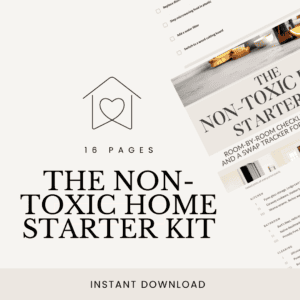
Want the full room-by-room swap checklist? Grab the Non-Toxic Home Starter Kit.
Recommended products
Want the Easy Version?
Get the free 7-Day Non-Toxic Home Kickstart, one simple swap a day, delivered to your inbox.
Your 7-Day Kickstart To A Non-Toxic Home
One swap per day. No overhaul required. Just 7 small changes that make your home a healthier place to live.
No spam. Unsubscribe anytime.