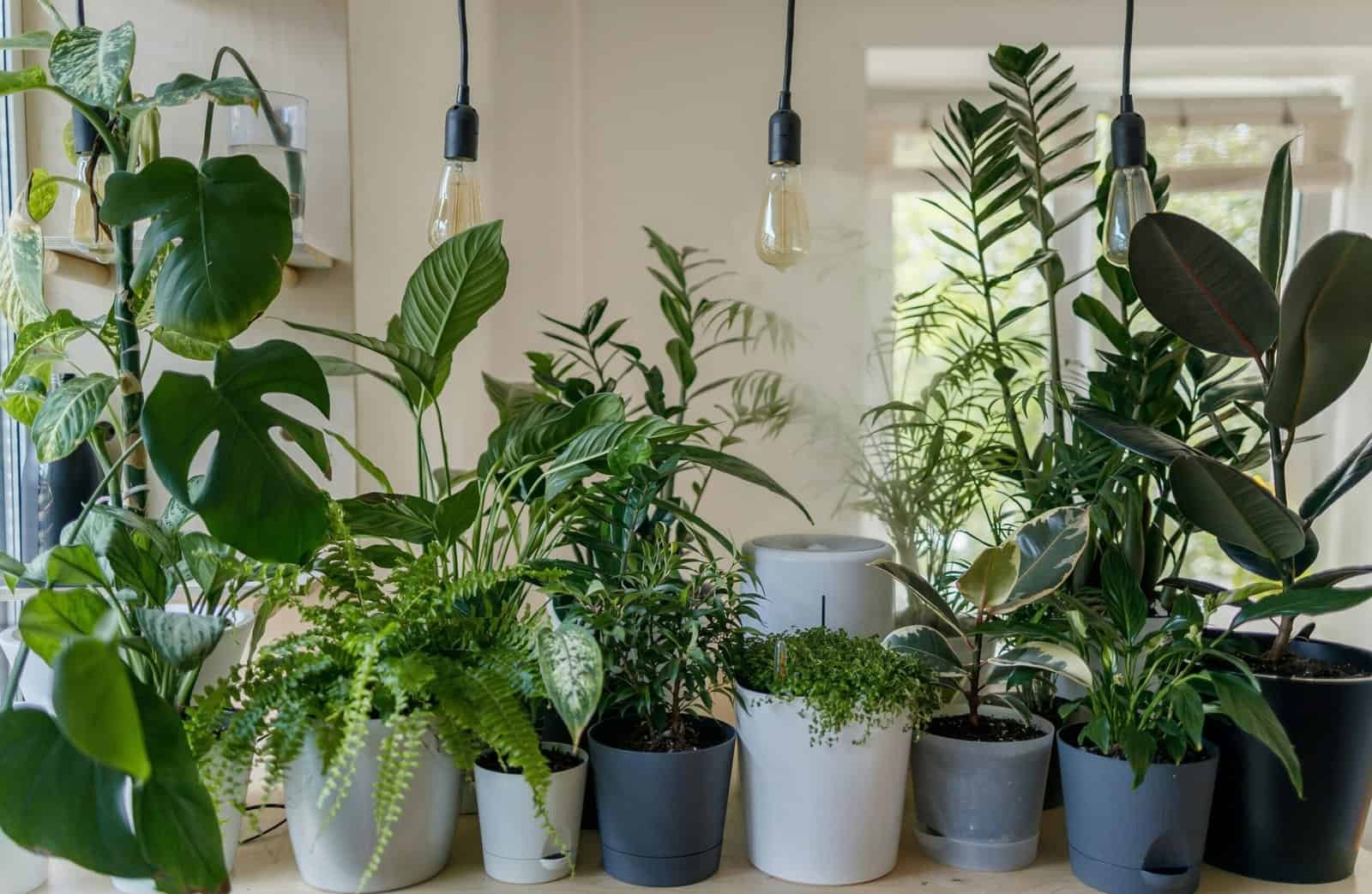
12 Non Toxic House Plants That Purify Your Air (and Are Easy to Keep Alive)
The day I closed on my first house, my mom brought me a fiddle leaf fig.
I named him Newt. Fig Newtons were my favorite snack as a kid, and when I looked at that plant, that’s what I saw: a cookie in plant form.
Newt was dead in a month.
So were the three plants I bought to replace him. The succulents I tried next lasted two weeks. The basil gave up before I’d even made pesto. For years I told myself I just wasn’t a plant person, which is the story every black thumb tells herself right before she figures out the real problem: she was picking the wrong plants.
Two decades later, three of the plants on this list are alive in my house right now. One of them lives in the pot that killed four of its predecessors. Another one I almost forget I own.
Every plant below is pet-safe, kid-safe, air-purifying, and (the part that actually matters to me) genuinely hard to kill.
Here are the 12 non-toxic, genuinely hard-to-kill plants that finally made me a plant person — including the ones that survived the room that killed Newt and his replacements.
12 Non Toxic House Plants Worth Owning
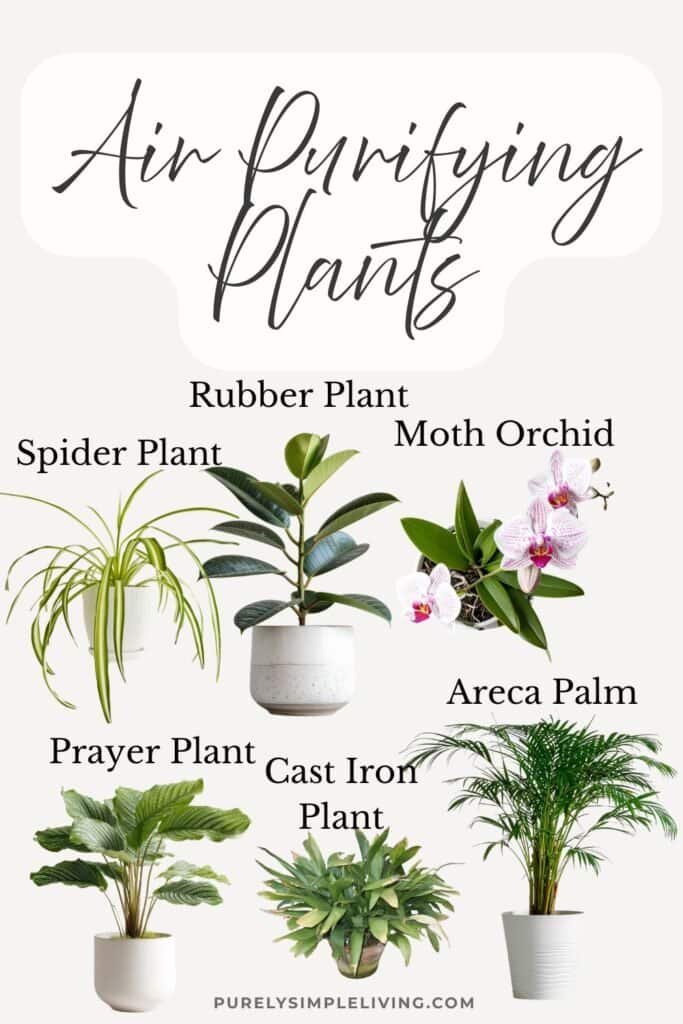
Easy Care (Perfect for Beginners)
1. Spider Plant (Chlorophytum comosum)
The plant that refuses to die. Spider plants handle low light, irregular watering, and general neglect with grace. They produce “babies” (small plantlets on runners) that you can clip and propagate into new plants for free.
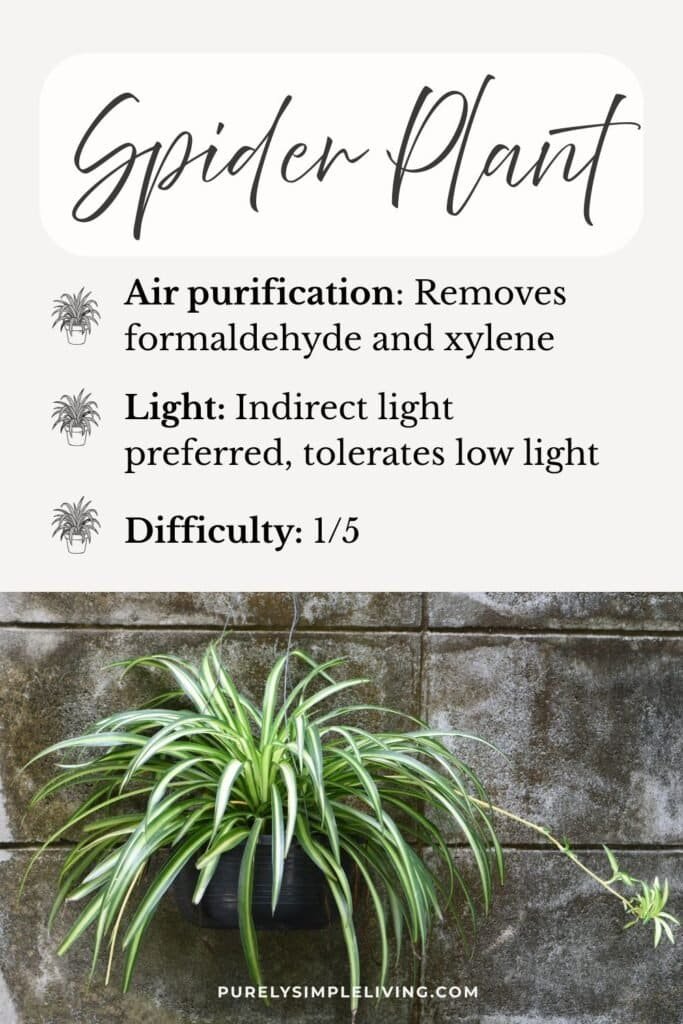
Air purification: Removes formaldehyde and xylene
Light: Indirect light preferred, tolerates low light
Water: When the top inch of soil is dry. Roughly once a week.
Pet/kid safe: Yes. Completely non-toxic.
Difficulty: 1/5. If you can keep any plant alive, you can keep this one alive.
2. Boston Fern (Nephrolepis exaltata)
Lush, cascading fronds that look beautiful in a hanging basket. Boston ferns are one of the most effective formaldehyde removers from the NASA study. They love humidity, which makes them perfect for bathrooms.
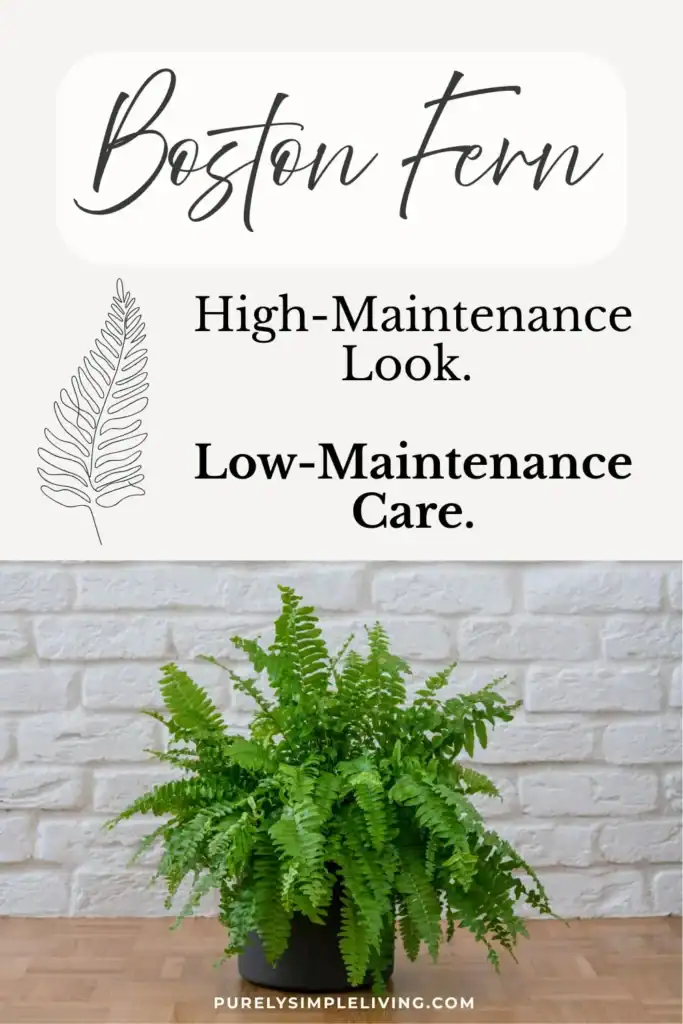
Air purification: Removes formaldehyde, xylene, toluene
Light: Indirect light. No direct sun (it burns the fronds).
Water: Keep soil consistently moist. Mist the fronds weekly or keep in a humid room.
Pet/kid safe: Yes.
Difficulty: 2/5. The only challenge is humidity. Bathroom placement solves that.
3. Areca Palm (Dypsis lutescens)
A statement plant. Areca palms grow 4-6 feet tall indoors and have feathery, tropical fronds that soften any room. NASA rated it one of the top air purifiers for removing all tested chemicals.
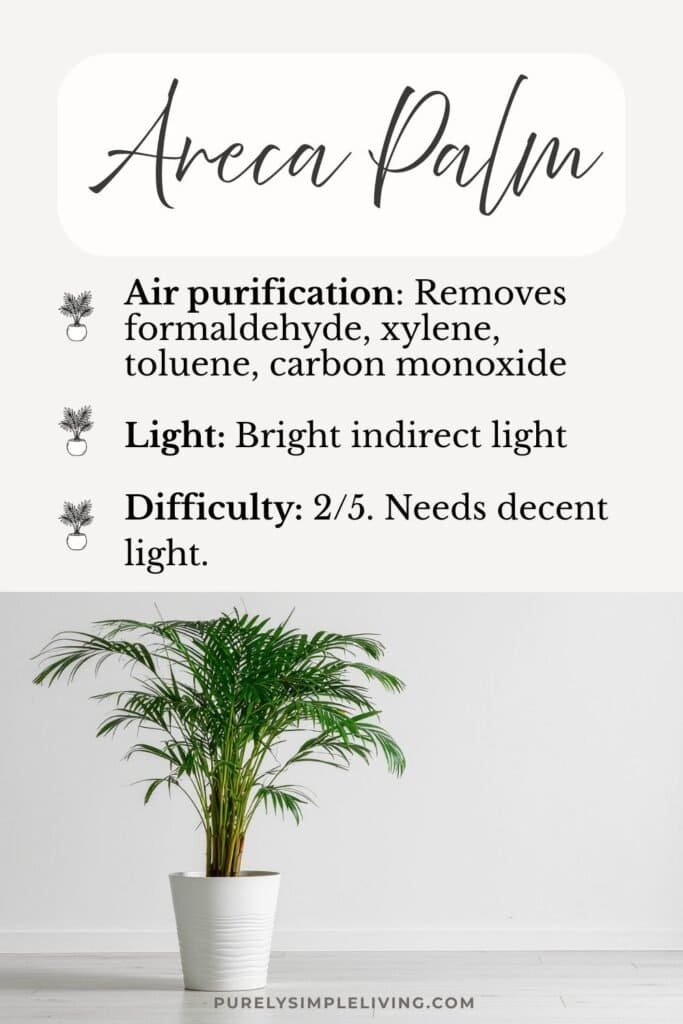
Air purification: Removes formaldehyde, xylene, toluene, carbon monoxide
Light: Bright indirect light
Water: When the top inch of soil is dry. Don’t let it sit in standing water.
Pet/kid safe: Yes.
Difficulty: 2/5. Needs decent light. Otherwise, very forgiving.
4. Bamboo Palm (Chamaedorea seifrizii)
Similar to the areca palm but more compact. Bamboo palms thrive in lower light conditions, making them better for offices and rooms without great windows. They also add moisture to the air, which helps with dry indoor environments.
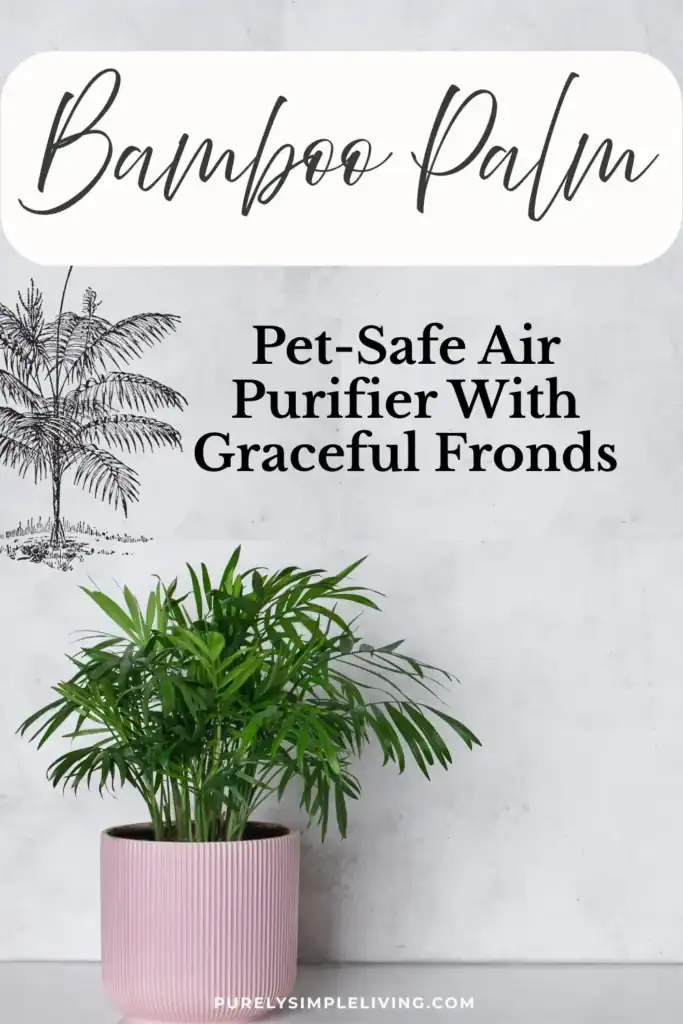
Air purification: Removes formaldehyde, benzene, trichloroethylene
Light: Low to bright indirect light (very adaptable)
Water: When the top inch of soil is dry
Pet/kid safe: Yes.
Difficulty: 1/5. One of the most tolerant palms for indoor growing.
Plants Help. Removing the Source Helps More.
Plants improve your air, but the biggest wins come from removing the toxins at the source. The free 7-Day Non-Toxic Home Kickstart shows you how, one room at a time.

Your 7-Day Kickstart To A Non-Toxic Home
One swap per day. No overhaul required. Just 7 small changes that make your home a healthier place to live.
No spam. Unsubscribe anytime.
Medium Care (Slightly More Attention)
5. Parlor Palm (Chamaedorea elegans)
A compact, elegant palm that rarely grows taller than 4 feet indoors. Parlor palms have been popular houseplants since the Victorian era for good reason: they handle low light, they’re beautiful, and they’re nearly indestructible.
Air purification: Removes formaldehyde, benzene
Light: Low to medium indirect light
Water: When soil is dry. Slightly drought-tolerant.
Pet/kid safe: Yes.
Difficulty: 2/5. Overwatering is the only common mistake.
6. Rubber Plant (Ficus elastica)
Bold, glossy leaves that make a statement in any room. Rubber plants are surprisingly low-maintenance for how dramatic they look. They’re effective at removing formaldehyde from indoor air, and their large leaves mean more surface area for gas exchange.
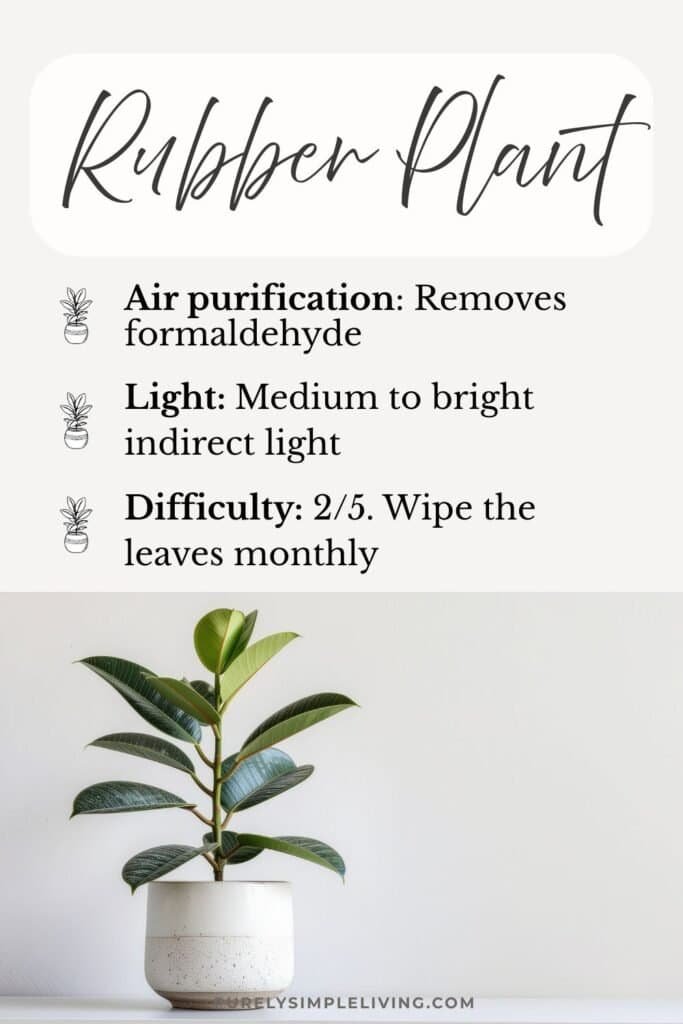
Air purification: Removes formaldehyde
Light: Medium to bright indirect light
Water: When the top inch of soil is dry. Every 1-2 weeks depending on conditions.
Pet/kid safe: Mildly irritating if ingested in large amounts, but non-toxic. Keep out of reach of persistent chewers.
Difficulty: 2/5. Wipe the leaves monthly to keep them glossy and functioning well.
7. Calathea (various species)
Calatheas are known for their stunning patterned leaves. Stripes, spots, purple undersides. They’re the most visually dramatic plants on this list. They also have a fun party trick: their leaves move throughout the day, folding up at night and opening in the morning.
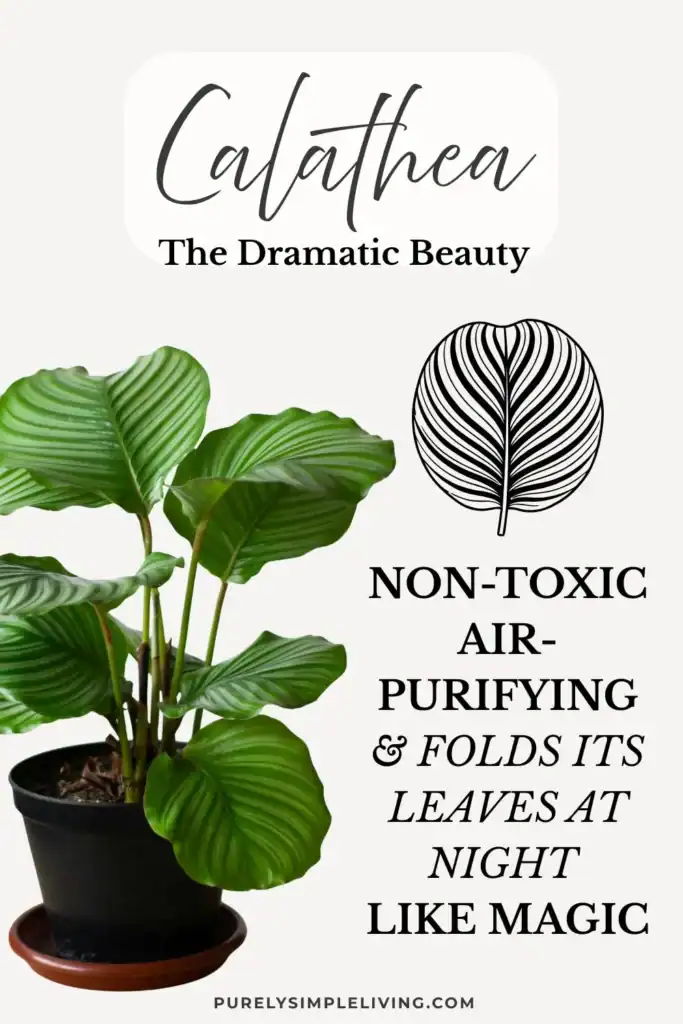
Air purification: General air cleaning (CO2 absorption, humidity release)
Light: Low to medium indirect light. No direct sun.
Water: Keep soil lightly moist. They prefer filtered or distilled water (sensitive to minerals in tap water).
Pet/kid safe: Yes. Completely non-toxic.
Difficulty: 3/5. The water sensitivity is the challenge. Use filtered water and they’re happy.
8. Prayer Plant (Maranta leuconeura)
Named for the way its leaves fold upward at night, like hands in prayer. Beautiful oval leaves with distinct markings. Prayer plants are closely related to calatheas and share the same dramatic leaf movements.
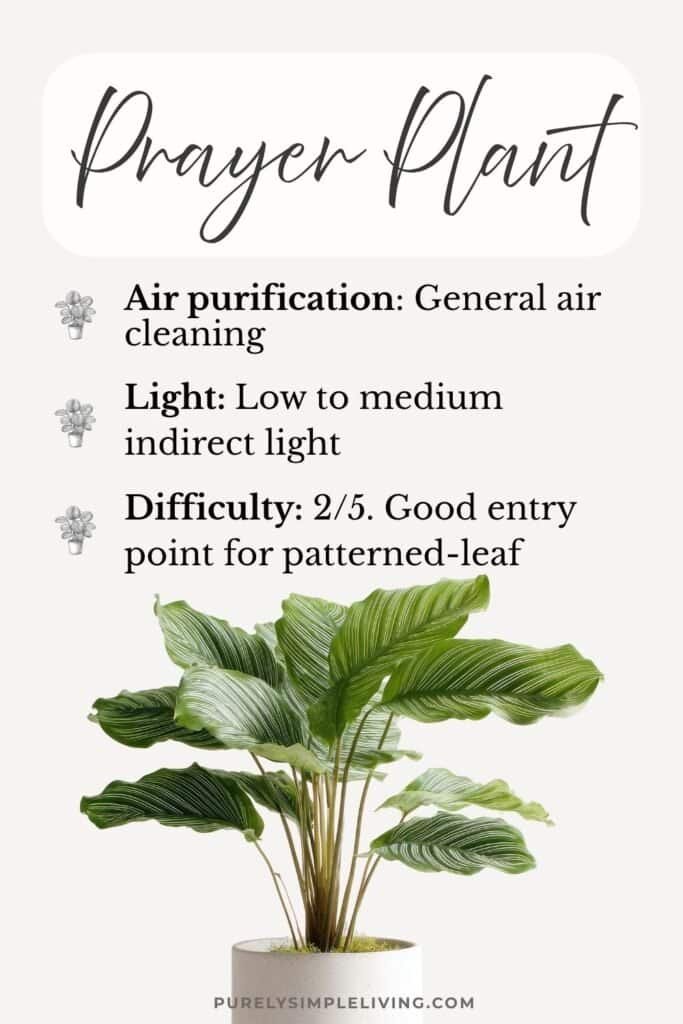
Air purification: General air cleaning
Light: Low to medium indirect light
Water: Keep soil lightly moist. Likes humidity.
Pet/kid safe: Yes.
Difficulty: 2/5. More forgiving than calathea. Good entry point for patterned-leaf plants.
Air Purification Powerhouses
9. Dwarf Date Palm (Phoenix roebelenii)
One of the top performers in the NASA study for removing indoor pollutants. The dwarf date palm is compact enough for indoor growing (4-6 feet) and adds a tropical feel to any space.
Air purification: Removes formaldehyde, xylene, toluene (top performer)
Light: Bright indirect light to some direct light
Water: Keep soil lightly moist. Doesn’t like drying out completely.
Pet/kid safe: Yes (though the fronds have small spines at the base, so placement matters with small kids).
Difficulty: 3/5. Needs consistent moisture and good light. Worth it for the air cleaning power.
10. Barberton Daisy (Gerbera jamesonii)
The only flowering plant on this list, and one of the best at removing benzene and trichloroethylene. Bright, cheerful blooms in red, pink, orange, and yellow. They bring color that no foliage plant can match.
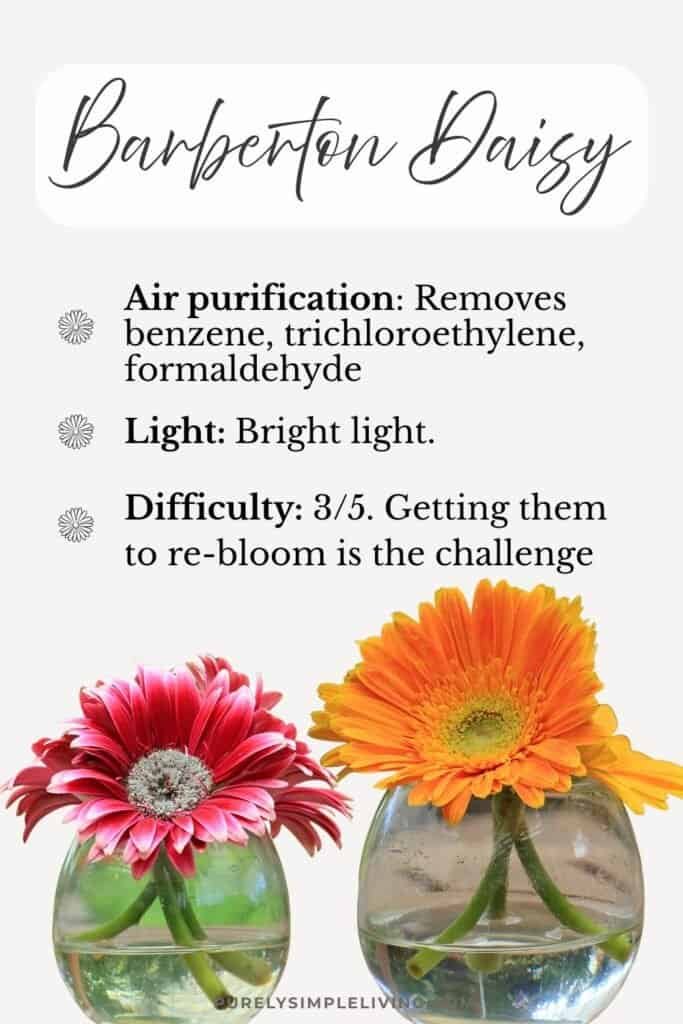
Air purification: Removes benzene, trichloroethylene, formaldehyde
Light: Bright light. Loves a sunny windowsill.
Water: When the top inch of soil is dry. Water at the base, not on the leaves.
Pet/kid safe: Yes. Non-toxic.
Difficulty: 3/5. Getting them to re-bloom is the challenge. They need good light and occasional feeding.
11. Cast Iron Plant (Aspidistra elatior)
Named for its toughness. Cast iron plants survive low light, drought, temperature swings, and general forgetfulness. They grow slowly but they last forever. A genuinely “set it and forget it” non toxic house plant.
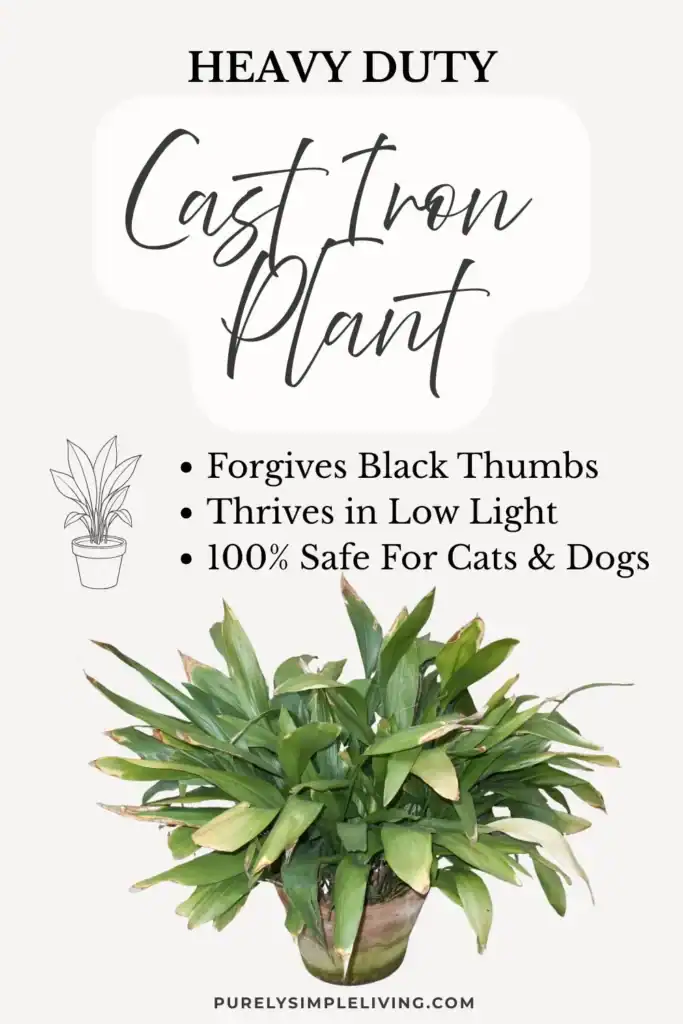
Air purification: Removes formaldehyde, general air cleaning
Light: Low light. Thrives in spots where other plants would struggle.
Water: When soil is dry. Very drought-tolerant.
Pet/kid safe: Yes.
Difficulty: 1/5. Possibly the hardest houseplant to kill.
12. Moth Orchid (Phalaenopsis)
Orchids seem fancy, but moth orchids are surprisingly easy. They release oxygen at night (most plants do this during the day), making them ideal bedroom plants. Their air purification is modest, but the nighttime oxygen release is unique on this list.
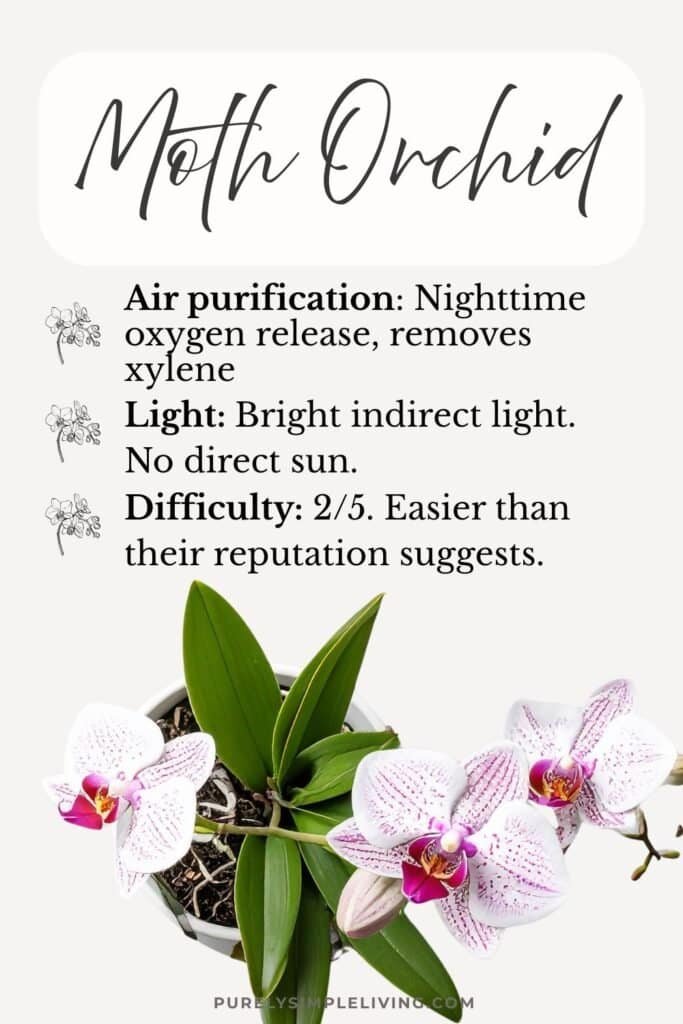
Air purification: Nighttime oxygen release, removes xylene
Light: Bright indirect light. No direct sun.
Water: Once a week. Ice cube method works (3 ice cubes on the bark, let them melt slowly).
Pet/kid safe: Yes. Completely non-toxic.
Difficulty: 2/5. Easier than their reputation suggests. The biggest mistake is overwatering.
Placement Guide (Where to Put What)
As an Amazon Associate, I earn from qualifying purchases. This means if you click an Amazon link and buy something, I may earn a small commission at no extra cost to you.
Living room: Areca palm, rubber plant, or parlor palm. Statement plants that fill space and purify the most trafficked room.
Bedroom: Moth orchid (nighttime oxygen), spider plant (formaldehyde from furniture), or prayer plant (low light tolerant for nightstands).
Bathroom: Boston fern. It loves the humidity from showers and removes the most common bathroom air pollutants.
Kitchen: Spider plant near windows. Cast iron plant in that dark corner where nothing else survives.
Office/desk: Small calathea or prayer plant. Low light tolerant, visually interesting enough to make a cubicle feel alive.
Nursery or kids’ room: Every plant on this list is safe, but spider plants and parlor palms are the best choices. They tolerate the most handling and won’t drop leaves that become choking hazards.
How Many Plants Do You Actually Need?
The general recommendation from the NASA study was 1 plant per 100 square feet of living space. For a 1,500 square foot home, that’s about 15 plants. You don’t need to buy them all at once.
Start with 3-4 in the rooms where you spend the most time (living room, bedroom). Add more over time. Propagate spider plant babies. Split ferns. Within a year, you’ll have a houseful of non toxic house plants and you’ll only have bought half of them.
The real benefit isn’t just cleaner air. It’s calmer rooms. Studies consistently show that indoor plants reduce stress, improve concentration, and make spaces feel more inviting. The air quality improvement is a bonus on top of that.
For more ways to improve the air in your home beyond plants, check out our guide on how to improve indoor air quality with 10 changes you can make this weekend.
Want the Easy Version?
Get the free 7-Day Non-Toxic Home Kickstart, one simple swap a day, delivered to your inbox.
Your 7-Day Kickstart To A Non-Toxic Home
One swap per day. No overhaul required. Just 7 small changes that make your home a healthier place to live.
No spam. Unsubscribe anytime.