Non-Toxic Deodorant: 7 Brands That Actually Work + One DIY Recipe That Surprised Me
I switched to non-toxic deodorant three different times before I found one that actually worked.
The first one was a baking soda stick that gave me an underarm rash so bad I thought I’d developed a sudden allergy to my own body. The second was a “natural” gel that smelled fine for about 90 minutes and then turned into something my husband described as “old gym bag.” The third was a $24 boutique cream that came in a cute glass jar and did absolutely nothing.
By the fourth try, I was annoyed. By the fifth, I started suspecting the whole non-toxic deodorant world was lying to me.
It turns out the problem wasn’t the category. It was that I was buying based on Instagram aesthetics instead of how the actual product was formulated. Once I figured out which ingredients made a non-toxic deodorant work and which ones were just there for the label, the search got a lot shorter.
This post is the cheat sheet I wish I’d had three years ago. What’s actually in conventional deodorant, what to look for in a non-toxic deodorant, the seven brands that have held up in real life, and one DIY recipe I started making after my second baby that genuinely changed the game.
Non-toxic deodorant is deodorant formulated without aluminum, parabens, synthetic fragrances, or phthalates. Most use baking soda, magnesium hydroxide, zinc, or arrowroot to neutralize odor without the ingredients linked to hormone disruption in conventional antiperspirants.
Why Most People Switch to Non-Toxic Deodorant
The biggest reason is aluminum.
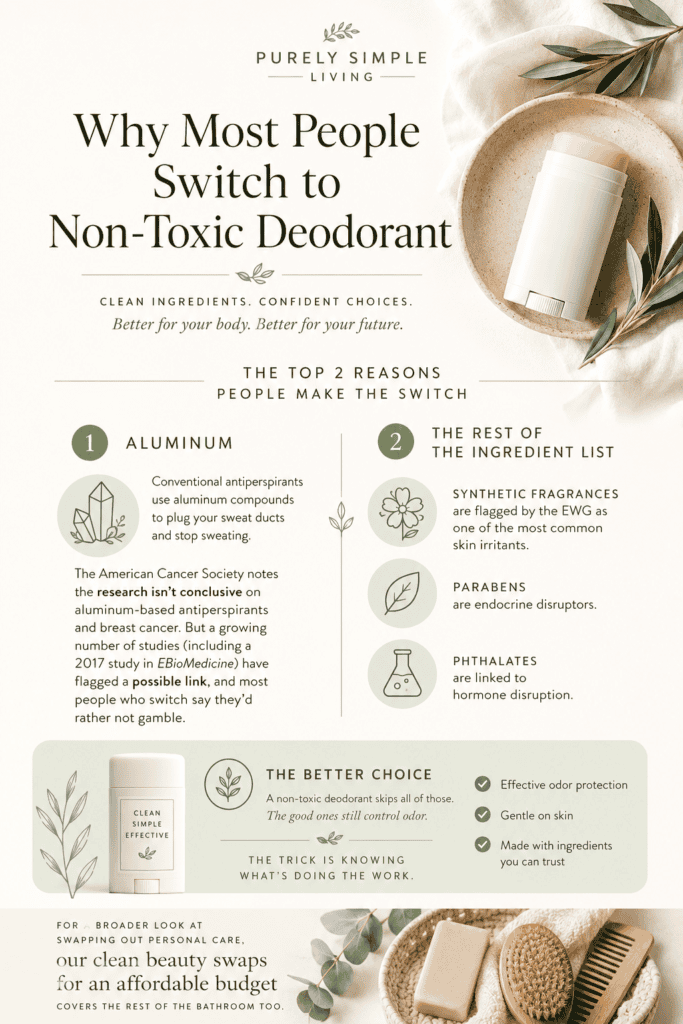
Conventional antiperspirants use aluminum compounds to plug your sweat ducts and stop sweating. The American Cancer Society notes the research isn’t conclusive on aluminum-based antiperspirants and breast cancer. But a growing number of studies (including a 2017 study in EBioMedicine) have flagged a possible link, and most people who switch say they’d rather not gamble.
The other reason is the rest of the ingredient list. Synthetic fragrances are flagged by the EWG as one of the most common skin irritants. Parabens are endocrine disruptors. Phthalates are linked to hormone disruption.
A non-toxic deodorant skips all of those. The good ones still control odor. The trick is knowing what’s doing the work.
For a broader look at swapping out personal care, our clean beauty swaps for an affordable budget covers the rest of the bathroom too.
Deodorant vs. Antiperspirant (This Matters)
As an Amazon Associate, I earn from qualifying purchases. This means if you click an Amazon link and buy something, I may earn a small commission at no extra cost to you.
This was the thing nobody told me clearly when I started.
Antiperspirant stops you from sweating. Almost every “antiperspirant” product on the shelf uses aluminum to do this. Almost no non-toxic deodorant is technically an antiperspirant.
Deodorant lets you sweat normally and neutralizes the odor that develops when sweat hits the bacteria on your skin.
When you switch to non-toxic deodorant, you’re switching to a deodorant. You will still sweat. That’s not a flaw. Sweating is how your body cools itself and clears out waste.
The first two weeks of the switch are the worst, because your underarms have built up a film of aluminum and your sweat glands are basically learning to function again. By week three, most people level out and the smell management becomes much easier.
What to Look For in a Non-Toxic Deodorant
Here’s what makes a non-toxic deodorant actually work.
Active Odor Neutralizers (the work-doers)
- Baking soda — neutralizes acidic compounds in sweat. Works fast. Can irritate sensitive skin in higher concentrations.
- Magnesium hydroxide — same job as baking soda but gentler. Best swap if you broke out from a baking soda formula.
- Zinc oxide or zinc ricinoleate — binds to odor-causing compounds. Often used alongside baking soda or magnesium.
- Arrowroot powder or kaolin clay — absorbs moisture without aluminum. Helps the formula dry down and stay matte.
Helpful Supporting Ingredients
- Coconut oil — antibacterial, soothes skin, melts smoothly into the underarm.
- Shea butter or cocoa butter — adds slip and conditions skin.
- Beeswax or candelilla wax — solidifies stick formulas.
- Probiotics — newer addition, supports a healthy skin microbiome.
Red Flags on the Label
If a “natural deodorant” lists any of the following, it’s basically a regular deodorant in green packaging.
- Aluminum chlorohydrate or aluminum zirconium
- Parabens (methylparaben, propylparaben, etc.)
- “Fragrance” or “parfum” without a specific essential oil listed
- Phthalates (DEHP, DBP, BBP)
- Triclosan
- Propylene glycol
7 Non-Toxic Deodorant Brands That Have Held Up
I’ve tested somewhere around 20 non-toxic deodorant brands over the past four years (some sent by readers, most bought by me). These seven are the ones I’d actually buy again.
1. Native (the easy starter)
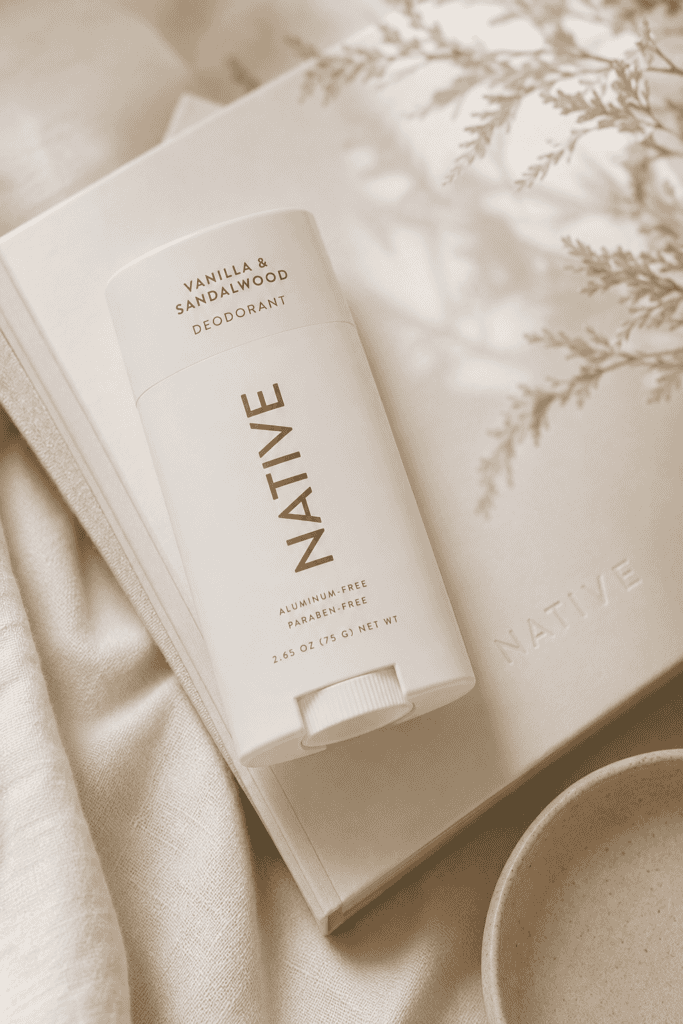
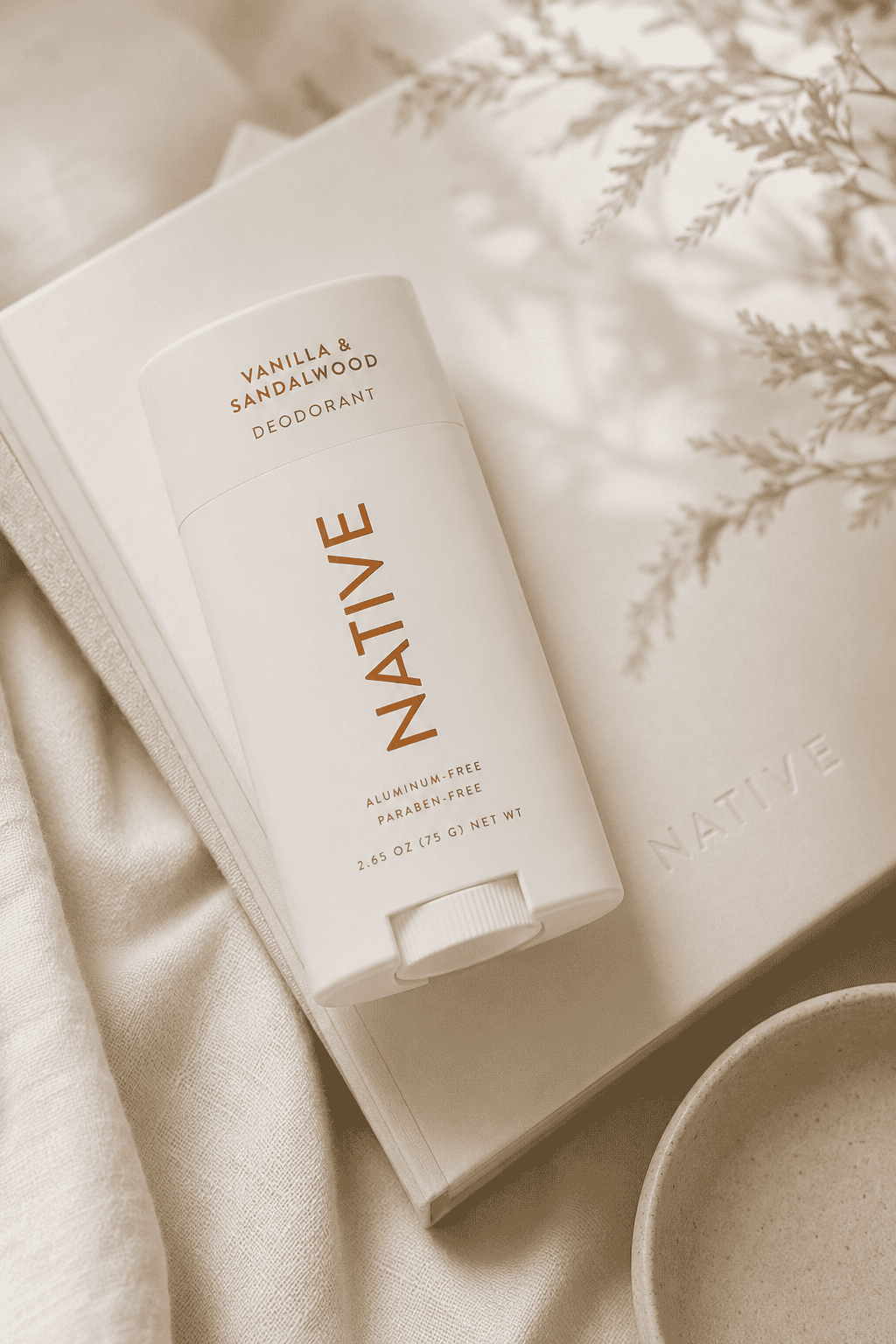
Native deodorant is sold at Target, runs about $13, and uses baking soda or a baking-soda-free version (look for “sensitive” on the label). The coconut and vanilla scent is the most popular for a reason. It’s the gateway non-toxic deodorant for most people.
Best for: someone who wants a non-toxic deodorant they can buy at Target without thinking about it.
2. Schmidt’s (drugstore-friendly)
Schmidt’s uses magnesium-based formulas and is one of the few clean brands you can find at most drugstores. The “Sensitive Skin” line is a winner for first-time switchers. About $9 a stick.
Best for: drugstore convenience plus a sensitive skin option.
3. Each & Every (subscription-friendly)
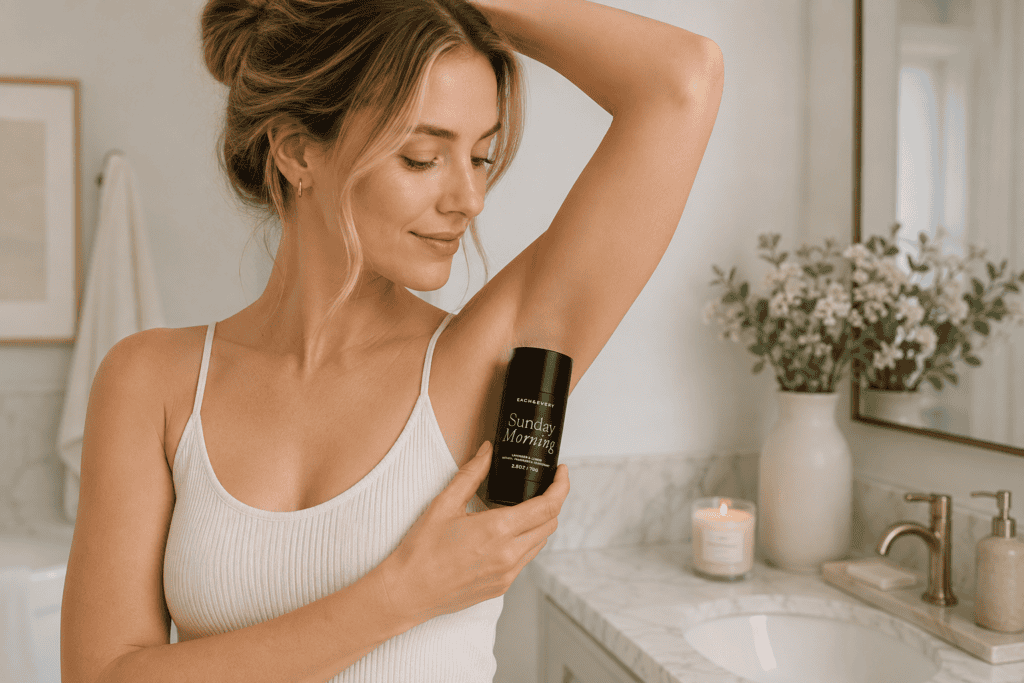
Each & Every uses coconut oil, magnesium, and arrowroot. The lavender lemon scent is one of the best in the category. They also have a subscription option that drops the price to about $10 a stick.
Best for: someone who wants a clean, plant-based formula and a hands-off refill schedule.
4. Routine (cream in a jar)
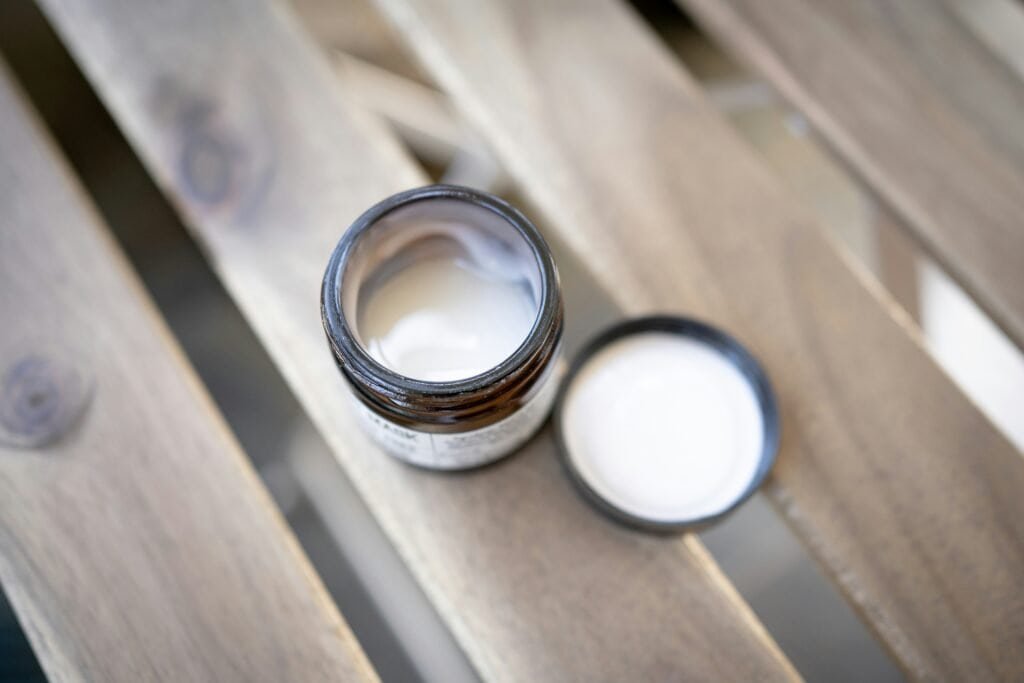
Routine is a Canadian brand that makes a deodorant cream you scoop with your fingers and rub in. Sounds weird. Works incredibly well. Their “Sweet Bo Peep” scent has a cult following. About $19 a jar but lasts 4 to 5 months.
Best for: anyone who’s been frustrated by sticks and wants to try a cream format.
5. Salt & Stone (extra strength 48 hr protection)
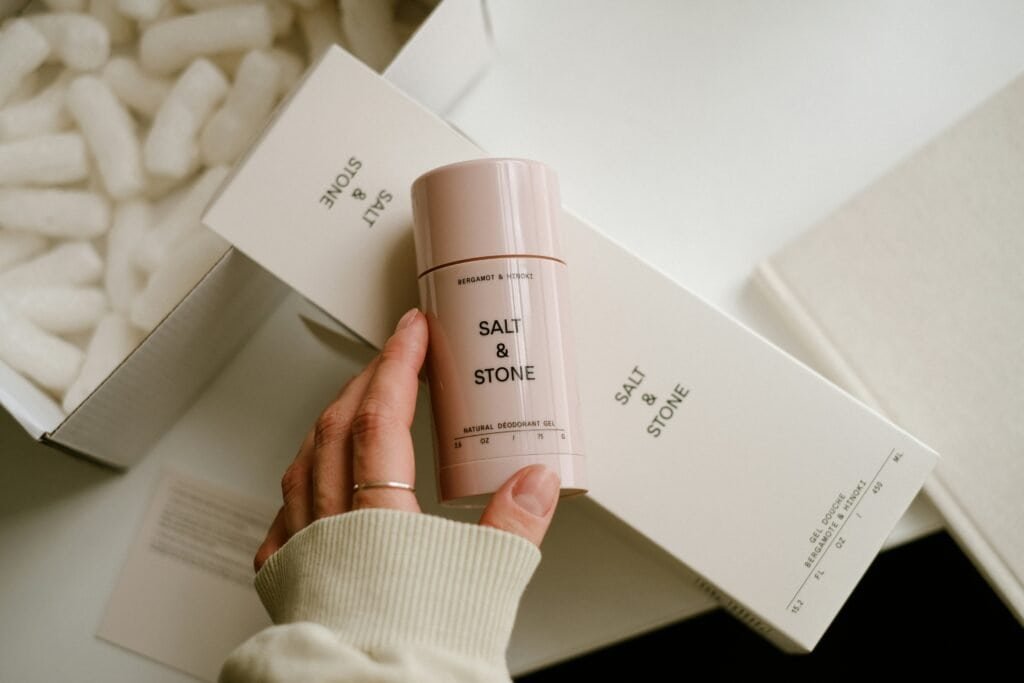
Salt & Stone is for those of us who sweat! It’s loaded with prebiotics to help neutralize the order and seaweed extracts for to keep your skin moisturizing. I LOVE the scents of this brand. $17-$20
Best for: anyone who works out a lot or is very active.
6. Tom’s of Maine (the OG)
Tom’s has been making natural deodorant since the 1970s and is the easiest one to find at any pharmacy in the country. Look for the aluminum-free line specifically (some Tom’s products are still antiperspirants). About $6.
Best for: budget shoppers who want non-toxic deodorant from a brand that’s been doing this for 50 years.

Your 7-Day Kickstart To A Non-Toxic Home
One swap per day. No overhaul required. Just 7 small changes that make your home a healthier place to live.
No spam. Unsubscribe anytime.
7. Primally Pure (the classic)
Primally Pure makes a tallow-and-essential-oil formula that’s the most go-to non-toxic deodorant I’ve used. About $14, organic, and the lavender scent is gentle enough to be the only fragrance you wear all day. Slightly more high-maintenance than a Native stick.
Best for: someone willing to spend a little more for a premium clean formula.
One DIY Non-Toxic Deodorant Recipe That Actually Worked

After my second baby, I went through a phase of making everything from scratch. Most of the recipes I tried were terrible. This one became my go-to.
What You’ll Need
- 3 tablespoons coconut oil (room temperature, soft enough to mix)
- 2 tablespoons arrowroot powder (or cornstarch)
- 1 tablespoon shea butter
- 10 drops lavender essential oil
- 5 drops tea tree essential oil
- A small glass jar (4 oz works perfectly)
How to Make It
- Soften the coconut oil and shea butter together in a double boiler or 30 seconds in the microwave. Don’t fully melt it. You want a soft paste.
- Stir in the arrowroot powder until smooth.
- Add the essential oils and stir again.
- Spoon into a clean glass jar. Let it set on the counter for about an hour, or pop it in the fridge for 15 minutes.
- Apply with clean fingers. About a pea-sized amount per underarm.
How Long It Lasts
This recipe makes enough for about 4 to 6 months of daily use. Store at room temperature. If your house gets above 76°F, the coconut oil will soften, but it still works fine.
Why It Works
Baking soda neutralizes odor. Arrowroot absorbs moisture. Coconut oil is antibacterial and keeps the formula from feeling crumbly. Shea butter conditions the skin so the baking soda doesn’t irritate. Tea tree is naturally antibacterial. Lavender smells like a calmer person than I usually am.
It’s not glamorous. It costs about $4 to make a 4-month supply. And it works better than half the boutique non-toxic deodorant brands I’d paid $24 for.
For more on what to put back in your bathroom after taking the conventional stuff out, check our non-toxic skincare and bathroom swaps guide.
What to Expect When You Switch
A few things that surprised me, and that I want you to know up front.
The first two weeks are rough. Your underarms are adjusting. You might smell more than you’re used to. Shower more often, change shirts midday if you need to, and ride it out. Most people level off by day 14.
You’ll start sweating again. This is normal and good. Antiperspirants block your sweat ducts, which is what your body uses to cool down and detox. You’ll get used to it.
Reapplication helps. Non-toxic deodorant generally needs a second swipe in the afternoon, especially if you’re working out or it’s hot. Keep one in your bag.
Your scent will change. As your microbiome shifts back to baseline, you might notice you actually smell less than you did on conventional deodorant. That was the most surprising thing for me.
For more on switching the rest of your fragrance routine off conventional products, check out our guide to non-toxic perfume and clean fragrances.
Frequently Asked Questions
Does non-toxic deodorant stop you from sweating? No. It controls odor while letting you sweat normally. If you want to stop sweating entirely, you’ll have to use an antiperspirant, which means aluminum.
Why does my non-toxic deodorant give me a rash? It’s almost always the baking soda. Switch to a magnesium-based formula like Megababe or Each & Every and the rash usually clears up within a week.
How often should I reapply? Most non-toxic deodorant lasts 6 to 8 hours. Reapply once midday if you’re active or it’s warm.
Can I use non-toxic deodorant during pregnancy? Yes, and most people who are paying attention to ingredients during pregnancy switch then. Just avoid clary sage essential oil in the first two trimesters.
Will my clothes still get yellow stains? Less than with antiperspirants. The yellow stains are mostly from aluminum reacting with sweat. Without aluminum, you’ll see far less staining over time.
If you want a step-by-step plan for swapping out the rest of your bathroom (not just deodorant), grab the free 7-Day Kickstart. One swap a day for a week, no overhaul.
There You Have It!
Non-toxic deodorant doesn’t have to be a science project. Pick a brand from the list above, give it two weeks, and adjust if it doesn’t work for you. If you want to try the DIY, the recipe takes five minutes to make and lasts months.
The smell question is solvable. The aluminum question is a yes from us. The rest is just finding the formula that fits your body.
What non-toxic deodorant brand worked for you (or didn’t)? Drop it in the comments. I update this post when I find new winners and would love to hear what’s worked for other people.
—
Your 7-Day Kickstart To A Non-Toxic Home
One swap per day. No overhaul required. Just 7 small changes that make your home a healthier place to live.
No spam. Unsubscribe anytime.