9 Non Toxic Skincare & Bathroom Swaps You Can Make This Week
Your bathroom cabinet is basically a chemistry experiment.
Flip over any bottle in there right now. Shampoo, body wash, face moisturizer. Count the ingredients you can actually pronounce. We’ll wait.
That’s the problem with most non toxic skincare conversations. People talk about “clean beauty” like it’s complicated. It’s not. (Here are 11 affordable clean beauty swaps if you want to start there.) The hard part is realizing how much junk is hiding in the products you already use. Once you see it, the swaps are honestly pretty straightforward.
Here’s what we recommend changing first, what the labels actually mean, and which products are worth your money.
The Ingredients You’re Trying to Avoid (And Why)
Quick reality check before the swap list. Not every chemical-sounding ingredient is harmful. Water is dihydrogen monoxide, and nobody’s panicking about that. The goal isn’t zero chemicals. It’s fewer of the ones that research keeps flagging.
Here are the big ones.
Parabens (methylparaben, propylparaben, butylparaben). Preservatives found in roughly 85% of personal care products. They mimic estrogen in your body. The European Commission has restricted several types. The U.S. hasn’t caught up yet.
Phthalates. Usually hiding behind the word “fragrance” on the label. They’re plasticizers that mess with hormones. You won’t see “phthalates” listed because companies aren’t required to disclose individual fragrance components. Fun, right?
Sodium Lauryl Sulfate (SLS) and Sodium Laureth Sulfate (SLES). These make products foam and bubble. That satisfying lather in your shampoo? SLS. It strips natural oils from your skin and hair, which is why people with sensitive skin or eczema often react to conventional products. Not everyone needs to avoid it. But if your skin is angry, this is suspect number one.
Synthetic Fragrance. The word “fragrance” on a label can represent any combination of 3,000+ chemical compounds. Companies consider their fragrance formulas trade secrets, so they don’t have to tell you what’s in them. Some of those compounds are endocrine disruptors. Some aren’t. You literally cannot know which ones you’re getting.
Formaldehyde releasers (DMDM hydantoin, quaternium-15, imidazolidinyl urea). Preservatives that slowly release formaldehyde. Yes, the embalming chemical. They’re more common than you’d think. Check your shampoo.
How to Read a Bathroom Product Label (30-Second Version)
As an Amazon Associate, I earn from qualifying purchases. This means if you click an Amazon link and buy something, I may earn a small commission at no extra cost to you.
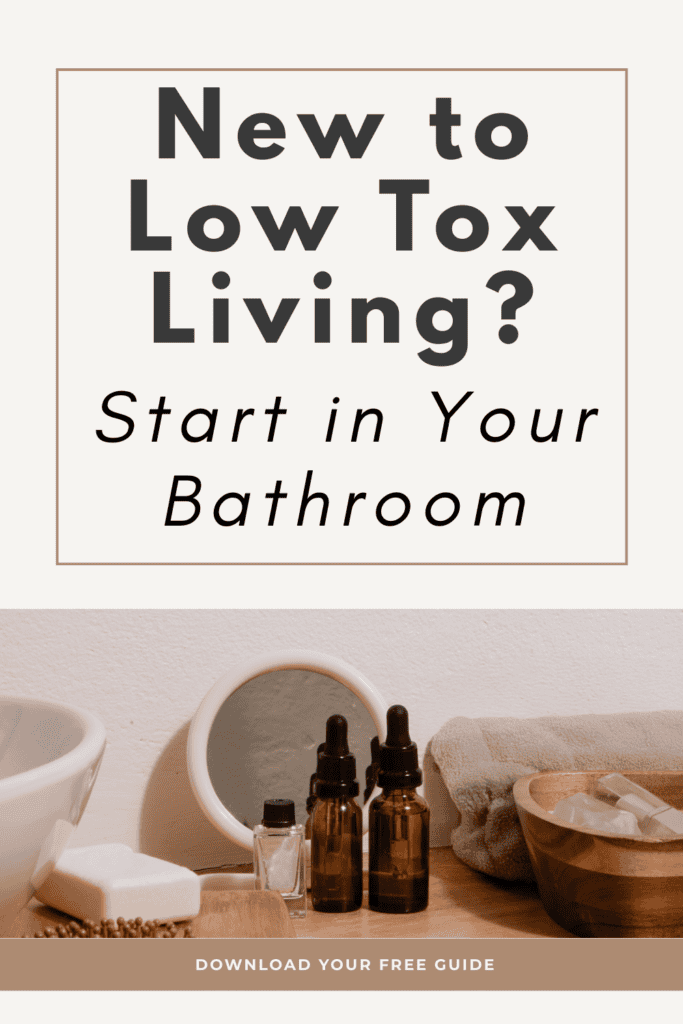
You don’t need a chemistry degree. Seriously.
Step one: Look at the first five ingredients. Those make up the bulk of the product. If something sketchy appears at position 3, that’s a bigger deal than if it appears at position 22.
Step two: Check for the word “fragrance” or “parfum.” If it’s there and the product isn’t scented with essential oils or specifically listed botanicals, that’s your synthetic fragrance flag.
Step three: Use the EWG Skin Deep database. Scan the barcode or search the product name. It rates products on a 1-10 scale based on ingredient hazard data. Not perfect, but a solid quick check. We use it constantly.
That’s it. Three steps. Takes 30 seconds per product.
The Non Toxic Skincare & Personal Care Swaps
Alright. Here’s what to swap, in order of impact.
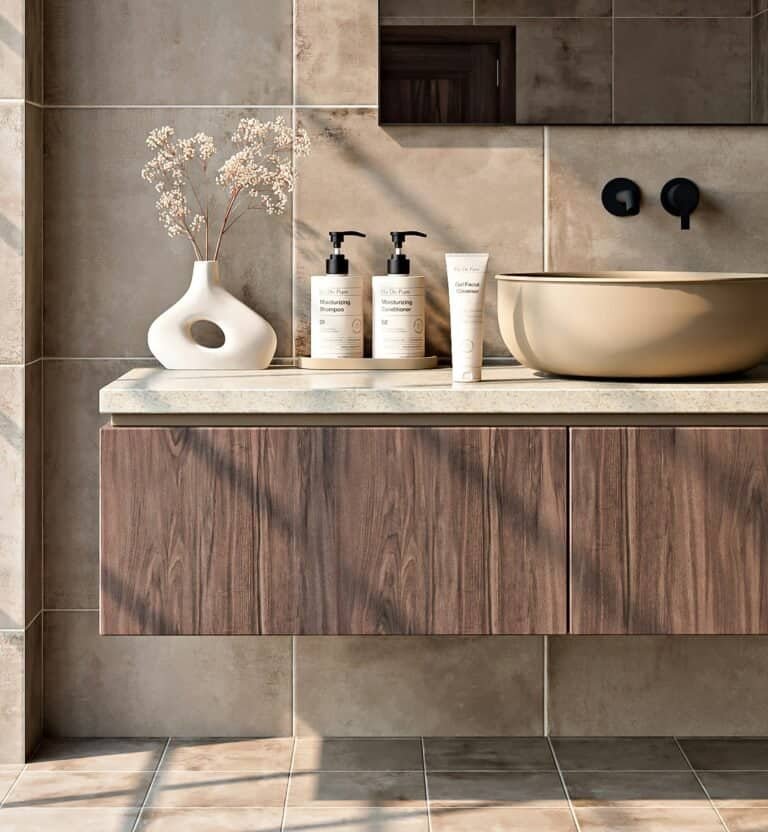
Body Wash
Your skin is your largest organ. It absorbs a percentage of whatever you put on it. Non toxic body wash hits most of your body, every single day. Start here.
What to grab: Dr. Bronner’s Unscented Castile Soap works for basically everything (body wash, hand soap, even cleaning). One bottle, a dozen uses. Puracy Natural Body Wash is plant-based, gentle, and has a light natural scent. Alaffia Everyday Shea Body Wash is affordable and uses fair-trade shea butter.
Budget move: Dr. Bronner’s 32oz bottle costs about $16 and lasts months because you dilute it. Probably cheaper than what you’re using now.
Non Toxic Shampoo and Conditioner
Non toxic shampoo and conditioner is one of those swaps where people worry it won’t work as well. Fair concern. Some natural shampoos are terrible. We’ve tried the ones that leave your hair feeling like straw. Not recommending those.
What actually works: Attitude makes genuinely good shampoo bars (less plastic, lasts longer, travels well). Acure has solid liquid options at a reasonable price point, sold at most Target and Whole Foods locations. Ethique bars are concentrated, plastic-free, and they actually lather.
The adjustment period: When switching from conventional to non toxic shampoo and conditioner, your hair might feel different for a week or two. That’s your scalp recalibrating oil production after years of being stripped by sulfates. Push through it. Week three is usually the turning point.
Face Moisturizer
This one sits on your face all day. Or all night. Whatever you absorb through facial skin enters your bloodstream faster than almost anywhere else on your body.
Simple swaps: Cocokind makes affordable non toxic skincare that you can find at Target. Their daily SPF moisturizer does double duty. Acure Radically Rejuvenating line is a solid mid-range option. Primally Pure is pricier but incredible if your skin is sensitive or reactive.
The free option: Cold-pressed jojoba oil. Closest thing to your skin’s natural sebum. A bottle costs $10 and lasts forever. Some people use nothing else. We’re not quite that minimal, but it’s worth trying.
Deodorant
Let’s be honest. Natural deodorant has a reputation problem. And some of it is earned. But the good ones have gotten really good in the last few years.
The keepers: Native is the easiest transition from conventional deodorant. Widely available, familiar feel, actually works. Primally Pure charcoal deodorant is our favorite if you want something with minimal ingredients. Lume works on basically any body part (seriously, their whole angle).
The detox period: Switching to natural deodorant usually involves 1-2 weeks where you sweat more than normal. Your body is literally purging aluminum compounds from conventional antiperspirants. It passes. Wear dark shirts for two weeks. You’ll be fine.
Toothpaste
Conventional toothpaste often contains SLS (which is why some people get canker sores), artificial sweeteners, and triclosan. Your mouth’s mucous membranes absorb substances incredibly fast.
Solid options: Hello activated charcoal or sensitivity toothpaste is probably the easiest swap because it feels normal. Burt’s Bees fluoride toothpaste is available everywhere and costs about the same as conventional. RiseWell uses hydroxyapatite instead of fluoride, which is the standard in Japan and gaining research support.
Quick note on fluoride: This one’s genuinely debatable. Some non toxic skincare advocates avoid it entirely. Some dentists insist on it. We’re not going to tell you what to do here. Both hydroxyapatite and fluoride toothpaste can be non-toxic. Pick based on your comfort level and your dentist’s input.
Bathroom Cleaning Products
Since we’re already in the bathroom, let’s tackle what you clean it with. Conventional bathroom cleaners are some of the harshest products in your house.
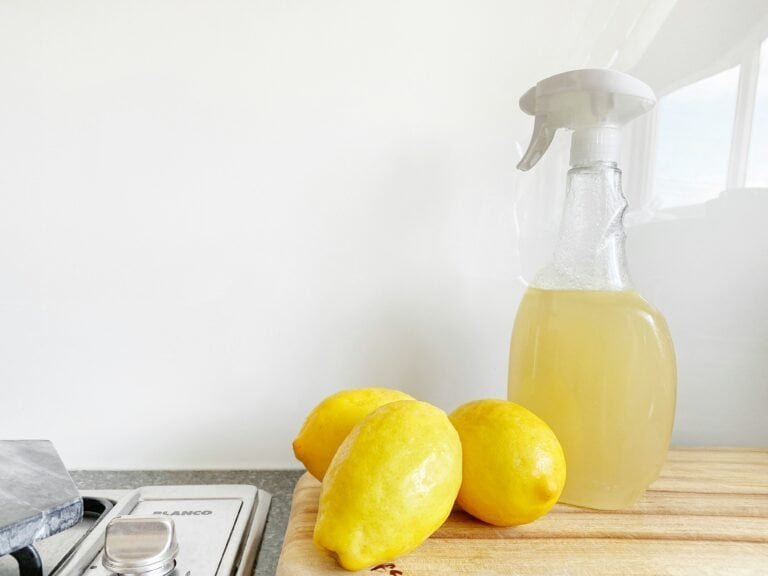
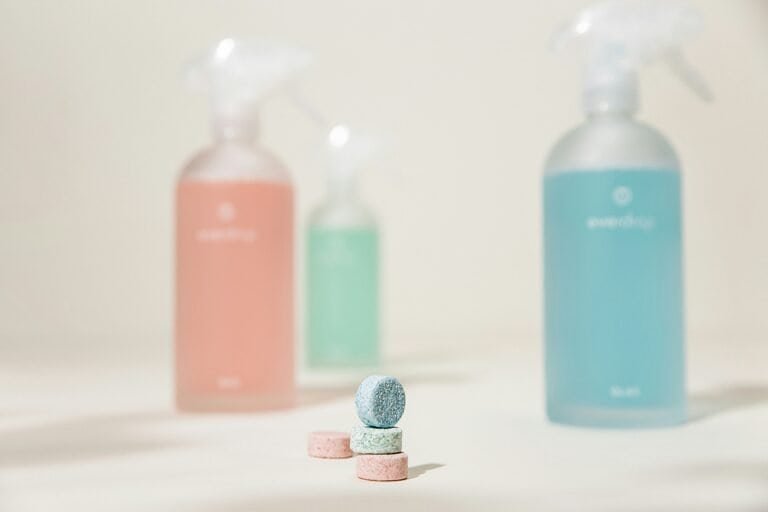
The swap: Branch Basics concentrate mixed to bathroom strength handles soap scum and grime without toxic fumes. A baking soda paste (just baking soda and water) scrubs tubs and tile better than most commercial cleaners. No joke. White vinegar and water in a spray bottle handles mirrors and glass.
What to skip: Anything with chlorine bleach, ammonia, or “antibacterial” on the label in your everyday cleaning. Those are overkill for regular maintenance and the residue lingers on surfaces you touch.
Your Bathroom Is Just One Room
Your skincare and bathroom products are covered. But your kitchen, bedroom, and cleaning supplies all have their own set of swaps worth making. The 7-Day Non-Toxic Kickstart gives you one simple change a day.
The “Flip Over and Check” Challenge
Here’s what we actually want you to do this week. Not buy anything. Not throw anything away.
Go into your bathroom. Pick up five products. Flip them over. Look at the first five ingredients of each one. Run them through EWG Skin Deep.
That’s it. Just look.
Because once you know what’s in the stuff you’re already using, the decision to swap becomes obvious. No guilt trip needed. No expensive haul. Just information.
Then pick one product. The one that scored the worst. Replace it when it runs out. One swap. That’s your Week 2.
What Comes Next
Your bathroom is cleaner. Your kitchen is handled (if you followed our non-toxic kitchen guide). Next up: the cleaning products you use everywhere else. Because that all-purpose spray under your sink? It probably deserves a second look. For the full room-by-room breakdown, start with 25 non-toxic swaps for every room in your home.
Save This For Later
Grab the Printable
Want a printable clean beauty cheat sheet? Grab the Clean Beauty Swap Guide.
Want the Easy Version?
Get the free 7-Day Non-Toxic Home Kickstart, one simple swap a day, delivered to your inbox.