The Best Water Filters for Your Home (Tap, Pitcher, and Under-Sink)
You probably assume your tap water is fine.
We did too. Then we looked up our zip code on EWG’s Tap Water Database and found 12 contaminants above health guidelines. Our water “passed” federal standards. It still contained PFAS, chlorine byproducts, and trace levels of lead. Legally compliant and genuinely concerning are not mutually exclusive.
This is the reality for most municipal water in the U.S. The EPA regulates about 90 contaminants. There are over 700 that have been detected in tap water. The standards haven’t been meaningfully updated in decades. Your water can pass every federal test and still contain things you don’t want to drink.
The good news: a water filter home setup doesn’t have to be complicated or expensive. A $25 pitcher can remove a surprising amount. A $150 countertop system can handle nearly everything. And once it’s set up, you don’t think about it again.
Here’s what’s actually in your water, how to check, and which filters are worth buying at every price point.
What’s Actually in Tap Water
Before we talk filters, it helps to know what you’re filtering out. These are the most common contaminants in U.S. municipal water.
Chlorine and chloramine. Added intentionally to kill bacteria during treatment. Effective for that purpose, but you’re still drinking it. Chlorine reacts with organic matter in pipes to form disinfection byproducts (DBPs), some of which are linked to health concerns with long-term exposure.
Lead. Doesn’t come from the treatment plant. Comes from old pipes, solder, and fixtures between the plant and your faucet. Even “lead-free” fixtures can contain small amounts. There is no safe level of lead in drinking water according to the EPA.
PFAS (forever chemicals). Synthetic chemicals used in nonstick coatings, food packaging, and firefighting foam. They don’t break down in the environment or in your body. Found in water systems across the country. The EPA set new limits in 2024, but enforcement is still catching up.
Microplastics. Tiny plastic particles from packaging, textiles, and industrial runoff. Present in most tap water systems. Research on health effects is ongoing, but most people would rather not drink plastic particles while we wait for conclusions.
Nitrates, pesticides, pharmaceuticals. Agricultural runoff, industrial discharge, and medications flushed down drains. Levels vary dramatically by region. Rural well water often has different contamination profiles than city water.
None of this means your water is dangerous to drink today. It means filtration is a reasonable, practical step toward reducing long-term exposure. Same logic as choosing non toxic home swaps for your bedroom or switching to cleaner cleaning products. Small reductions add up.
How to Check Your Local Water
As an Amazon Associate, I earn from qualifying purchases. This means if you click an Amazon link and buy something, I may earn a small commission at no extra cost to you.
Two free tools. Five minutes.
Step 1: Go to EWG’s Tap Water Database. Enter your zip code. It shows every contaminant detected in your local water, how much was found, and how that compares to health guidelines (not just legal limits). The legal limit and the health guideline are often very different numbers.
Step 2: Find your utility’s Consumer Confidence Report (CCR). Every water utility is required to publish one annually. Google your city name plus “water quality report.” It lists everything detected and whether levels exceeded EPA maximums. Compare it to EWG’s data for the full picture.
If you’re on well water, neither tool applies. You’ll need to test your water directly. Companies like Tap Score offer mail-in test kits ($150-$300) that analyze for hundreds of contaminants and recommend specific filters based on your results.
Knowing what’s in your water tells you exactly what kind of water filter home setup you actually need. Someone with high chlorine but no lead needs a different filter than someone with PFAS contamination.
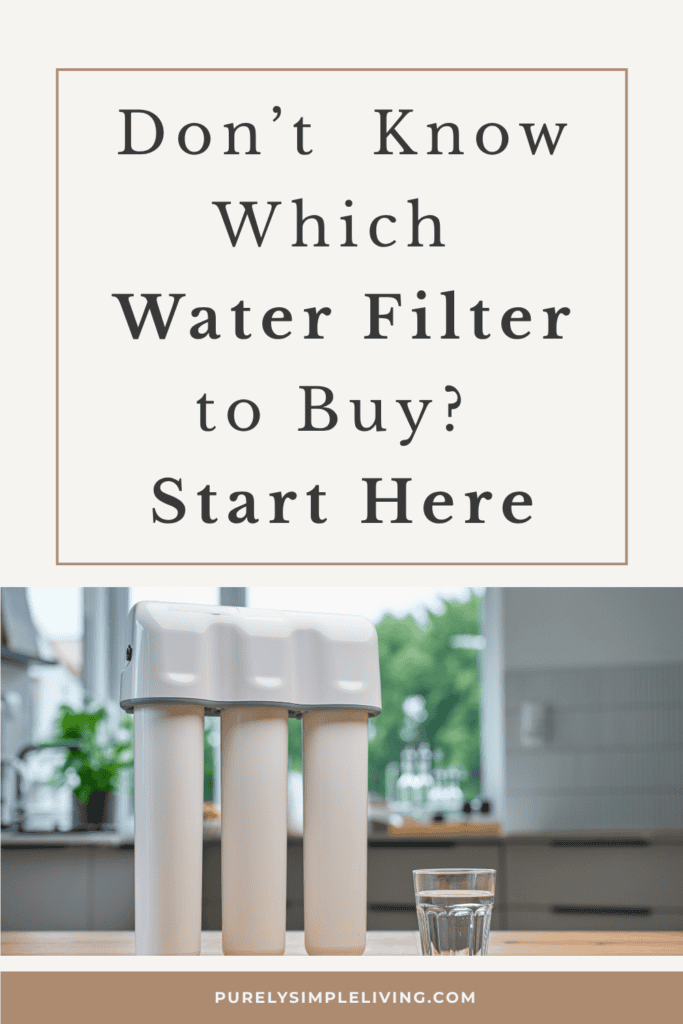
Your water is just one piece of the puzzle. The free 7-Day Non-Toxic Home Kickstart helps you tackle the rest of your home, one room at a time.
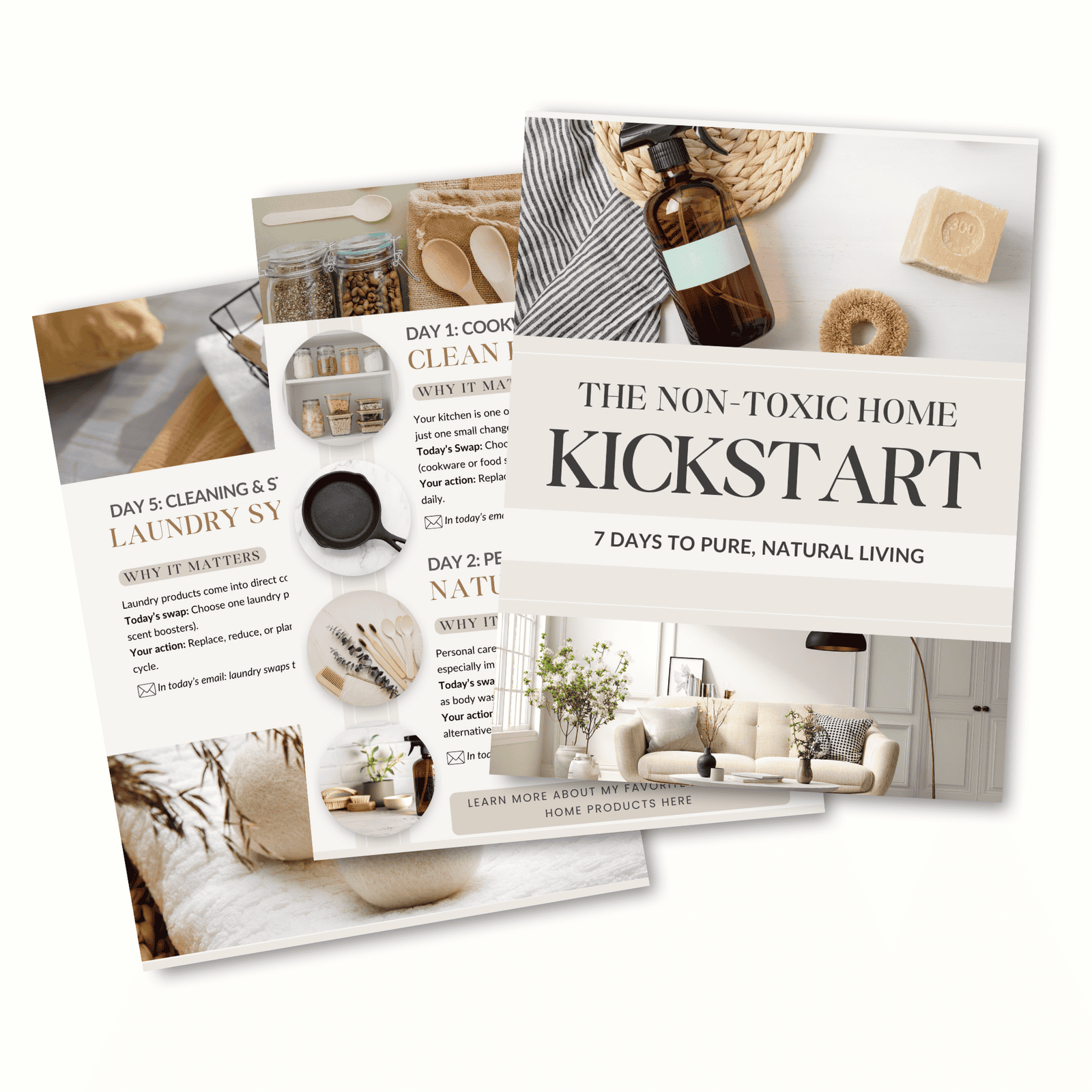
Your 7-Day Kickstart To A Non-Toxic Home
One swap per day. No overhaul required. Just 7 small changes that make your home a healthier place to live.
No spam. Unsubscribe anytime.
Why I’m the one telling you this
When we lived in a fluoridated town and I was pregnant with my third, I talked my husband into a Pelican whole-house filter. Over $1,000, plus install. He pushed back. I didn’t care. Water was the hill I’d die on.
Then 2020 happened. We moved to the country and ended up on a well. The Pelican we’d just installed was built for public water with fluoride, so we gave it to my sister-in-law.
I’m not mad about the money. Water matters that much to me, and her family got cleaner water out of it. That’s a win.
If you’re on public water right now, here’s what I wish someone had laid out for me before we made our decision.
Filter Types Compared
Not all filters do the same thing. Here’s what each type removes, what it costs, and who it’s best for.
Pitcher Filters
How they work: Pour water through a gravity-fed filter cartridge. Activated carbon and sometimes ion exchange resin remove contaminants as water passes through.
What they remove: Chlorine, some heavy metals, some VOCs. Basic models reduce taste and odor. Better models (like Clearly Filtered) remove PFAS, lead, and dozens more.
Cost: $25-$90 for the pitcher. $8-$20 per replacement filter every 2-4 months.
Best for: Renters, small households, anyone who wants better water without installing anything. Grab it, fill it, put it in the fridge. Done.
The trade-off: Slow. You have to fill it and wait. Capacity is limited (usually 6-10 cups). Not ideal for cooking or filling large pots.
Faucet-Mount Filters
How they work: Attach directly to your kitchen faucet. Water runs through the filter as you turn on the tap. A switch lets you toggle between filtered and unfiltered water.
What they remove: Chlorine, lead, some pesticides and pharmaceuticals. Similar to mid-range pitcher filters.
Cost: $20-$40 for the unit. $10-$15 per replacement filter every 2-3 months.
Best for: Renters who want filtered water on demand without counter space for a pitcher. Easy install, no tools.
The trade-off: Doesn’t fit all faucet types (especially pull-down sprayers). Reduces water pressure slightly. Filter cartridges are small, so they need replacing more often.
Countertop Filters
How they work: Sit on your counter and connect to the faucet with a small diverter valve, or operate independently (like gravity-fed systems). Water passes through multiple filter stages.
What they remove: This is where filtration gets serious. Multi-stage countertop systems remove chlorine, fluoride, lead, PFAS, microplastics, pharmaceuticals, and hundreds of other contaminants. AquaTru uses reverse osmosis in a countertop format and removes 83+ contaminants.
Cost: $150-$450 for the unit. $40-$70 per year for replacement filters.
Best for: Anyone who wants comprehensive filtration without under-sink installation. Homeowners and renters alike. Families who use a lot of filtered water for drinking and cooking.
The trade-off: Takes up counter space. Higher upfront cost. Some models (reverse osmosis) produce wastewater.
Under-Sink Filters
How they work: Install under the kitchen sink and connect to the cold water line. A separate filtered water faucet sits on your countertop, or the filter connects to your existing faucet.
What they remove: Depends on the system. Carbon block filters handle chlorine, lead, VOCs. Reverse osmosis systems handle nearly everything, including fluoride, PFAS, arsenic, and nitrates.
Cost: $100-$400 for the system. $30-$80 per year for filters. Professional installation adds $100-$200 (though most are DIY-friendly).
Best for: Homeowners who want clean water on demand with nothing on the counter. Set it and forget it (except filter changes every 6-12 months).
The trade-off: Requires installation (drilling a hole for the faucet if adding a separate tap). Not portable. Some reverse osmosis systems waste 2-4 gallons of water per gallon filtered.
Whole-House Filters
How they work: Install at the main water line where it enters your house. Every faucet, shower, and appliance gets filtered water.
What they remove: Sediment, chlorine, some heavy metals. Protects appliances and plumbing. Reduces chlorine exposure during showers (your skin absorbs chlorine through hot water, and you inhale it as steam).
Cost: $300-$1,500+ for the system. Professional installation required ($200-$500). Filter replacements every 3-12 months ($50-$150).
Best for: Homeowners who want filtered water everywhere, including showers and laundry. Especially useful in areas with very hard water or high chlorine.
The trade-off: Expensive. Requires plumbing work. Doesn’t replace a drinking water filter for comprehensive contaminant removal. Think of it as a first line of defense, not a complete solution.
NSF Certifications (What the Numbers Mean)
When shopping for any water filter home system, look for NSF International certifications. These are third-party tested standards that verify the filter actually removes what it claims.
NSF 42: Reduces chlorine, taste, and odor. The baseline.
NSF 53: Reduces specific health-related contaminants like lead, VOCs, and cysts. This is the one that matters.
NSF 58: Reverse osmosis systems. Comprehensive contaminant reduction.
NSF 401: Emerging contaminants like pharmaceuticals and pesticides.
NSF P473: PFAS reduction. Relatively new certification. Important if PFAS is in your water.
A filter with NSF 42 only reduces taste and odor. That’s fine if that’s all you need. But if your water report shows lead or PFAS, you want NSF 53 or P473. The certification tells you what a filter actually does versus what the marketing says it does.
Our Picks at Every Price Point
These are the filters we’d recommend based on budget, living situation, and contamination concerns. All have NSF certifications for their claimed reductions.
Budget pick ($35): Brita Longlast+ Pitcher. NSF 42 and 53 certified. Removes chlorine, lead, cadmium, mercury, and asbestos. Filter lasts 6 months (twice as long as standard Brita filters). Solid entry point. Won’t handle PFAS or fluoride, but covers the basics well.
Best pitcher ($80-$90): Clearly Filtered Water Pitcher. NSF 42 and 53 tested. Independently tested to remove 365+ contaminants including PFAS, lead, fluoride, microplastics, and pharmaceuticals. More expensive than Brita, significantly more thorough. Replacement filters run about $50 every 4 months.
Best faucet-mount ($30): PUR Plus Faucet Filtration System. NSF 42 and 53 certified. Removes 70+ contaminants including lead. Easy install. Good middle ground between a pitcher and an under-sink system.
Best countertop ($350-$450): AquaTru Countertop Reverse Osmosis. NSF 42, 53, 58, 401, and P473 certified. Reverse osmosis without installation. Removes 83+ contaminants. No plumbing required. Sits on the counter, plugs into an outlet. Filters last 6 months to 2 years depending on the stage.
Best under-sink ($150-$250): Frizzlife PD600-TAM3 or APEC Water Systems ROES-50. Both are reverse osmosis systems with multiple stages. NSF 58 certified. Comprehensive contaminant removal. DIY installation takes about an hour. Filter changes once or twice a year.
Best whole-house ($300-$800): Aquasana EQ-1000. NSF 42 and 53 certified. 10-year, 1,000,000-gallon capacity. Reduces chlorine, heavy metals, pesticides, and herbicides from every tap. Professional installation recommended.
“But I Already Have a Brita”
Good. That’s a start. The standard Brita filter (the white one) is NSF 42 certified, which means it reduces chlorine, taste, and odor. It makes water taste better.
It does not meaningfully reduce lead, PFAS, fluoride, microplastics, or pharmaceuticals. For those, you need the Longlast+ filter (blue, NSF 53 certified) or a different system entirely.
So if you have a Brita with the standard filter, you’re improving taste. If you want to actually reduce contaminants, upgrade to the Longlast+ filter ($15 on Amazon, fits your existing pitcher) or consider a more thorough system like Clearly Filtered.
The standard Brita isn’t bad. It’s just not doing as much as most people think.
Real Talk: Cost and Maintenance
Let’s be honest. Good filtration isn’t free.
A Clearly Filtered pitcher costs $90 upfront plus about $150 per year in filters. An AquaTru runs $400 upfront plus about $60 per year. An under-sink RO system costs $200 plus installation plus $50-$80 per year in filters.
Compare that to buying bottled water. A family of four drinking the recommended amount spends $500-$1,000+ per year on bottled water. Plus the plastic waste. A water filter home setup pays for itself within a year, and you’re not hauling cases of water from the store every week.
The other reality: you have to change the filters. Write the replacement date on the filter with a Sharpie. Set a phone reminder. Order replacements before you need them. A clogged, expired filter is worse than no filter at all because it can actually release trapped contaminants back into your water.
Where to Start
If you’re overwhelmed by options, here’s the simplest path.
Step 1: Look up your water on EWG’s Tap Water Database.
Step 2: If your main issues are chlorine and taste, a Brita Longlast+ pitcher ($35) handles it. If you see lead, PFAS, or a long list of contaminants above guidelines, go with Clearly Filtered ($90) or AquaTru ($400).
Step 3: Set a filter replacement reminder.
That’s it. One purchase. One setup. Years of cleaner water.
Water filtration is one of those changes (like improving your indoor air quality or making non toxic kitchen swaps) where the effort is almost entirely upfront. You install it, you forget about it, and every glass of water is better than the last one you poured from the tap.
Start with what your budget allows. Upgrade later if you want. A $35 pitcher today is better than a $400 system you’re still researching next year.
Want the Easy Version?
The Non-Toxic Home Starter Kit includes a room-by-room checklist covering water, air, kitchen, and more. One printable guide. Done.
Your 7-Day Kickstart To A Non-Toxic Home
One swap per day. No overhaul required. Just 7 small changes that make your home a healthier place to live.
No spam. Unsubscribe anytime.
Related: How to Improve Indoor Air Quality | 10 Non Toxic Home Swaps for a Healthier Bedroom