7 Non Toxic Laundry Detergent Swaps (Plus a DIY Recipe That Works)
Every piece of clothing you own. Every towel. Every sheet on your bed. Every onesie on your baby.
They all go through your laundry routine. And whatever chemicals are in your detergent, fabric softener, dryer sheets, and scent boosters end up woven into the fabric, pressed against your skin, all day and all night.
This is the one that surprises people. You can swap your cookware, clean up your bathroom products, switch to natural cleaners. But if your non toxic laundry detergent situation isn’t addressed, everything you wash goes right back to square one.
The good news? Laundry swaps are some of the cheapest and easiest changes you can make. Let’s get into it.
What’s Actually in Conventional Laundry Products
Here’s the part that gets frustrating. Laundry detergent manufacturers aren’t required to disclose their full ingredient lists. That “clean linen” scent? Could be any combination of hundreds of synthetic fragrance chemicals. The “brighteners” that make your whites look whiter? Optical brighteners that stay on fabric, don’t wash out, and are absorbed through your skin.
The main offenders:
Synthetic fragrance. The biggest one. Most conventional detergents are loaded with it. Those fragrance chemicals are linked to endocrine disruption, respiratory irritation, and skin sensitivity. When you can smell someone’s laundry from across the room, that’s a cloud of synthetic chemicals off-gassing from their clothes.
1,4-dioxane. A probable carcinogen that shows up as a manufacturing byproduct in many detergents. It’s not intentionally added, so it doesn’t appear on labels. Fun.
Optical brighteners. They don’t actually clean. They coat fabric with a UV-reactive chemical that makes things look brighter. These stay on your clothes and transfer to your skin all day. Some people with sensitive skin or eczema trace their reactions back to these.
Phosphates and surfactants. Some are harsher than necessary. Sodium lauryl sulfate shows up in laundry products too (not just shampoo). Can irritate skin, especially for people who are already sensitive.
Fabric softeners and dryer sheets. These coat your clothes with a thin layer of chemicals to reduce static and add softness. That layer includes quaternary ammonium compounds, synthetic fragrance, and various conditioning agents. Your skin absorbs them throughout the day.
The Non Toxic Laundry Detergent Options We Recommend
As an Amazon Associate, I earn from qualifying purchases. This means if you click an Amazon link and buy something, I may earn a small commission at no extra cost to you.
We’ve tried a lot of these. Some leave clothes dingy. Some don’t handle stains. Some smell like nothing (which is actually fine, but takes getting used to). Here’s what actually performs.
Store-Bought Options
Branch Basics Concentrate. This is our top pick. One concentrate bottle handles laundry, cleaning, hand soap, everything. For laundry, you dilute it in their laundry bottle. Cleans well, no fragrance, no irritants. Pricier upfront but the concentrate lasts months.
Molly’s Suds Original Laundry Powder. Earth-based, minimal ingredients, works in all water temperatures. The peppermint version smells amazing if you want a natural scent. Affordable per load.
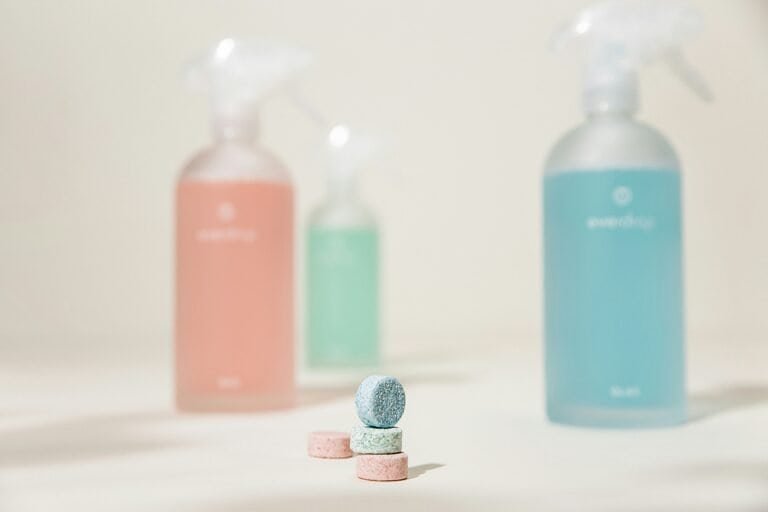
Blueland Laundry Tablets. Drop a tablet in, done. No plastic jug to recycle. Effective formula. The convenience factor is real, especially if you share laundry duties with someone who isn’t into measuring things.
Dropps Laundry Pods. Plant-based, septic-safe, no dyes or fragrance. The sensitive skin formula is legitimately gentle. Subscription model keeps the price reasonable.
Seventh Generation Free & Clear. The easiest swap because it’s available everywhere. Grocery stores, Target, Amazon. No fragrance, no dyes. Not the absolute cleanest formula on this list, but miles better than conventional and zero effort to find.
Your Laundry Room Is One of the Easiest Swaps
Detergent, fabric softener, scent boosters: three products, three easy replacements. Ready to keep going? The 7-Day Non-Toxic Kickstart covers one swap a day across your whole home.
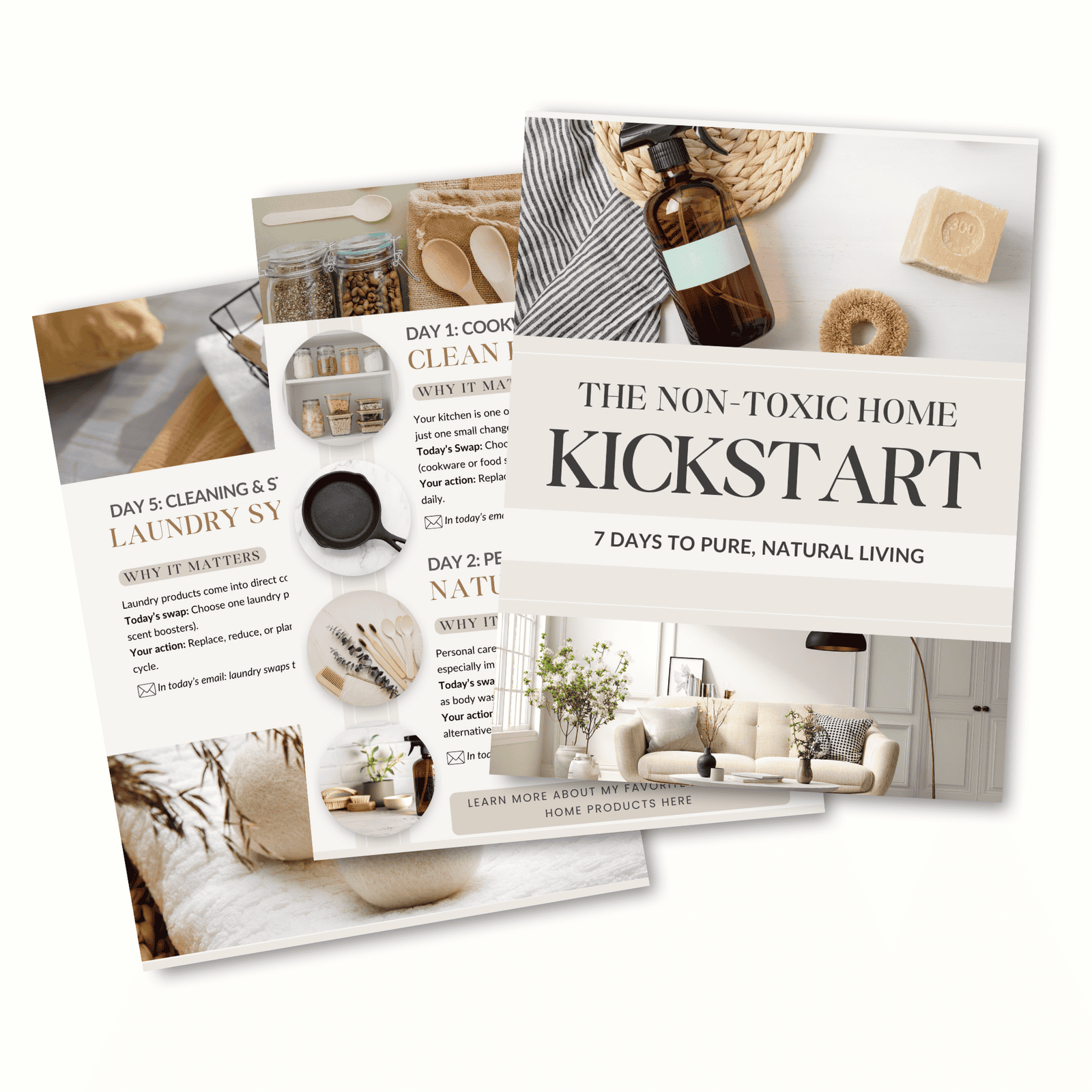
Your 7-Day Kickstart To A Non-Toxic Home
One swap per day. No overhaul required. Just 7 small changes that make your home a healthier place to live.
No spam. Unsubscribe anytime.
The DIY Non Toxic Laundry Detergent Recipe
This one’s for the “I want to know exactly what’s in it” crowd. And it works surprisingly well.
What you need:
- 1 bar castile soap or Fels-Naptha, grated (about 1 cup)
- 1 cup washing soda (not baking soda, washing soda)
- 1 cup borax (optional, some people skip this)
Grate the soap. Mix everything together. Use 1-2 tablespoons per load.
Cost: About $0.03-$0.05 per load. Not a typo.
Does it work? For everyday laundry, absolutely. For heavily soiled clothes or serious stains, you might want to pre-treat with a paste of washing soda and water first. It handles normal family laundry just fine.
The borax debate: Some people avoid borax because of concerns about toxicity. In the quantities used for laundry (diluted in a full wash cycle), the research suggests it’s safe. But if you’re uncomfortable with it, skip it. The recipe works without it, just with slightly less cleaning power.
Fabric Softener Alternatives
Conventional fabric softener is honestly one of the worst offenders in the laundry room. The whole purpose is to coat your fabrics with chemicals. That’s literally how it works.
Wool dryer balls. These are the move. Toss 3-6 wool dryer balls in the dryer. They reduce drying time by 20-30%, soften clothes naturally by tumbling against them, and reduce static. Add 2-3 drops of essential oil to each ball if you want scent. They last for 1,000+ loads. A $15 set of 6 replaces years of dryer sheets.
White vinegar rinse. Add 1/2 cup white vinegar to your fabric softener dispenser. It softens clothes and eliminates odors without leaving any vinegar smell (it evaporates completely). This is what we use for towels especially. They come out softer and more absorbent than with conventional softener.
Skip it entirely. Fabric softener is a want, not a need. Clothes function perfectly fine without it. If your clothes are scratchy, it’s usually because of residue buildup from previous products. A few wash cycles with non toxic laundry detergent and that goes away.
Natural Laundry Scent Booster (Without the Chemicals)
Missing that “fresh laundry” smell? That scent is engineered by chemists using synthetic fragrance compounds. But you can get genuinely pleasant-smelling laundry without them.
Essential oils on dryer balls. 3-4 drops of lavender, lemon, or eucalyptus per ball. Apply 10 minutes before you toss them in (lets the oil absorb so it doesn’t stain).
DIY linen spray. Mix 1 cup distilled water, 2 tablespoons vodka or witch hazel (helps the oil disperse), and 20-30 drops of your favorite essential oil. Spray lightly on sheets, towels, or clothes after folding. Lavender on pillowcases before bed is genuinely lovely.
Scent-free is okay. We’ll say it: your clothes don’t need to smell like anything. Clean clothes smell like… nothing. That’s actually the goal. The “clean linen” scent that conventional brands have trained us to associate with cleanliness is entirely artificial.
Laundry Stripping (The Reset Button)
If you’re switching from conventional to non toxic laundry detergent, you might want to do a laundry strip first. This removes the buildup of detergent residue, fabric softener coating, body oils, and mineral deposits from your fabrics.
How to strip laundry:
- Fill a bathtub with hot water
- Add 1/4 cup washing soda, 1/4 cup borax, 1/4 cup non-toxic powdered detergent
- Add your laundry (towels and sheets are the most satisfying)
- Soak for 4-6 hours, stirring occasionally
- Drain (prepare to be disgusted by the water color)
- Run everything through a regular wash cycle with no detergent
The first time you strip towels, the water turns gray or brown. That’s years of buildup coming out. Your towels will be noticeably softer and more absorbent afterward.
The Swap Priority List
- Switch detergent (biggest impact, easiest swap)
- Ditch dryer sheets and switch to wool dryer balls
- Stop using fabric softener (or switch to vinegar rinse)
- Remove scent boosters (or switch to essential oils on dryer balls)
- Strip your most-used items (towels, sheets, everyday clothes)
You can do steps 1-4 in a single grocery trip. Total cost to switch everything: about $30-$50. Or under $10 if you go the DIY route.
What’s Next
Five rooms down. Kitchen, bathroom, cleaning products, bedroom, and now laundry. Your clothes, your sheets, your towels are all getting cleaner. Next: the products you put directly on your face and body every day. We touched on it with bathroom swaps, but the beauty and self-care deep dive goes further.
Save This For Later
Grab the Printable
Want all the cleaning recipes in one printable guide? Grab the DIY Natural Cleaning Recipe Book.
- Clean Beauty1 product
- DIY Natural Cleaner Recipes1 product
- Non-Toxic Home1 product
Want the Easy Version?
Get the free 7-Day Non-Toxic Home Kickstart, one simple swap a day, delivered to your inbox.
Your 7-Day Kickstart To A Non-Toxic Home
One swap per day. No overhaul required. Just 7 small changes that make your home a healthier place to live.
No spam. Unsubscribe anytime.