How to Pick an Air Purifier: 5 Things That Actually Matter (Tested by a Roof Leak and Fire Season)
Last fall, I heard a drip inside our bedroom. By the time that little sound was done with us, the bathroom was stripped bare and two new air purifiers were standing in my living room.
We traced it fast. Our metal roof was leaking, and the water was running straight down into the bathroom. So we tore out the walls and removed everything, because I wanted to see with my own eyes that mold hadn’t moved in.
It hadn’t. Thank goodness. But somewhere between demo day and the rebuild, I impulse-bought two AirDoctor air purifiers anyway. Mold is one of the few things I refuse to gamble on, and clean air felt like cheap insurance next to everything else that project cost.
An air purifier is a fan that pulls room air through a set of fine filters, traps what’s floating in it (dust, smoke particles, pollen, pet dander), and sends cleaner air back out. Picking the right air purifier comes down to five practical things, and not one of them requires falling down a spec-sheet rabbit hole.
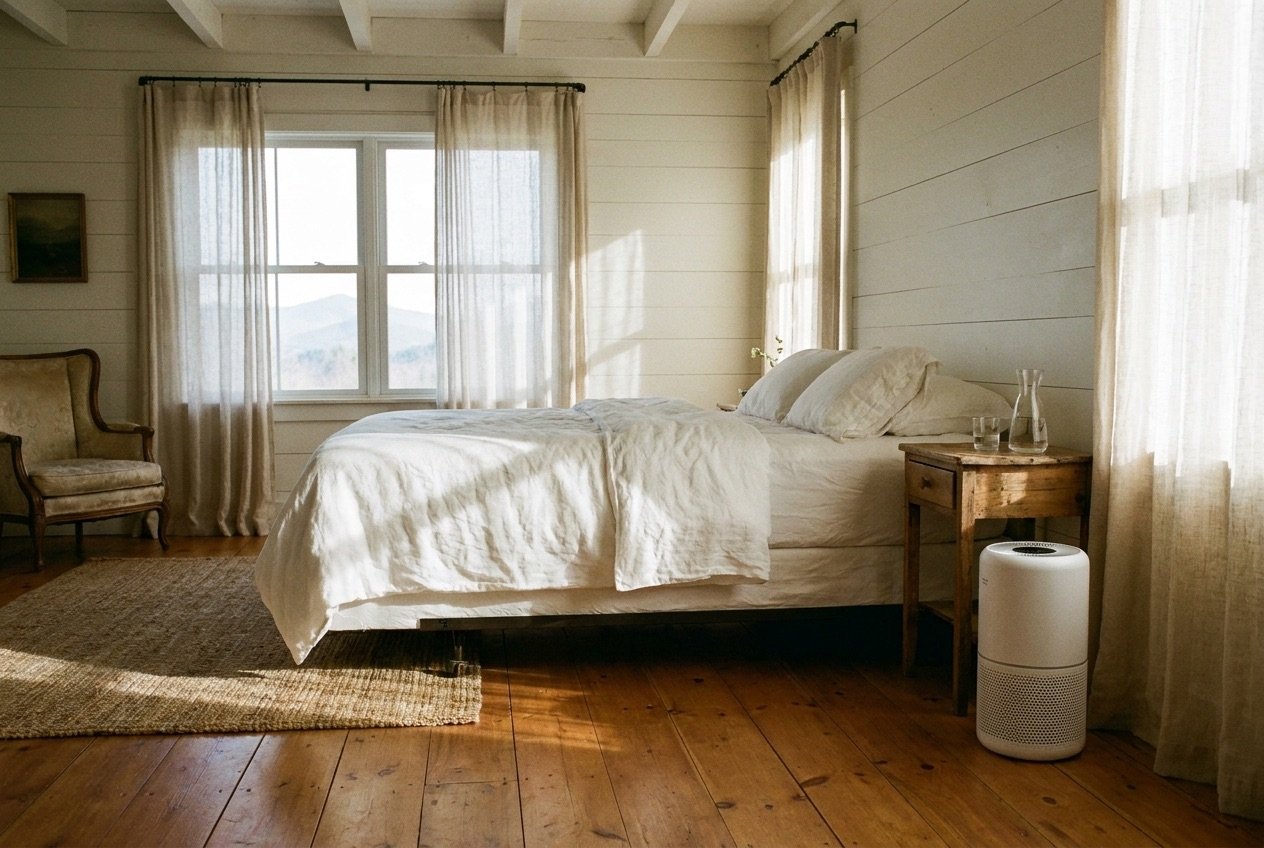
The timing turned out to be strange grace, too. We live in the mountains, it’s fire season, and right now there’s a fire close enough that the house gets smoky. Both purifiers are out of their corners and running as I write this.
The 3 Times an Air Purifier Actually Earns Its Spot
I’m not the person who thinks every gadget deserves a corner of your house. Most don’t. In my experience there are three moments when an air purifier stops being a gadget and starts being genuinely useful.
1. After Water Damage or a Mold Scare
One honest thing first: if you’ve just had a leak like ours, the fix is the repair, never a machine. Find the source, dry everything, open the walls if you have to. No filter on earth can do that part.
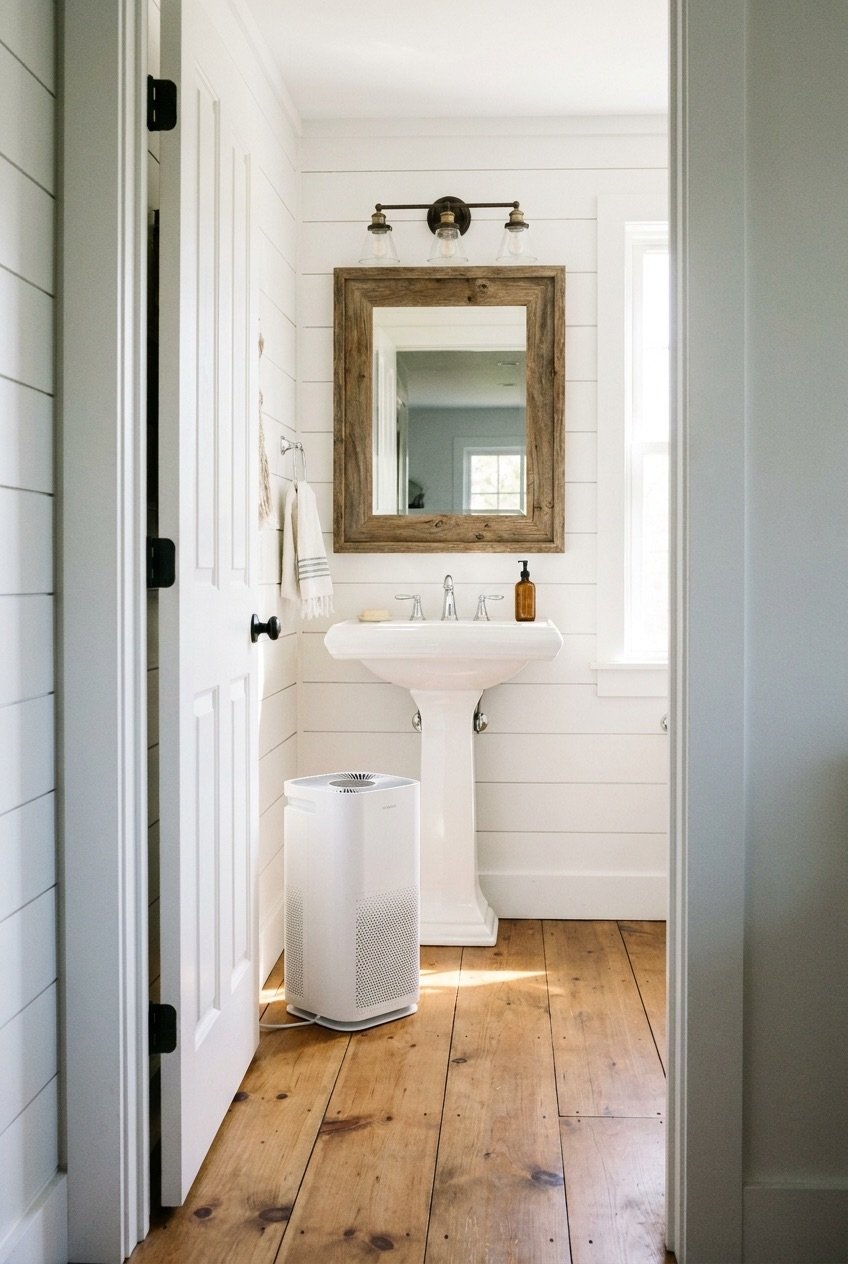
What a purifier can do is clean up what the repair stirs into the air. Demo work fills a house with drywall dust, insulation fibers, and general renovation grit. Keeping ours on through the rebuild meant the rest of the house stayed breathable while the bathroom was a construction zone. That was the job they were hired for.
2. Wildfire Smoke Season
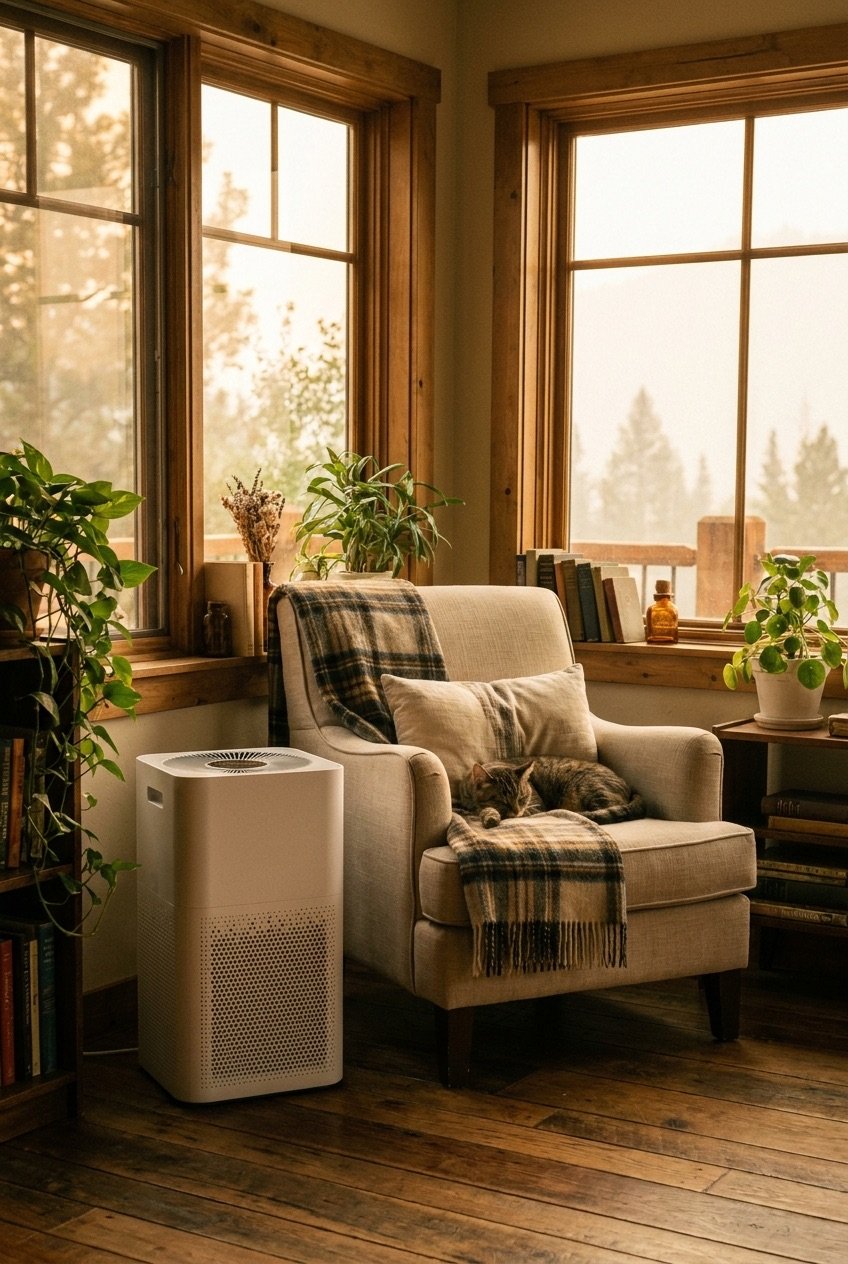
This one is our current reality. When smoke settles into a mountain valley, opening the windows stops being an option, and the campfire smell finds its way inside anyway.
A purifier with a true HEPA filter is one of the few tools that actually helps indoors on smoky days, because smoke is exactly the kind of fine particle those filters were built to catch. It won’t make the mountain stop burning. It will make your living room smell like your living room again.
3. Closed-Window Seasons
Then there’s plain old winter, when the house seals up for months. The EPA reports that indoor air can be two to five times more polluted than outdoor air, and closed windows are a big part of why. Cooking, wood heat, candles, dust, and pets all add up in a sealed house.
This is the least dramatic reason to own an air purifier and probably the most useful one. It also pairs with the free stuff: the habits in my guide to improving indoor air quality cost nothing and do a surprising amount of the work. The machine handles what the habits can’t reach. It’s the same get-ahead-of-the-season thinking behind my simple fall decor list: set the house up for what’s coming before it arrives.
What We Actually Run: 2 AirDoctors and an Old Molekule
As an Amazon Associate, I earn from qualifying purchases. This means if you click an Amazon link and buy something, I may earn a small commission at no extra cost to you.
Full honesty up front: nobody sponsors this, and I don’t have a partnership with AirDoctor. These are the machines I paid for and live with, so this is a review from a hallway, not a lab.
The two AirDoctors were the impulse buy of the whole roof saga. They’re the big units, built to handle full-size rooms, and they were made for exactly the season we bought them in. They cost several hundred dollars apiece, and I’d buy them again. When mold is the thing you’re worried about, peace of mind has a price and I paid it willingly.
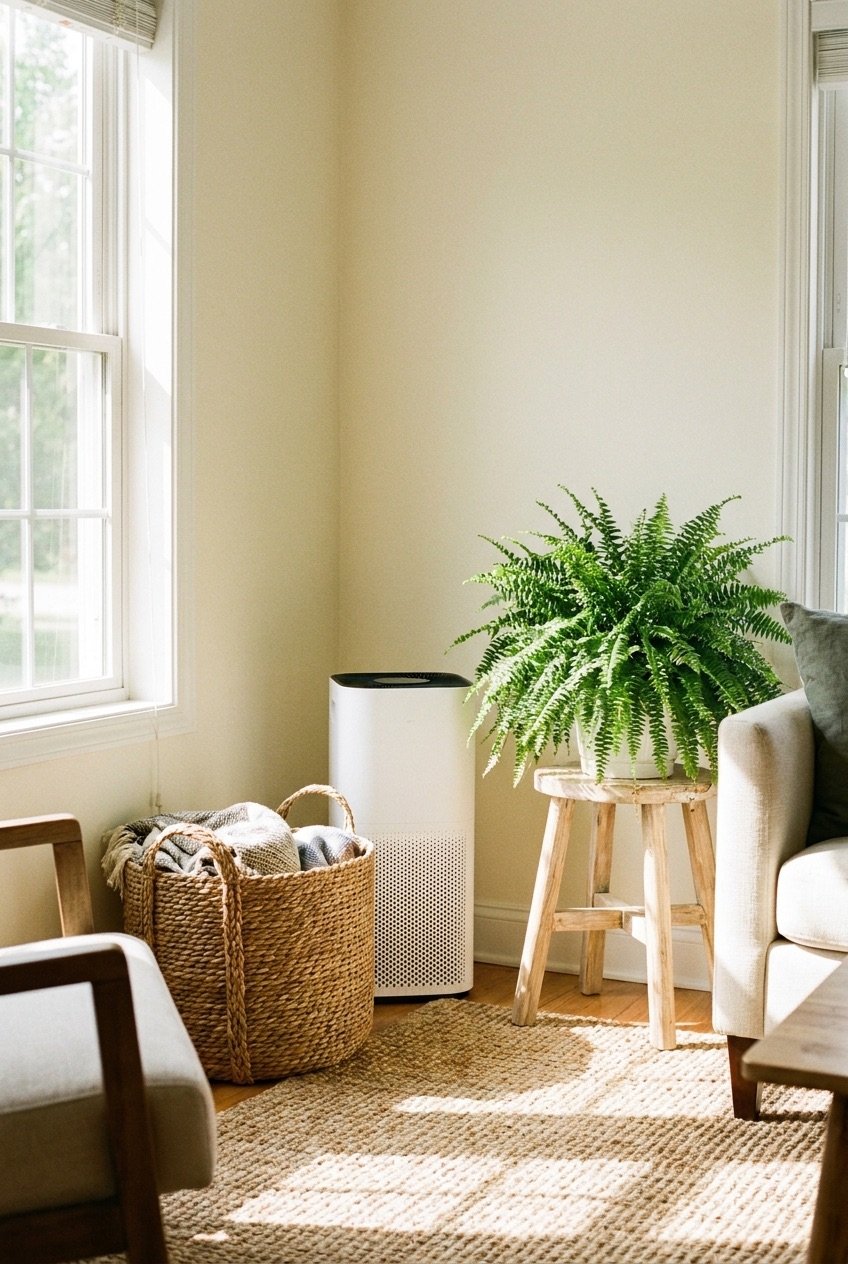
The third machine is a Molekule I bought years back, long before the leak. I really liked it then and I still do. It looks more like decor than an appliance, which is part of why it never got exiled to a closet. Between the three of them, one ordinary farmhouse is covered.
The honest downsides, so you have the whole picture: good units are expensive, replacement filters are a recurring cost, and a purifier won’t fix moisture, clutter, or a dusty house on its own. You still clean. It’s a helper, not a housekeeper.
Want more honest, from-a-real-home takes like this? The Purely Simple Digest brings one practical home win to your inbox each week, tested here first.

Your 7-Day Kickstart To A Non-Toxic Home
One swap per day. No overhaul required. Just 7 small changes that make your home a healthier place to live.
No spam. Unsubscribe anytime.
5 Things That Actually Matter When Picking an Air Purifier
Shopping for one of these gets overwhelming fast. Every brand has a proprietary technology with a trademarked name and a chart proving it’s the best. Ignore all of that. After buying three machines across several years, these are the five things I’d tell a friend to check.
1. Match It to the Room, Not the Marketing
Every air purifier lists a coverage area in square feet. Measure your actual room before you shop. A typical bedroom is 120 to 200 square feet, and a main living area is often 300 or more.
Then buy a unit rated for more space than the room it’s going in. A machine with headroom can clean the air on its lower settings, while an undersized one has to roar on high all day to keep up. Bigger than the room is the whole trick.
2. Look for One Number: True HEPA
If you read one spec, make it this one. A true HEPA filter is certified to capture 99.97% of particles down to 0.3 microns, which covers the fine stuff you actually care about: smoke, dust, pollen, dander.
Watch the wording, because “HEPA-type” and “HEPA-like” are marketing phrases, not the certification. If the box can’t say true HEPA, put it back. That one number is the entire spec sheet you need.
3. Listen to It on the Setting You’ll Actually Use
An air purifier only works while it’s on, and you’ll only keep it on if you can live with the sound. The noise rating that matters isn’t the whisper-low sleep mode in the brochure. It’s the medium setting you’ll really use, day in and day out.
Look for the decibel rating at each speed before you buy. Something around 30 decibels reads as a soft hum. Push past 50 and it starts competing with conversation. The machine you want is the one you forget is on.
4. Price the Filters Before the Machine
This is the one cost almost nobody checks in the store. Filters need replacing, usually every 6 to 12 months, and depending on the unit that lands somewhere between $30 and $100 or more per year. A cheap machine with expensive filters isn’t a cheap machine.
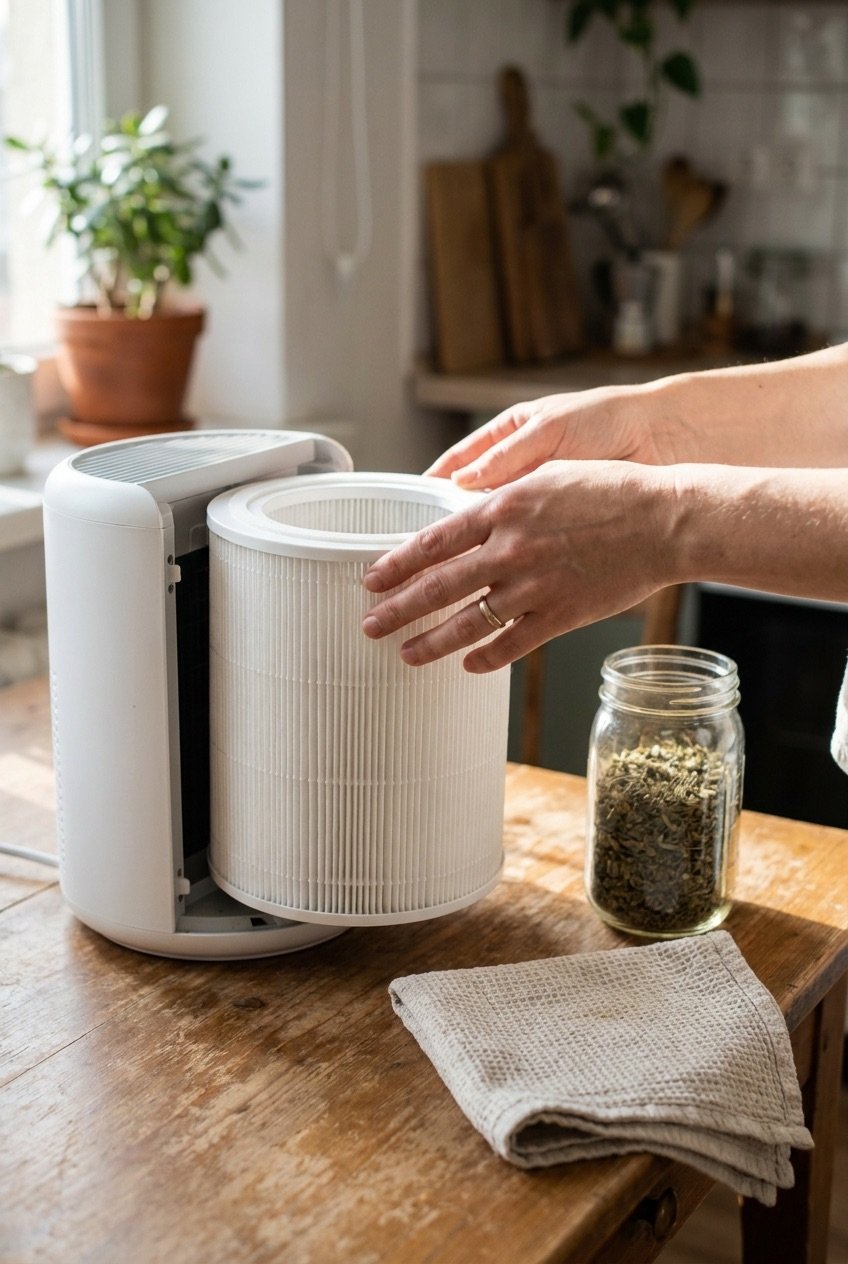
Before you commit, look up the replacement filter price and how often the maker says to swap it. Then set a reminder on your calendar, because a purifier with a clogged filter is mostly a fan with good intentions.
5. Pick One You Won’t Hide in a Closet
An air purifier only helps in the room it’s in, so it has to live somewhere you can see. If you hate looking at it, it will end up unplugged behind the guest room door. That’s why I count looks as a real feature, not vanity. The Molekule has survived years in our house partly because it’s genuinely nice to look at.
Placement has one rule: give it about a foot of breathing room on every side. Shoved into a bookcase or tucked behind an armchair, the intake chokes and you lose most of what you paid for. A corner with a little clearance keeps it working and out of the way at once.
And no, you don’t need one in every room. Put it where your family actually spends time, and move it if your evenings and nights happen in different places.
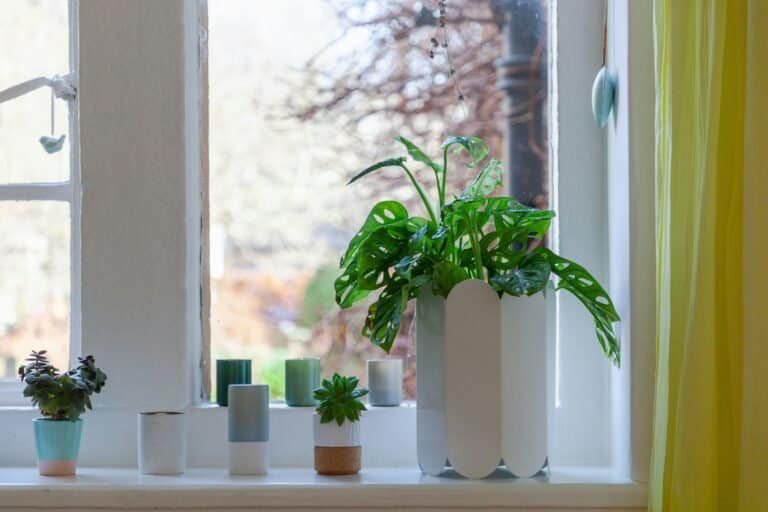
One more placement question I get: what about plants? I love a leafy room, and some greenery does double duty, like the varieties in my roundup of non-toxic air-purifying house plants. But for actually pulling smoke and dust out of the air, it isn’t a close race. The machine wins, and the plants make the room worth sitting in.
What an Air Purifier Setup Actually Costs
Honest math, because this list could read like an expensive hobby. Small-room air purifiers with a true HEPA filter start around $60 to $150. Solid mid-size machines sit between $150 and $300. The big-room units like ours cost several hundred dollars each, and every one of them adds that $30 to $100 a year in filters.
You don’t need three machines on day one. We didn’t plan for three either; a roof and a fire made that decision for us. Start with one good unit sized for the room where you sleep, live with it for a season, and let real life tell you whether a second one earns its spot.
The Sound of a Dry House
The bathroom walls are closed up now, and the only sound in our bedroom at night is the one I chose: a low hum in the corner, chewing through campfire smell while the fire outside does whatever it’s going to do.
I’d rather have learned all this some other way than a leaking roof. But if the drip had to happen, at least it left the house with cleaner air than it started with. That trade I’ll take.
Want the rest of my tested-at-home guides to a calmer, healthier house? Join the Purely Simple Digest and get one doable home win in your inbox every week.
Your 7-Day Kickstart To A Non-Toxic Home
One swap per day. No overhaul required. Just 7 small changes that make your home a healthier place to live.
No spam. Unsubscribe anytime.