Why Chemical Weedkillers Don’t Work Long-Term: A Better Way to Kill Weeds Naturally
For years now, we’ve been hearing that chemical weedkillers like glyphosate are the easiest, maybe even the ONLY way to keep weeds under control. I just saw another ad for a “spray and forget” weed solution promising a perfect yard in one application. And since the big brands keep selling it, it must work great. Right?
Uhh… no.
I think most of this advice comes from a place of convenience. But it’s lazy advice. And not only does one chemical spray not work for every type of weed, conventional weedkillers definitely aren’t the best option out there.
Also, how do you know that “weed-free lawn” in the commercial wasn’t maintained by an entire landscaping crew? Or that the weeds didn’t come right back two weeks later?
It seems to me that people spend a lot of time and money spraying chemicals on their yards, only to watch the same weeds return every season, while the soil underneath gets worse and worse.
I know because when I first started trying to manage our yard, I used the store-bought stuff. And sure, the weeds shriveled up within a few days.
But then they came back. Every time. Meanwhile, I started noticing that the areas I sprayed most looked… tired. The grass was thinner, the soil was compacted, and nothing I planted in those spots seemed to thrive. I didn’t feel great about my kids and pets walking through freshly sprayed areas, either.
I also didn’t feel like dumping chemicals into the ground aligned with how we were trying to live in every other part of our home. We’d swapped our cleaning products, switched to non-toxic cookware, started reading labels at the grocery store, and then walked outside and sprayed glyphosate on the lawn. It felt like a contradiction.
A non-toxic weed killer is any weed-control method that eliminates unwanted plants without using synthetic chemicals, glyphosate, or ingredients that contaminate soil, groundwater, or harm the people and animals using the space.
What’s Not So Great About Chemical Weedkillers
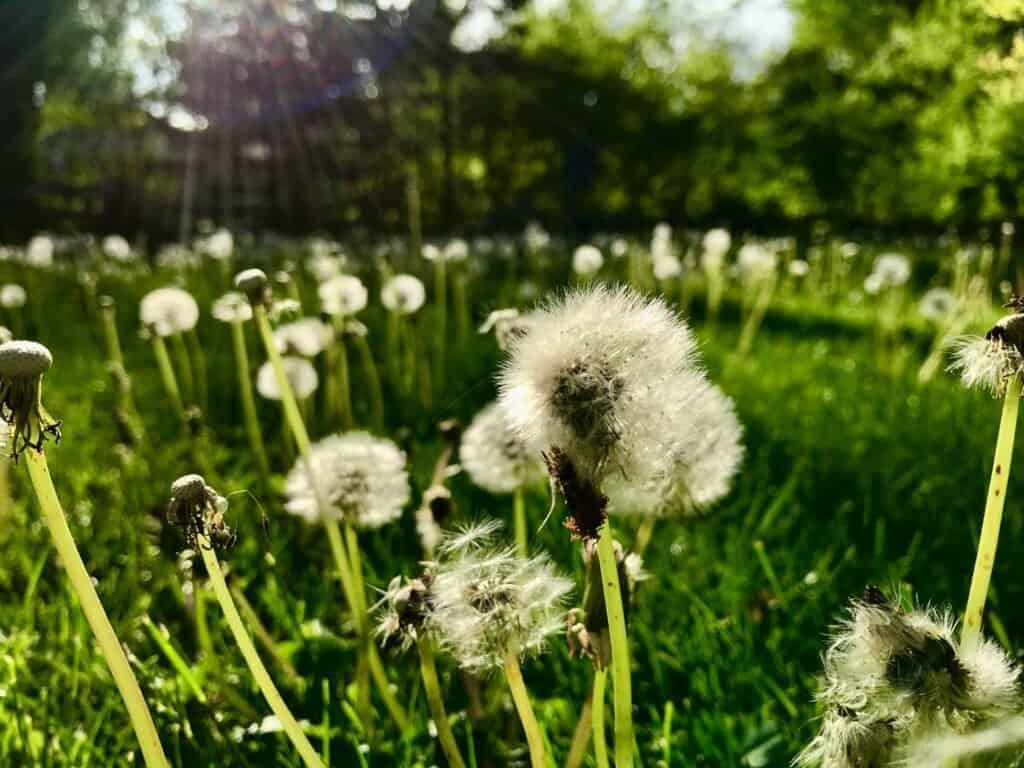
Here’s the thing. Chemical weedkillers aren’t a good idea because:
- They kill the weed but not the root system, so the weed often grows back
- They destroy beneficial soil organisms that your garden actually needs to thrive
- Glyphosate-based products have been classified as a probable carcinogen by the International Agency for Research on Cancer
- They can contaminate groundwater and harm pollinators like bees
- Repeated use degrades soil quality over time, making it harder for anything (including grass) to grow
Want proof? The EPA’s own ecological risk assessments have flagged glyphosate for potential harm to non-target plants and animals in treated areas. And a growing body of research links long-term exposure to health concerns beyond just the people spraying it.
So what can you do to keep weeds under control? Fortunately, there’s a better way. Instead of reaching for the chemical spray every spring, try something that actually works with your soil instead of against it.
Wouldn’t you rather spend your time on an approach that keeps weeds away longer AND makes your yard healthier? Well, now you can. And it doesn’t have to be confusing or expensive.
A Better Way to Kill Weeds Without Chemicals
As an Amazon Associate, I earn from qualifying purchases. This means if you click an Amazon link and buy something, I may earn a small commission at no extra cost to you.
Here’s what I did to get our yard under control instead of reaching for the Round-Up every weekend.
Step 1: Get Clear About What You’re Actually Dealing With
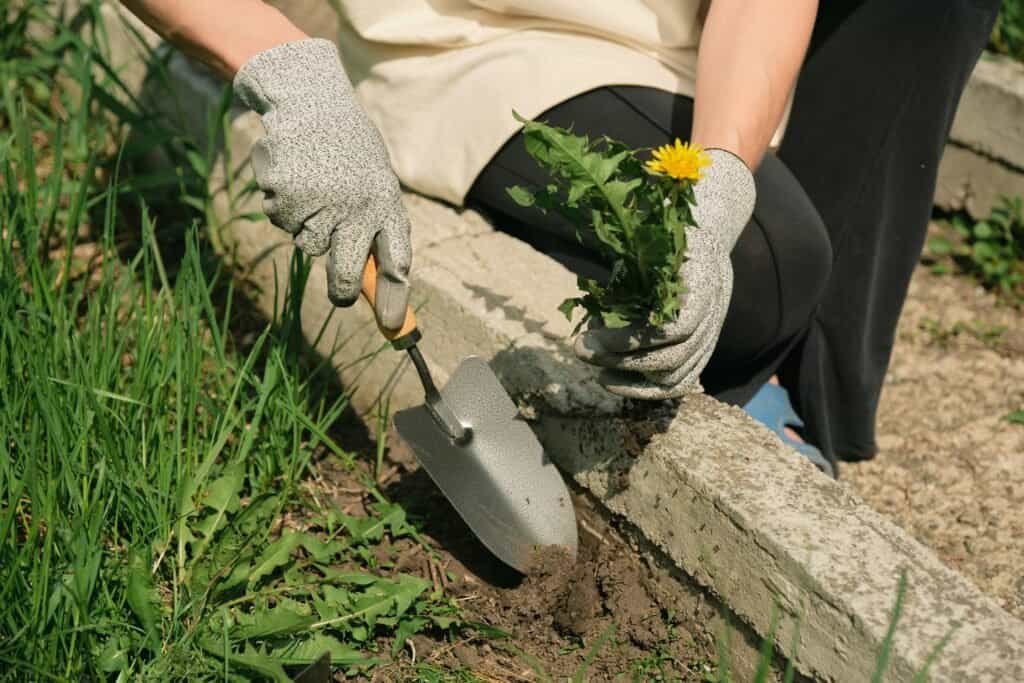
I stopped treating all weeds the same way. Dandelions, crabgrass, clover, and bindweed all have different root systems and different growth patterns. A single spray won’t outsmart all of them.
I spent one afternoon actually looking at what was growing in our yard. Turns out, most of our “weed problem” was really a clover and dandelion problem, both of which respond well to non-toxic methods when you catch them at the right time.
If you skip this step, you’ll keep applying solutions that don’t match the actual problem. That’s how people end up frustrated and going back to chemicals.
Step 2: Make a Simple Non-Toxic Weed Killer Spray
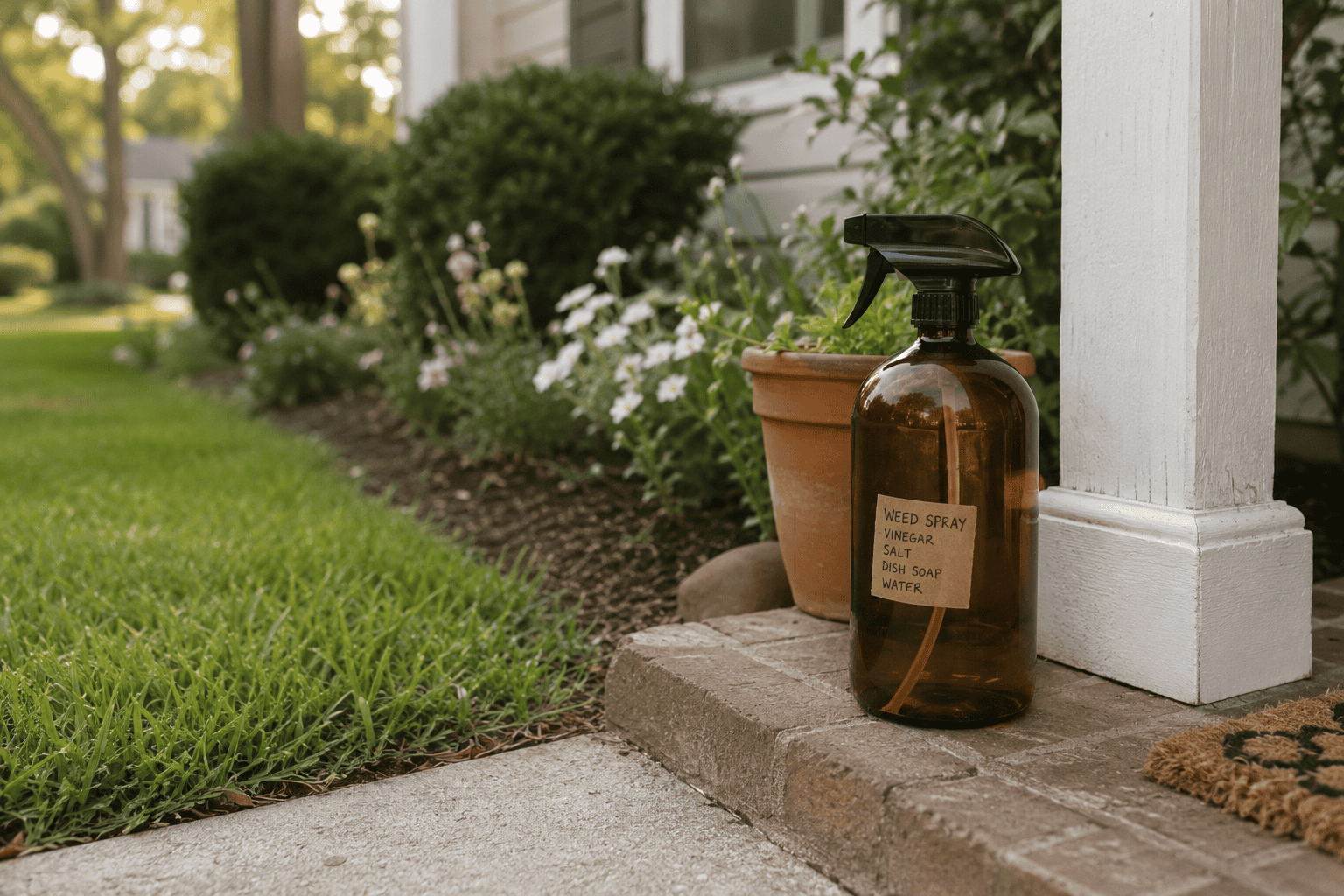
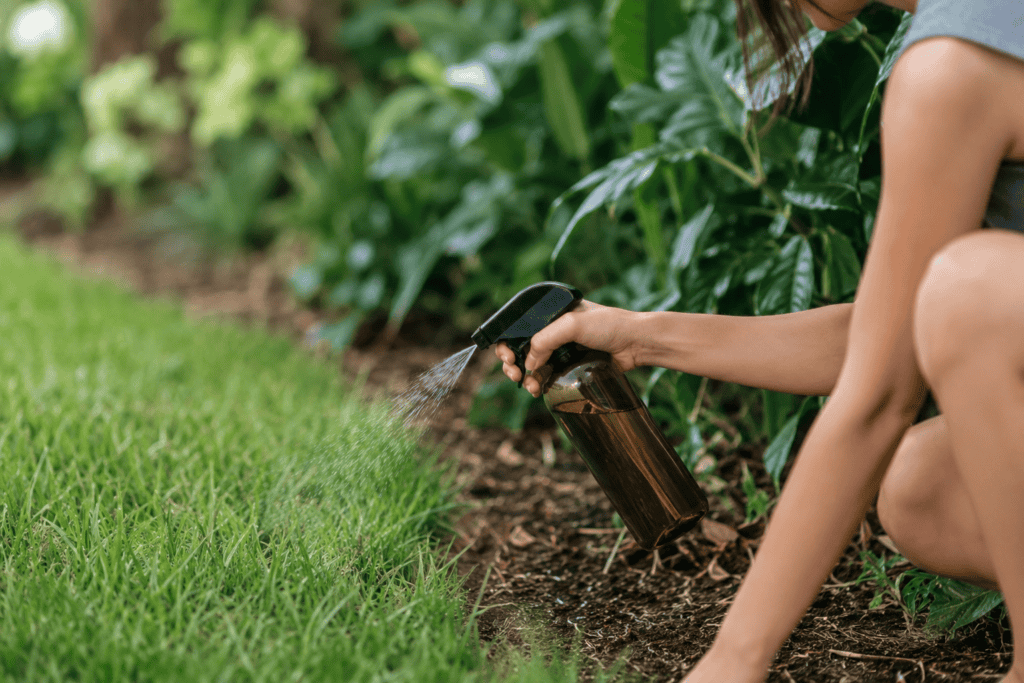
I researched what actually works and found that a vinegar-based spray handles most surface weeds effectively. Here’s the recipe I use:
- 1 gallon of white vinegar (the regular 5% kind from the grocery store works, but 20% horticultural vinegar is stronger for stubborn weeds)
- 1 tablespoon of natural dish soap (this helps the solution stick to the leaves)
- Optional: 1 cup of salt (use sparingly and only in areas where you don’t want anything to grow, like sidewalk cracks)
Mix it in a spray bottle or garden sprayer. Apply directly to the weeds on a hot, sunny day. The combination of acetic acid and sun exposure dries the weeds out within 24 to 48 hours.
A few important notes: this non-toxic weed killer works best on young weeds. Established perennials with deep root systems may need multiple applications. Avoid spraying near plants you want to keep, because vinegar doesn’t discriminate. And skip the salt anywhere near your garden beds, since salt can linger in the soil.
Step 3: Play the Long Game With Prevention
After keeping records of what worked and what didn’t, I realized that the non-toxic weed killer spray was only half the solution. The real game-changer was prevention.
Here’s what I started doing:
- Mulching garden beds with 2 to 3 inches of organic mulch. This blocks sunlight and prevents weed seeds from germinating in the first place. It’s probably the single most effective non-toxic weed control method out there.
- Overseeding the lawn in fall so thick, healthy grass crowds out weeds naturally
- Pulling weeds after rain when the soil is soft and you can get the entire root
The combination of a non-toxic weed killer spray for existing weeds, mulch for prevention, and healthy soil management has kept our yard looking better than it ever did with chemicals. And I don’t worry about our kids rolling around in the grass or our dog eating dandelions anymore.
If you’re working on switching to a non-toxic approach in other parts of your home, the yard is a natural next step. And if you’ve already started making non-toxic swaps in every room, extending that mindset outdoors is easier than you’d think.
Next Steps
Chemical weedkillers offer a quick fix that creates long-term problems. A non-toxic weed killer approach takes a little more intention upfront, but it actually improves your soil, protects your family, and keeps weeds from coming back season after season.
Check out some of our other non-toxic living posts and keep challenging yourself to find solutions that work for your home:
Current wisdom can be little more than marketing wrapped in a spray bottle. Plenty of conventional approaches don’t stand the test of time, and they definitely don’t pass the “would I want my kids touching this?” test.
The good news is, you can absolutely keep your yard weed-free in a way that feels right for your family. You just need a better recipe, a little patience, and some mulch.

Your 7-Day Kickstart To A Non-Toxic Home
One swap per day. No overhaul required. Just 7 small changes that make your home a healthier place to live.
No spam. Unsubscribe anytime.