Organization Ideas for the Home That Don’t Fall Apart by Friday
We’re a family of five on a farm. My husband and I both work from home, and we homeschool our three kids.
So our house doesn’t get used like most houses. It gets used all day, every day, by all five of us at once, which means the organizational ideas for the home you’ll find here come from survival, not Pinterest ambition.
I love my children to death. I’m also honest enough to tell you they’re agents of chaos. My girls are artistic, so supplies migrate to every flat surface. My son loves hands-on science experiments, the messier the better. And because it’s a farm, more than one chicken has walked straight through my front door when I haven’t kept on top of the fencing. And my flock has sheep that have been known to wander in as well (real ‘farmhouse’ vibes).
We also have friends over once or twice a week. That deadline turned me into the queen of the quick clean. But a quick clean only works when the house has systems underneath it.
The best organization ideas for the home aren’t 40 separate hacks. They’re one repeatable system (empty, sort, zone, contain, label) that you use in every room, then protect with a short daily reset so the house is still held together by Friday.
Why Most Organization Ideas for the Home Don’t Stick
We’ve all organized one junk drawer so well it deserved a photo, while the rest of the kitchen stayed chaos. That’s the pattern with hack-based organizing. Each mess becomes its own project, forty projects deep, and nobody finishes forty projects.
Most organization ideas for the home fail at the same spot: they organize the stuff without changing the system. A system is different. You learn it once, then repeat it in every room, and each room gets easier than the last.
And if a whole-house system sounds like one more standard to fail, the book I always go back to is How to Keep House While Drowning by KC Davis (or one of her podcast episodes when I need the short version). Her big idea is that care tasks are morally neutral. Your house isn’t a report card. A system just makes the care tasks smaller, and that’s the spirit of everything below.
The Purely Simple Home Reset: One System for Every Room
As an Amazon Associate, I earn from qualifying purchases. This means if you click an Amazon link and buy something, I may earn a small commission at no extra cost to you.
The Purely Simple Home Reset is a five-step system (empty, sort, zone, contain, label) that works in any room, built for homes that get lived in hard instead of styled for photos. What makes it different is the order: containers come last, and the system ends with a rhythm instead of a reveal.
- Empty the space completely. Yes, all of it. You can’t zone what you can’t see.
- Sort into three piles: keep, donate, trash. Fifteen minutes, no agonizing.
- Zone by how your family uses the space. Daily things at eye level, rare things up high.
- Contain each zone in a bin or basket, and measure the shelf before you buy anything.
- Label every container in words your kids can read (for younger kids, a photo or graphic works). A system nobody else can follow just lands back on your plate.
Then comes the rhythm: ten minutes a day, everything back to its zone. It’s the backbone behind every one of the organizational ideas for the home in this post, and it’s what saves my evenings. More on that at the end.
Organization Ideas for the Home, Room by Room
Run the Reset one room at a time, never all at once. One room a weekend is plenty. Here’s how the same five steps play out in each space.
Kitchen and Pantry
The kitchen was the first place we ever built a system, because it’s where five people collide three plus times a day. In our house, the jobs are split by kid: my 11-year-old unloads the dishwasher, my 9-year-old loads it and starts it, and my 6-year-old clears the table and wipes it down. Same jobs every night, so there’s nothing to negotiate.
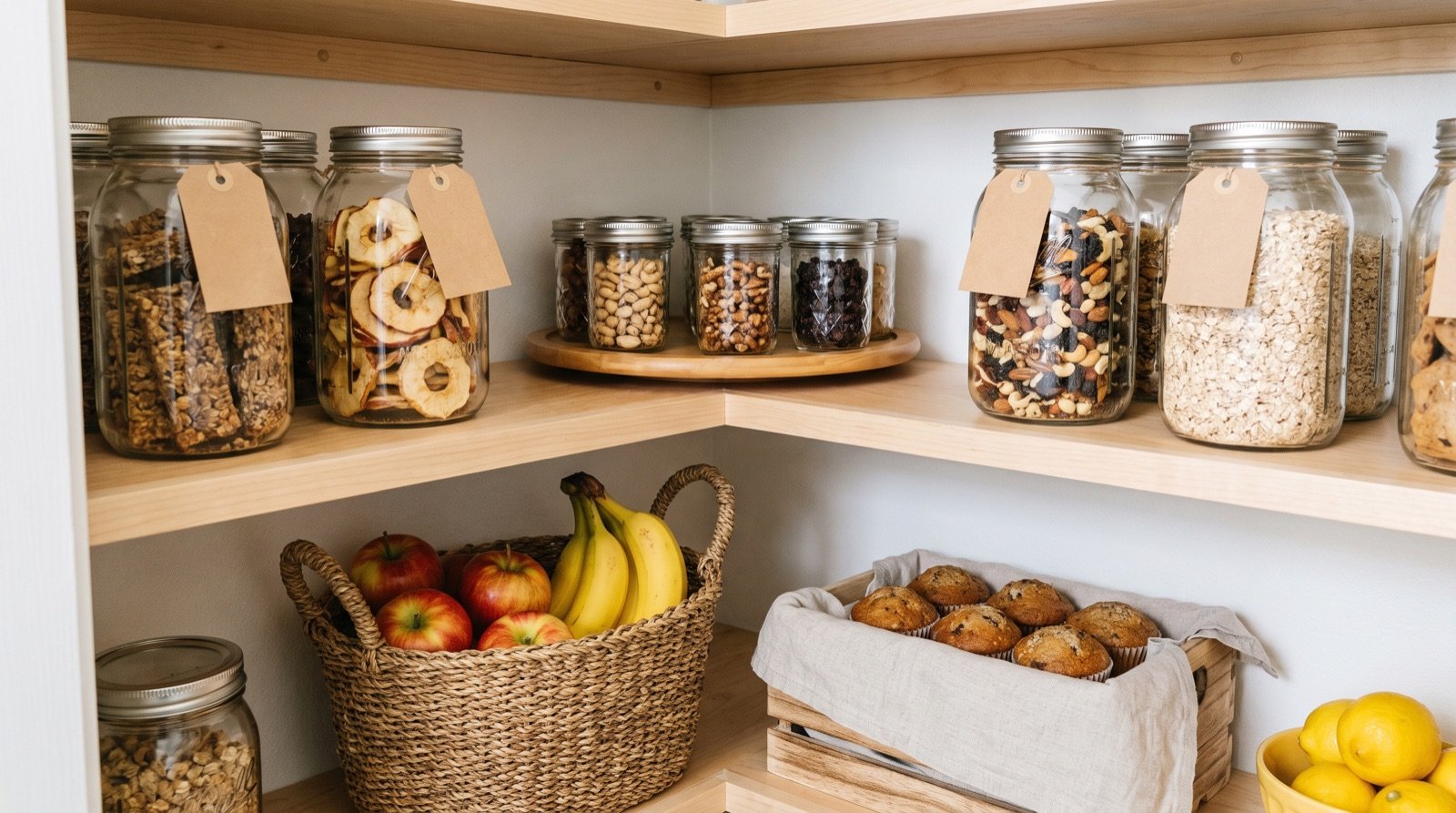
On the cabinet side, zone by behavior, not by category. A dinner-starters zone, a baking zone, and a snack zone the kids can reach without asking will save you a dozen interruptions a day. While everything’s out of the cabinets anyway, it’s the natural moment for a few non-toxic cookware and kitchen swaps. Glass storage over stained plastic earns its spot fast.
Linen and Hall Closets
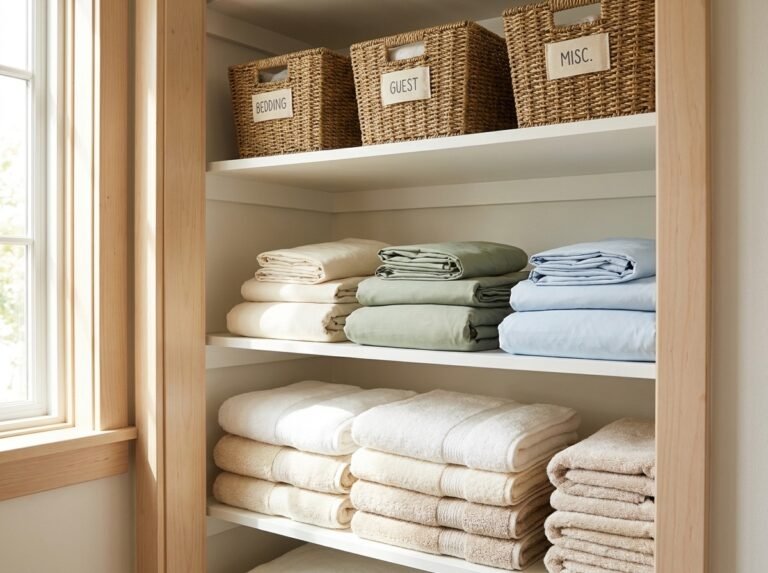
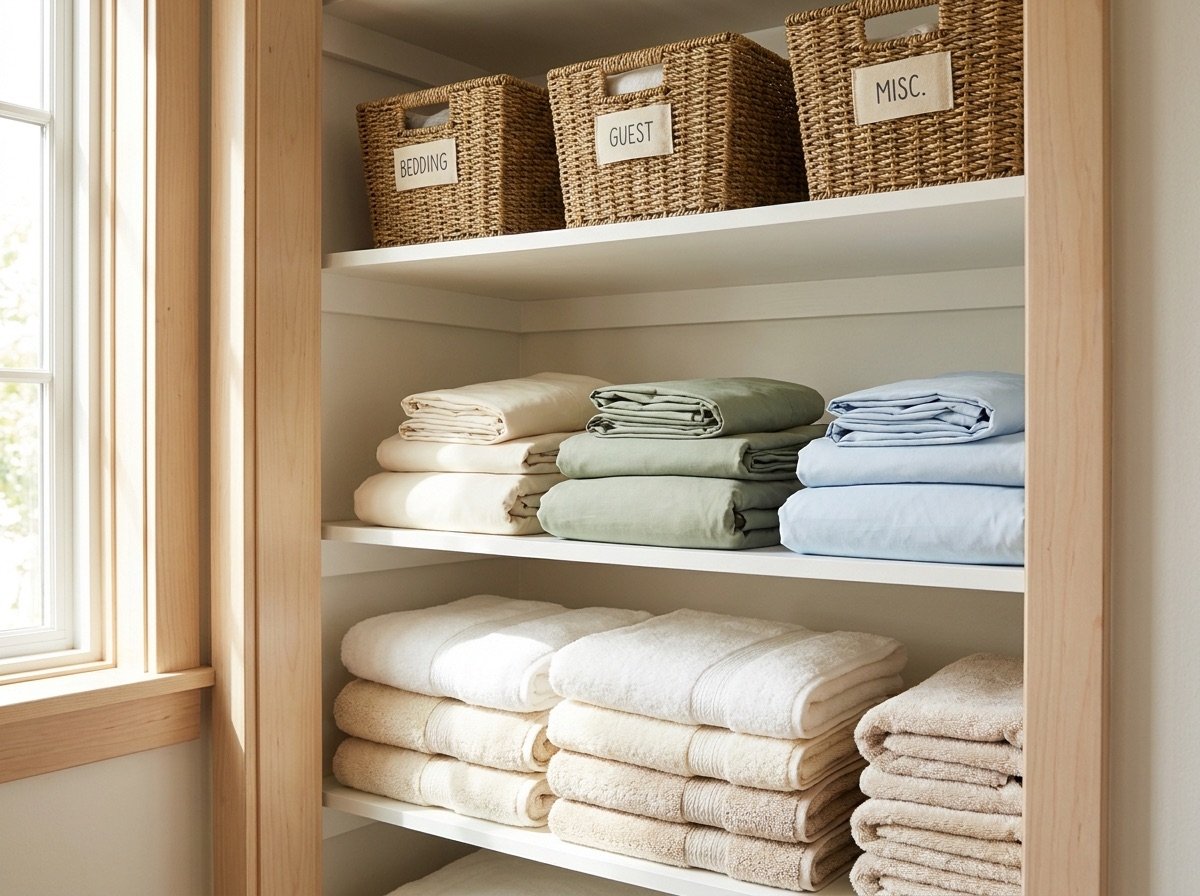
Give every shelf one job: daily towels at eye level, sheet sets folded inside their pillowcases on the middle shelf, bulk and seasonal up top. I wrote a full guide to linen closet organization ideas that survive real life, including what to do with deep shelves and wire shelving.
Bedrooms
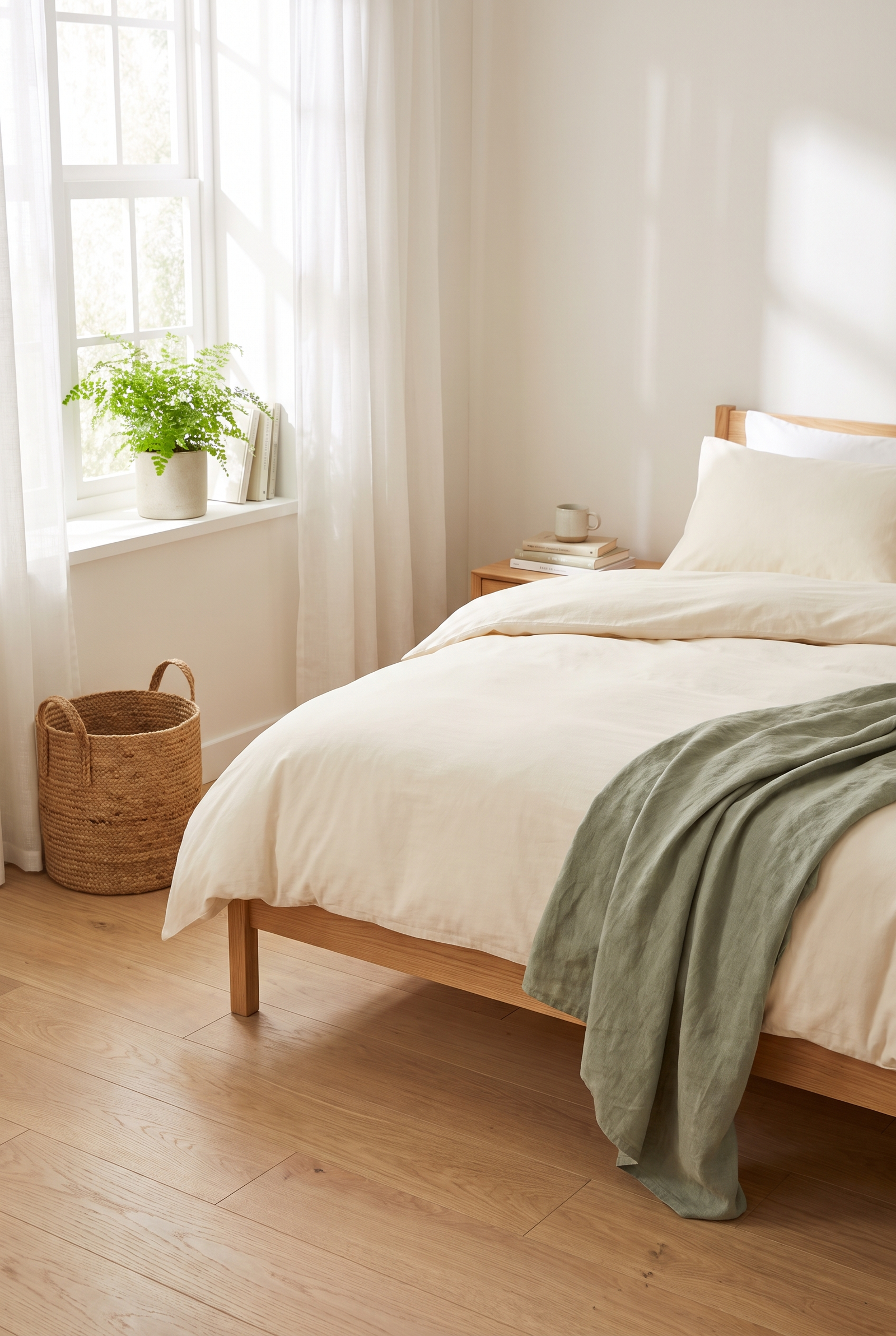
The battle in a bedroom is flat surfaces. Give the nightstand a lamp-plus-one rule (my plus one is my diffuser), and give the dresser top a single tray so whatever lands there has a boundary. If you’re already resetting the bedroom, it’s a good time to make a few non-toxic swaps for better sleep while the surfaces are clear.
Bathrooms
Bins turn under-sink cabinets into drawers. Use one bin per person or per job (hair, first aid, cleaning supplies). Also super helpful is a cleaning bin with products in each bathroom. While you sort, toss the expired products. Most cabinets lose a third of their contents this way, and nobody misses any of it.
Entryway and Drop Zone
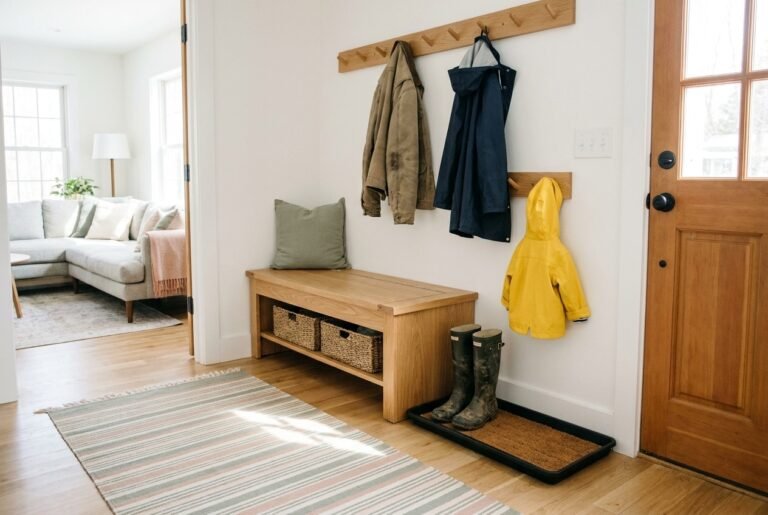
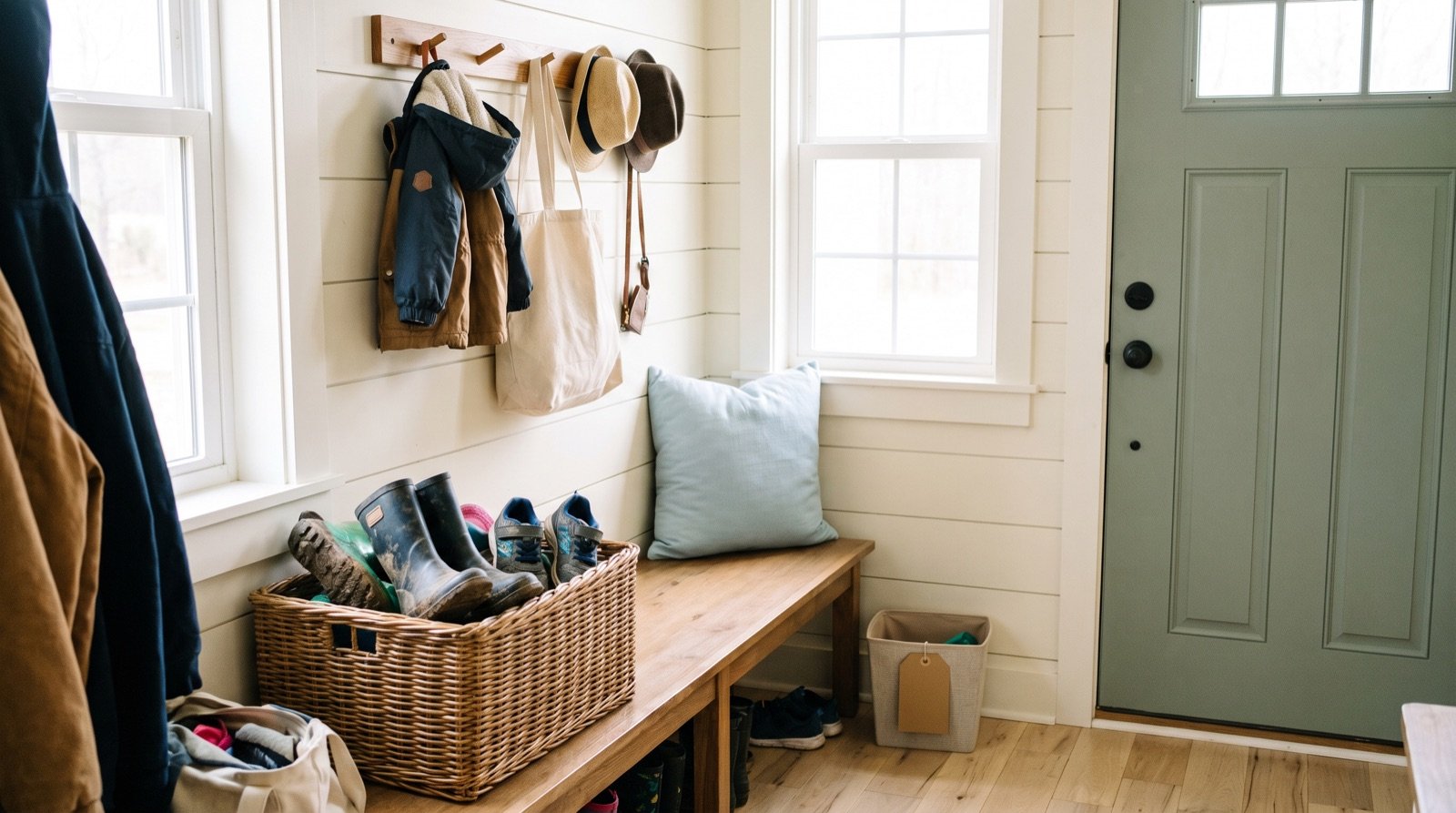
The entryway decides how the whole house feels when you walk in. A hook per person, a basket for shoes, and one bin for things that are leaving the house (returns, donations, borrowed stuff) will carry most of the load. If your family runs on farm boots, sports cleats, or both, the shoe basket is non-negotiable. Entryways deserve their own post, and one is coming in this series.
Kids’ Spaces and the Homeschool Table
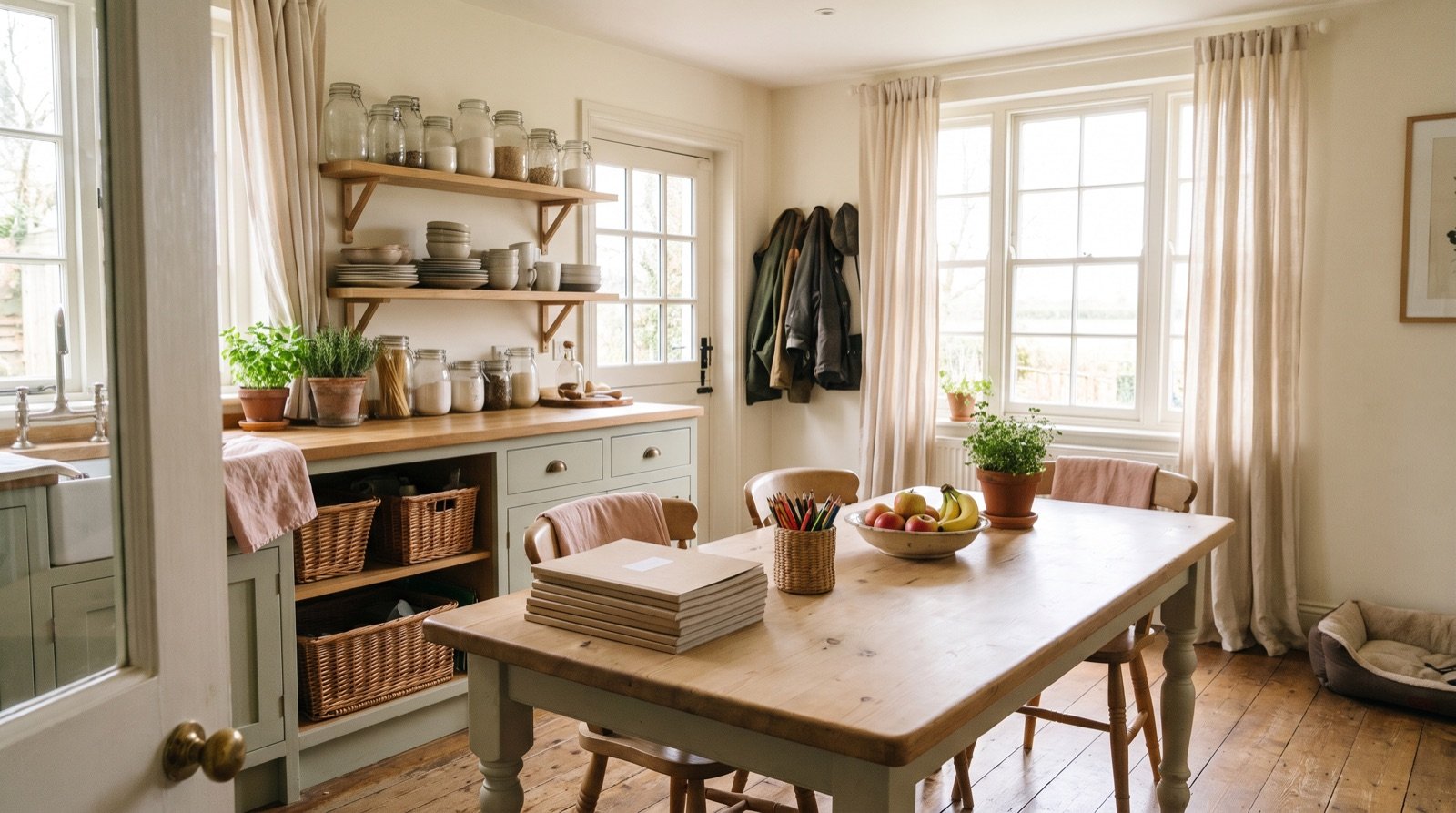
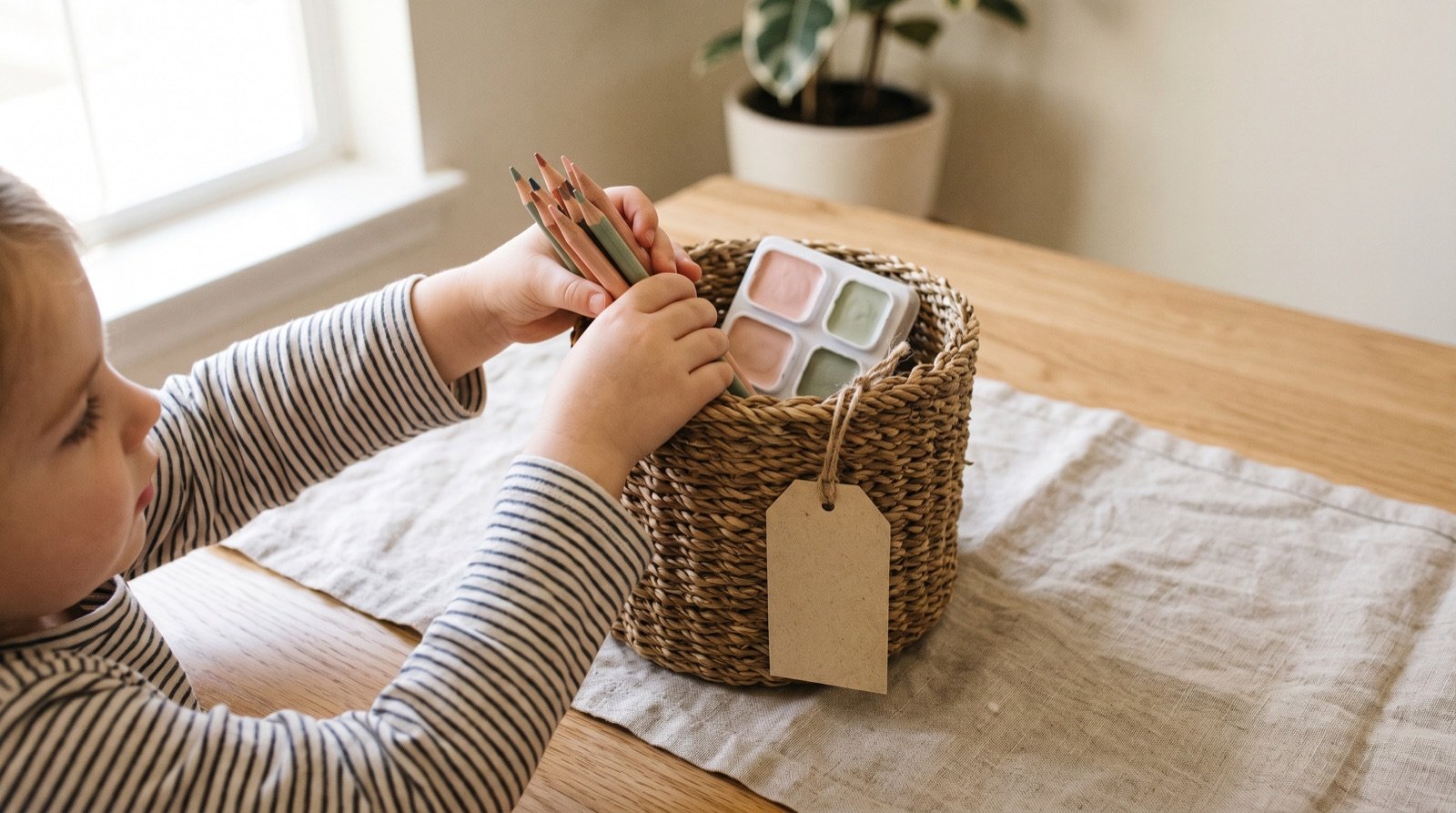
We homeschool, so our table wears four jobs a day: school, art, science, dinner. The fix is bins the kids can reset themselves. Give art supplies one bin per kid. Give science experiments one dedicated shelf, and label anything in progress. Cleanup means everything back in its bin, not sorted to perfection. Kids will keep a system they can run without you.
The Work Corners
My husband and I both work from home, so I’ll say this with love: a home office turns into a room-sized junk drawer if you let it. End every workday with a two-minute flat-surface clear. Papers get one inbox tray, and the tray gets emptied on Friday.
If you’d rather build this one room at a time, that’s exactly how I share it. Join the Purely Simple Digest and get one doable home win each week.
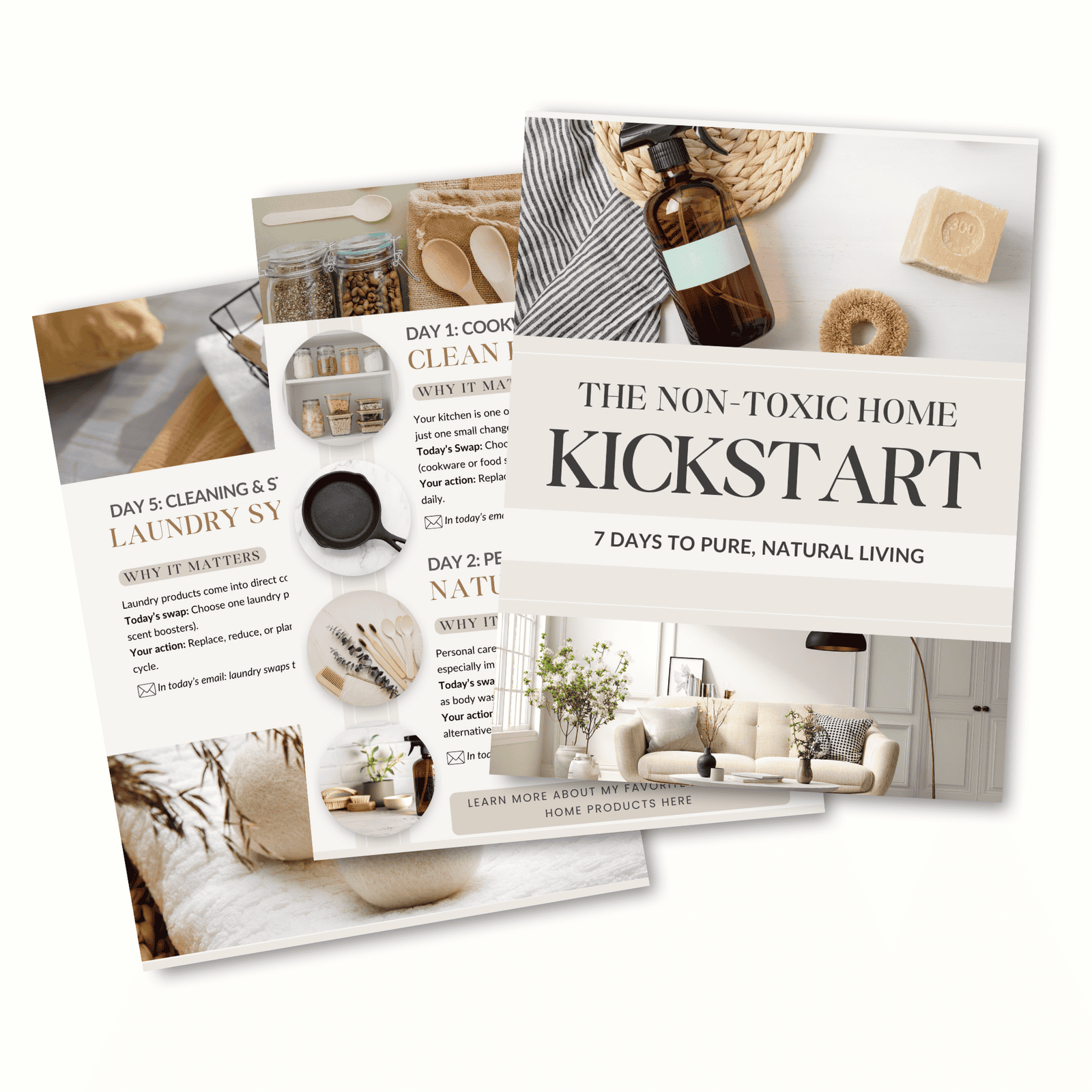
Your 7-Day Kickstart To A Non-Toxic Home
One swap per day. No overhaul required. Just 7 small changes that make your home a healthier place to live.
No spam. Unsubscribe anytime.
If Your Whole House Is Small
Small homes don’t need smaller versions of these organization ideas for the home. They need three adjustments. Furniture works double duty (storage ottomans, beds with drawers). Walls work harder than floors (vertical shelving, hooks, over-door racks). And one-in-one-out becomes law: a new toy, book, or gadget comes in only when one leaves.
Under about 1,200 square feet, that last rule matters more than any product you can buy.
Buy the Bins Last
The most expensive mistake with organization ideas for the home is starting at the container aisle. Containers bought before sorting become clutter with lids. Declutter first, measure the shelf, then buy.
When you do buy, six things earn their keep in nearly every room: clear stackable bins, a turntable for deep corners, shelf risers, drawer dividers, one big catch-all basket per room, and a label maker. Where you can, pick natural fiber baskets and glass over plastic. They last longer and they’re the better choice near food and kids’ things.
The Ten-Minute Reset That Saves My Fridays
We have friends over once or twice a week, so my house has a real deadline with real witnesses. Alibis don’t work here. The quick clean before company only works because the week has systems under it. By Friday, I’m cleaning, not excavating.
The daily version takes ten minutes: one lap through the main rooms, everything back to its zone, everyone carrying their own. Kids can do it because the labels tell them where things go. That’s the real reason the labels exist.
Ten minutes a day sounds too small to matter. Multiply it by five people and seven days, and it’s the difference between a Friday panic and a Friday wipe-down. That’s the test for any organizational ideas for the home: not how the room looks the day you finish, but whether it still works at the end of the week.
Don’t organize the whole house this weekend. Pick the one room that annoys you every day, run the Purely Simple Home Reset on it once, and hold it for ten minutes a day. The next room gets easier. They all do.
I share one simple, tested home system every week in the Purely Simple Digest, from a farmhouse that holds five people, daily art projects, and the occasional wandering chicken. Come join us.
Your 7-Day Kickstart To A Non-Toxic Home
One swap per day. No overhaul required. Just 7 small changes that make your home a healthier place to live.
No spam. Unsubscribe anytime.