9 Mudroom Ideas for Homes Without a Mudroom (Tested by Farm Mud)
Every fall, I add more Pins to my ‘mudroom ideas’ board on Pinterest. Then I look up from my phone at my actual front door, which opens straight into the house. No back hallway. No tiled landing zone. Just a door, a wall, and five humans tromping in with wet boots.
We live on a farm in the mountains, so fall here means rain, mud, and a sudden explosion of wet gear. Most mudroom ideas work great… for a room I don’t have! So everything below is the system I actually use at my front door (that doesn’t require a contractor).
The best mudroom ideas for homes without a mudroom skip the built-ins and give one ordinary stretch of wall four jobs: a place for boots to drip, coats to hang, small stuff to land, and mud to stop. If your entry does those four things, it’s a mudroom, whatever the floor plan says.
You Don’t Need a Room. You Need Four Feet of Wall.
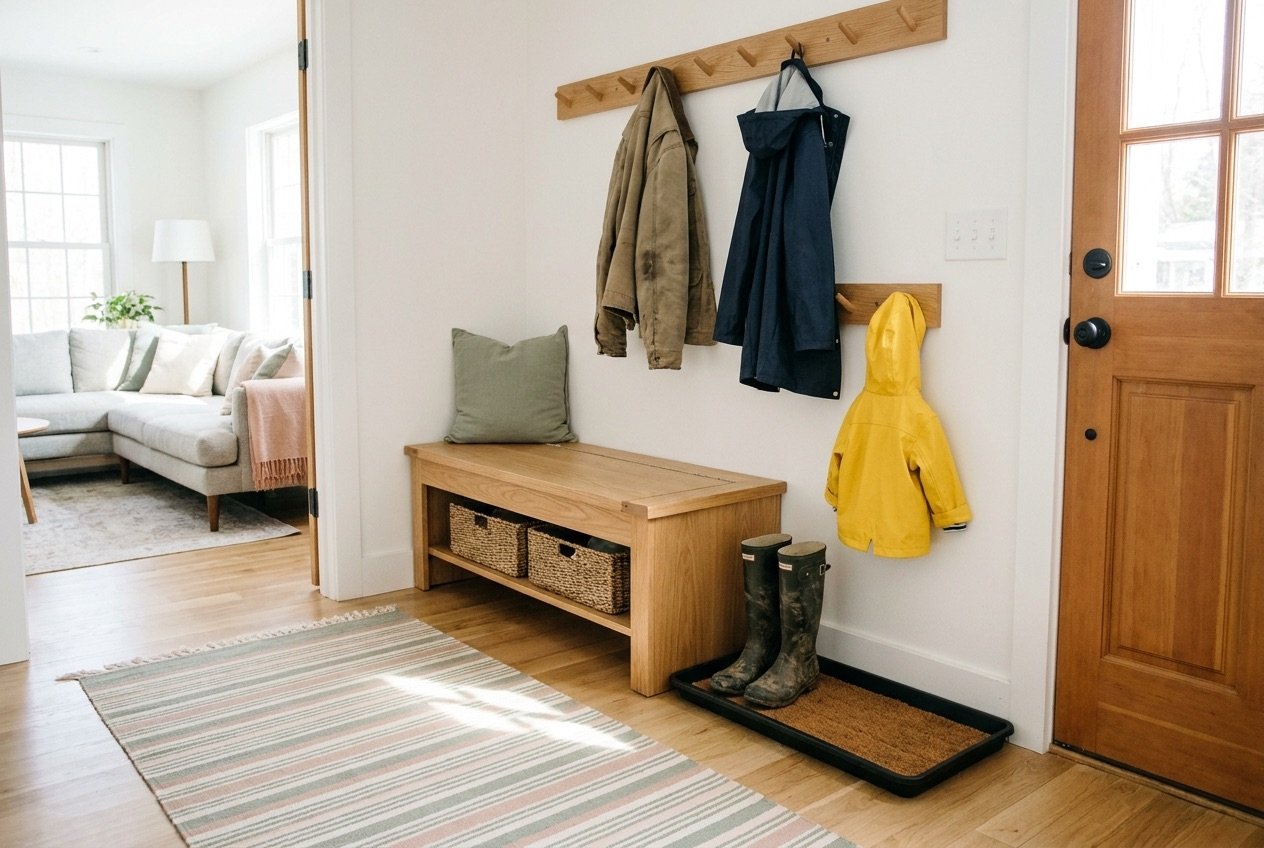
I call our version The Four-Foot Mudroom: a mudroom’s four jobs (drip, hang, land, stop) compressed onto about four feet of wall beside whatever door your family actually uses. What makes it different from most mudroom ideas is that it’s built entirely from freestanding pieces, so a rental or a no-mudroom house gets the function without the renovation.
One honest note before the list: pick the door people really use, not the door you wish they used. If everyone comes in through the front, that’s where the system goes. A beautiful setup by a door nobody opens organizes nothing.
9 Mudroom Ideas for Homes Without a Mudroom
As an Amazon Associate, I earn from qualifying purchases. This means if you click an Amazon link and buy something, I may earn a small commission at no extra cost to you.
1. Claim the Zone Before You Buy Anything
A designer’s note from my Interior Design school days: define the space first, then furnish it. Stand at your door and mentally tape off the four feet beside it. That’s your zone. Everything in the zone serves the entry, and nothing else gets to live there.
This step costs nothing, and it’s the one most people skip. Without a boundary, the entry creeps into the living room one dropped backpack at a time. It’s the least glamorous of these mudroom ideas, and it’s the one that makes the other eight work.
2. Start With a Boot Tray, Not a Bench
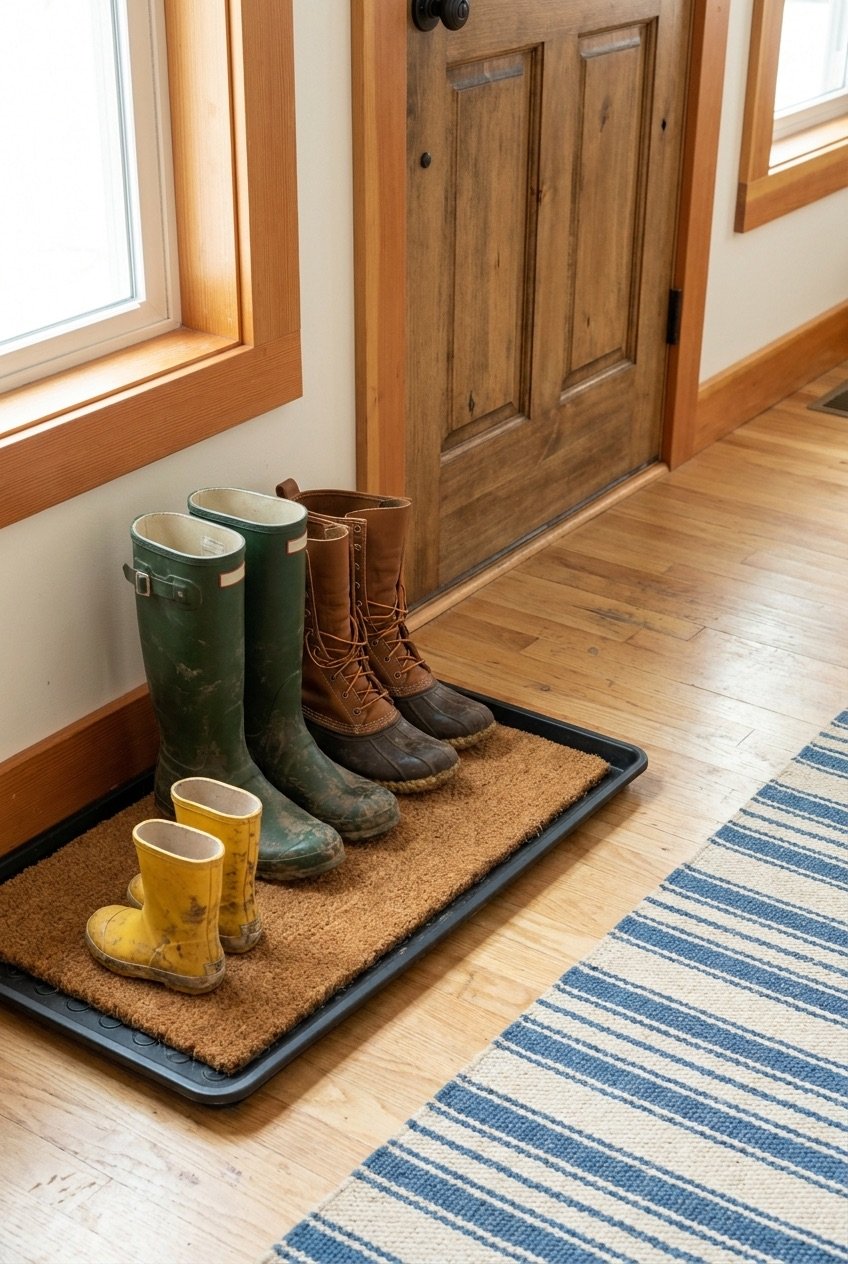
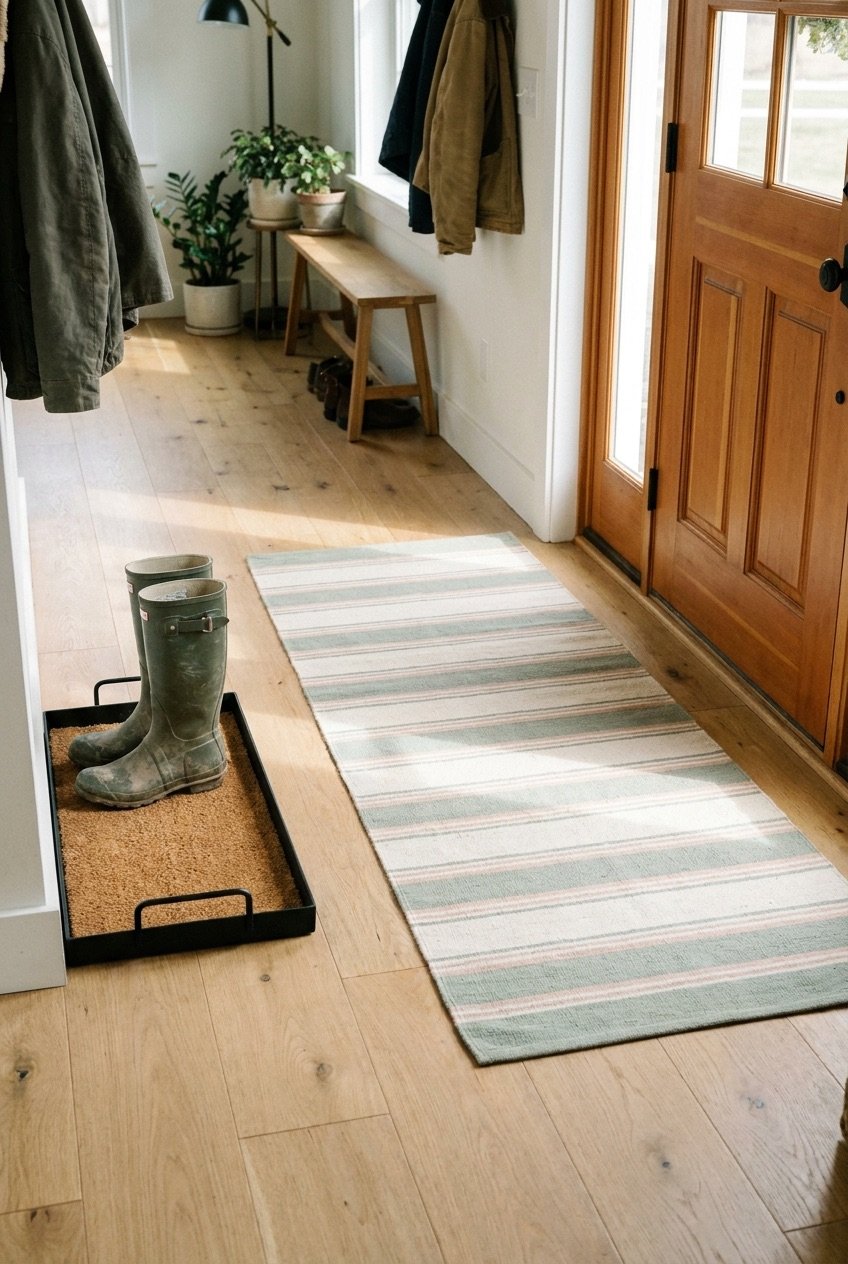
The first thing I set up every fall is the boot tray, because the mud shows up before the cold does. Wet boots need somewhere to drip that isn’t the floor, and a tray gives every muddy pair a home for about $20.
A tray with a raised insert works better than a flat one, because boots dry from underneath instead of sitting in their own puddle. This rubber tray with a coir insert holds four pairs for about $34, and coir is a natural fiber that drinks up the drips.
One rule keeps the tray from turning into a boot parking lot: only the pairs in current rotation get a spot. Everything else dries off and moves along.
3. Hang One Hook Per Person, at Heights They Can Reach
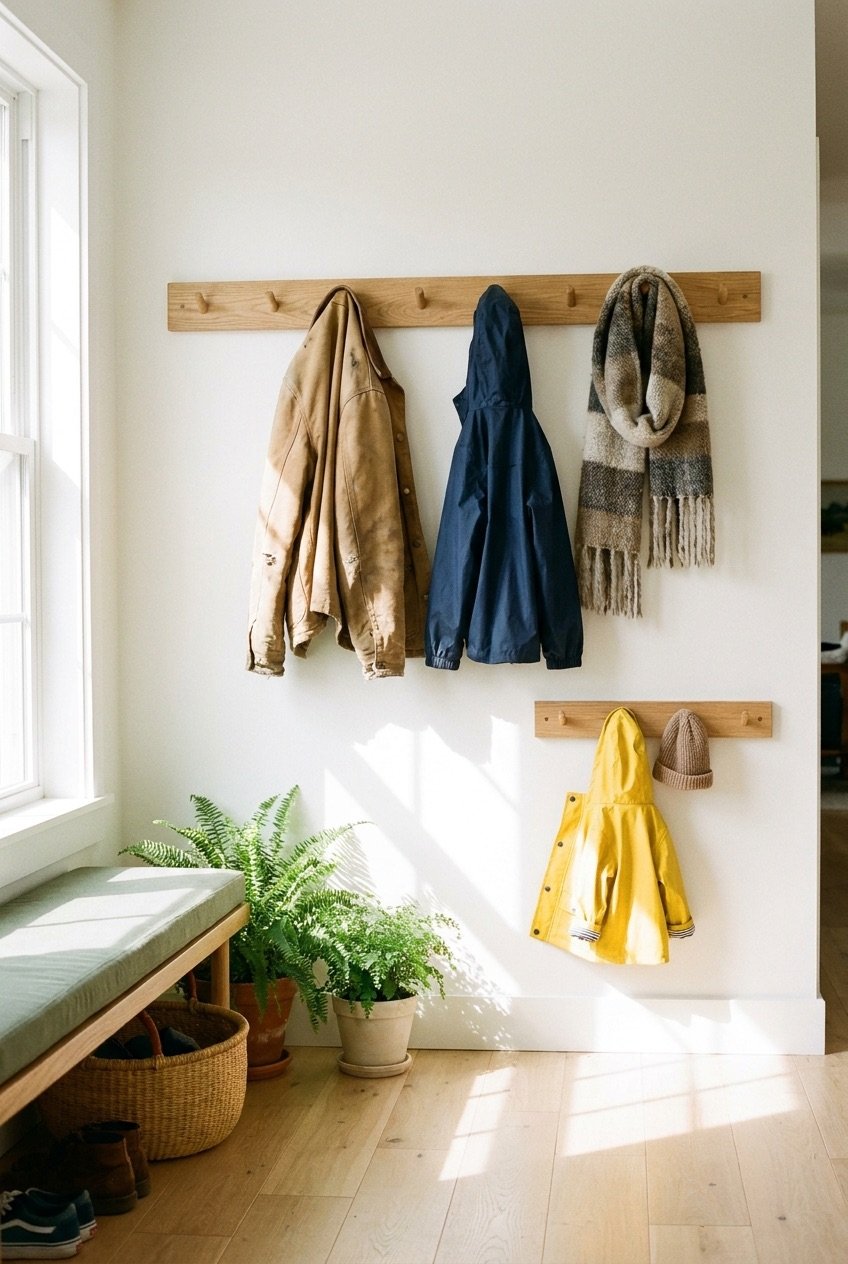
A row of hooks beats a coat closet for daily layers, because a hook is a one-second job and a hanger is a four-step negotiation. Give each person one hook and mount the kids’ hooks low enough that they can actually use them. A solid wood hook rail costs about $26 and goes up in ten minutes with a level and two screws.
One hook per person is also a built-in limit. When the hook is full, a coat goes back to the closet. The wall polices itself.
The coat closet still earns its keep, just not for daily gear. It holds the overflow and the dress coats, which keeps the hooks honest.
4. Add a Solid Wood Bench That Opens
A bench earns its four feet twice: somewhere to sit while boots go on, and storage inside for the out-of-rotation pairs. If you’re buying one, go solid wood over particleboard. Particleboard and wet boot season are a short, sad story.
Check secondhand first. A used solid wood bench usually costs less than a new flat-pack one, it outlasts trends, and in an entry the dings just read as character.
5. Use Closed Storage if the Door Opens Into Your Living Space
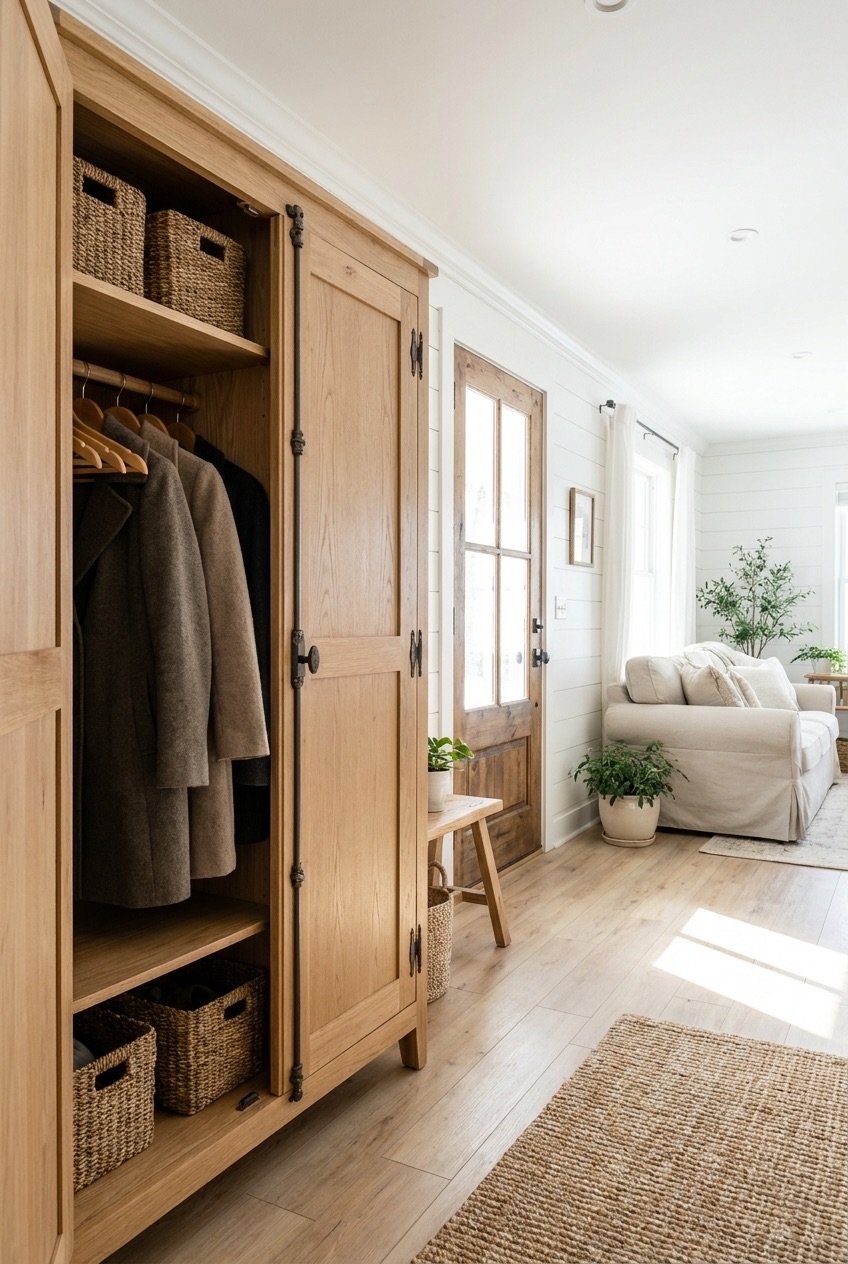
We have friends over once or twice a week, and the entry is the first thing they see. That’s why my favorite of all these mudroom ideas is closed storage: an armoire, a hall tree with doors, or a simple cabinet that swallows the coats, the bags, and the bins whole.
Open cubbies look wonderful in photos where four items hang on eight pegs. Real families don’t live at that ratio. Doors mean the zone can hold a whole season of gear and still look calm at dinnertime.
This is the kind of one-wall, one-afternoon project I share every week in the Purely Simple Digest. One doable home win at a time.

Your 7-Day Kickstart To A Non-Toxic Home
One swap per day. No overhaul required. Just 7 small changes that make your home a healthier place to live.
No spam. Unsubscribe anytime.
6. Give the Small Stuff a Basket Per Person
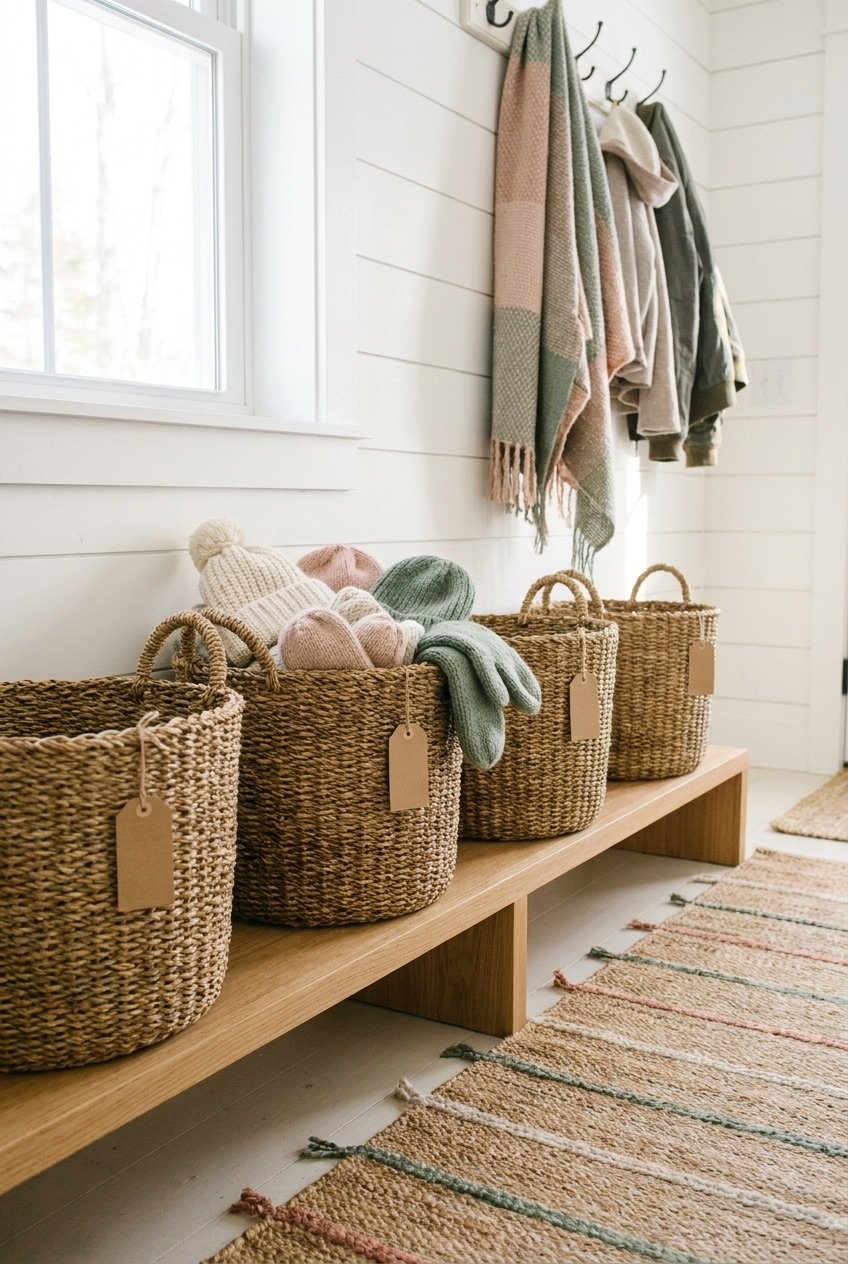
Hats, gloves, and mittens are what actually bury an entry, because they’re small enough to land anywhere. One labeled basket per person ends it. Kids can work the system themselves when the label tells them where things go, and that’s the whole point of the label.
Woven natural-fiber baskets do the job and double as the prettiest thing in the zone. That beats another plastic bin on both counts.
7. Put Down a Rug That Eats Mud (and Fits in the Washer)
I’d love to tell you the mud stays in the boot tray. On a farm with three kids, plus the occasional chicken strolling through the front door like she pays rent, it doesn’t. The rug is the last line of defense, so make it washable.
Wool and cotton earn their keep here. Wool hides dirt between washes and handles moisture without smelling like a wet dog, and a flat-weave cotton runner (around $34) goes straight into the machine. If you can swing two runners, rotate them, so a clean one goes down while the muddy one is in the wash.
8. Add a Leaving-the-House Bin
One bin by the door for everything on its way out: returns, donations, borrowed things, library books. It’s the cheapest idea on this list and the one that saves the most trips back inside. This bin is also a station in the daily reset from my full guide to organization ideas for the home, which is the system this whole entry setup plugs into.
9. Set Up a Seasonal Swap So The Area Doesn’t Overflow
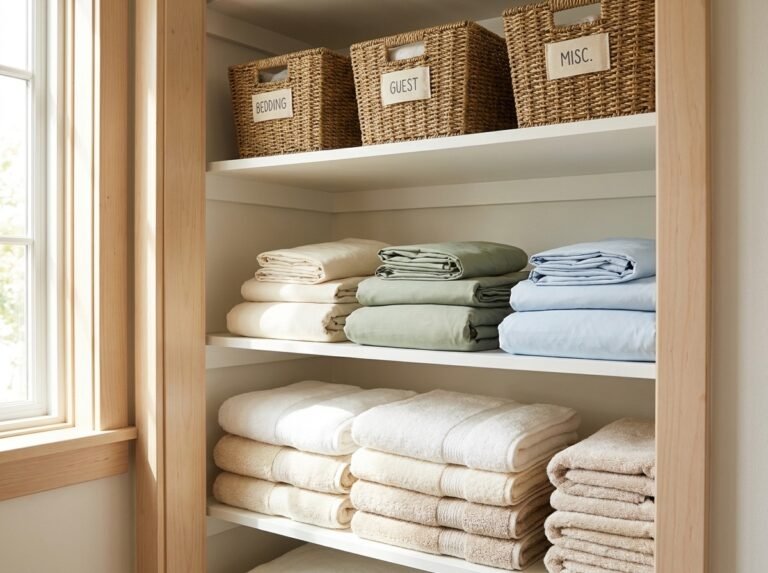
Four feet of wall can’t hold four seasons of gear, and it shouldn’t try. Twice a year, the zone flips: sandals and sun hats migrate out, boots and layers move in. Off-season gear lives in a closet, not by the door. My linen closet organization ideas post covers the zone system that keeps that migration from becoming an avalanche.
The fall flip is the one that matters most. Most mudroom ideas stop at storage, but the swap is what keeps four feet of wall from overflowing by October. It’s the difference between a September that starts with a system and a September that starts with a pile.
What These Mudroom Ideas Actually Cost
Honest math, because a list like this can read like a renovation in disguise. A boot tray is about $20. Hooks are a few dollars each. Baskets sit around $10 to $15, a washable runner lands in the $40 to $80 range, and a solid wood bench or armoire found secondhand usually comes in between $75 and $200.
You also don’t need all nine at once. The tray, the hooks, and one basket per person will carry you through fall for under $75. Everything else can wait for the piece to turn up secondhand.
Set It Up Before the Mud Arrives
The best week to build your four feet of wall is the week before you need it, which in most places means late summer or early September. It’s the same logic behind my simple fall decor list: get the house ready for what the season is about to ask of it, and the cozy part takes care of itself.
You can set up all nine of these mudroom ideas in one Saturday, but you don’t need to. Start with the tray and the hooks before the first muddy week, and let the rest arrive as the season settles in.
Then protect the zone with ten minutes a day, everything back to its spot, everyone carrying their own. That’s the entire maintenance plan.
A Mudroom Was Never the Requirement
If your entry never looks like the built-in cubby photos, that’s not a failure of housekeeping. It’s a floor plan you didn’t choose, meeting a season that doesn’t care.
The photos were selling you a room. All the season ever asked for was a place to land: somewhere for boots to drip, coats to hang, small stuff to live, and mud to stop. Four feet of wall does that. Mine has for years, sheep sightings and all.
Want a season’s worth of simple systems like this one? Join the Purely Simple Digest and get one practical home win in your inbox each week.
Your 7-Day Kickstart To A Non-Toxic Home
One swap per day. No overhaul required. Just 7 small changes that make your home a healthier place to live.
No spam. Unsubscribe anytime.