Non Toxic Nursery Checklist: Creating a Safer Room for Baby
Nesting is powerful.
Something about preparing a room for a baby makes you hyper-aware of everything. The paint on the walls. The chemicals in the carpet. The materials in the crib. Questions you never asked about your own bedroom suddenly feel urgent when it’s someone else’s first room.
That instinct is worth listening to. Babies spend 12-16 hours a day in their nursery. Sleeping, breathing, absorbing. Their bodies are smaller, their lungs are developing, and their skin absorbs at a higher rate per pound of body weight than adults. A non toxic nursery is the room where getting things right matters most.
The good news: building a non toxic nursery isn’t as expensive or complicated as the internet makes it seem. Some changes are free. Some are worth investing in. And some of the “must-have” non-toxic baby products are more marketing than substance.
This non toxic nursery checklist separates what actually matters from what’s just selling you something.
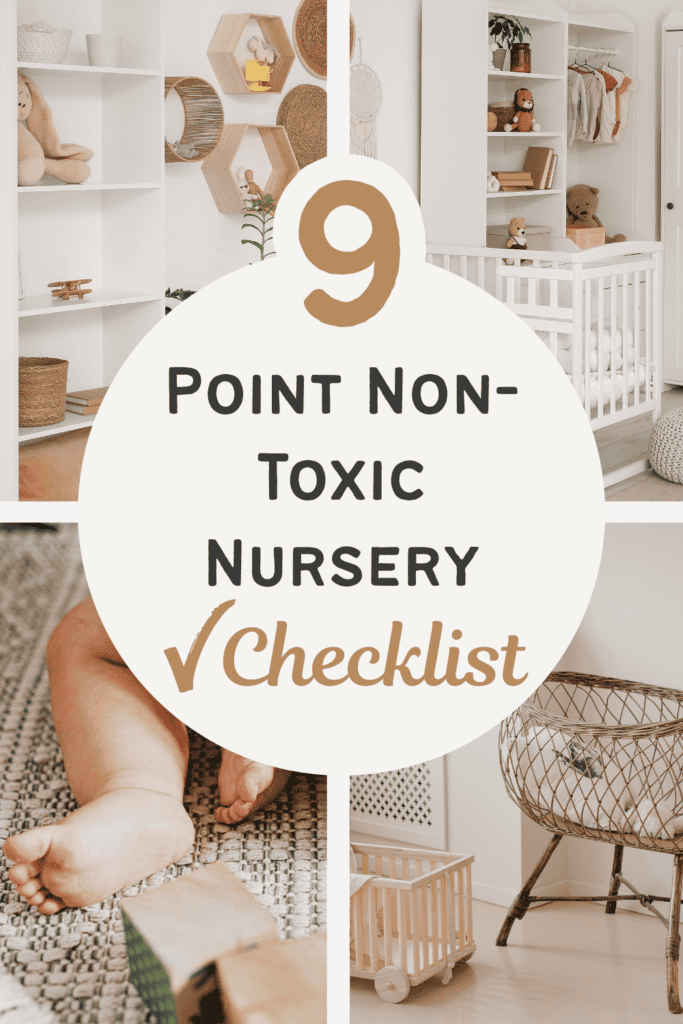
The Non Toxic Nursery Checklist
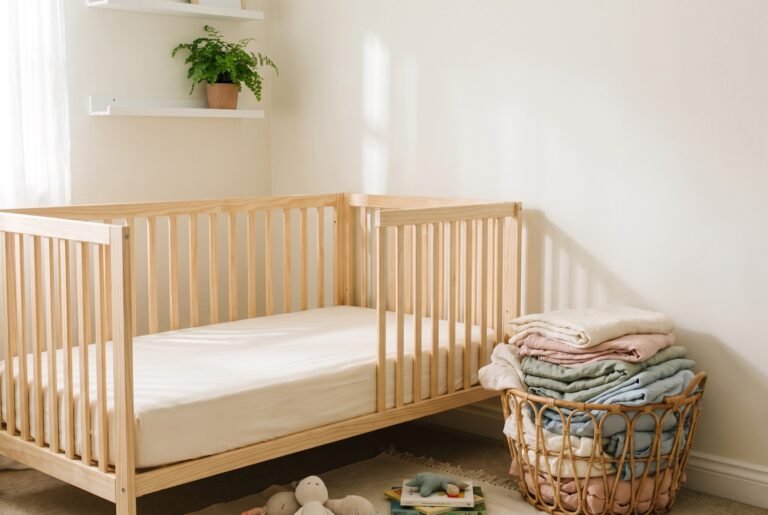
1. The Crib Mattress (Priority #1)
This is the single most important item in the nursery. Your baby sleeps on it for 12+ hours a day, face down, breathing directly into the surface. A conventional crib mattress can contain polyurethane foam, vinyl covers, flame retardants, and adhesives that off-gas VOCs.
What to look for:
- GREENGUARD Gold certified (tested for low chemical emissions)
- Organic cotton, organic wool, or natural latex construction
- No polyurethane foam
- No vinyl/PVC covers
- Meets federal flammability standards without chemical flame retardants (wool is naturally flame-resistant)
Recommended brands:
- Naturepedic Organic Crib Mattress ($199-$399): The gold standard. Started specifically to make safer crib mattresses. GREENGUARD Gold, GOTS certified organic.
- Newton Baby Crib Mattress ($250-$350): Made from a food-grade polymer core (90% air, 100% recyclable, breathable, washable). GREENGUARD Gold certified. The “breathable mattress” that pediatricians talk about.
- Avocado Organic Crib Mattress ($279): Organic latex and cotton. GREENGUARD Gold. Same quality as their adult mattresses.
Budget option: If an organic crib mattress isn’t in the budget, look for a GREENGUARD Gold certified option (several conventional brands offer certified models for $80-$150). It won’t be organic, but it will have been tested for low chemical emissions.
2. Paint
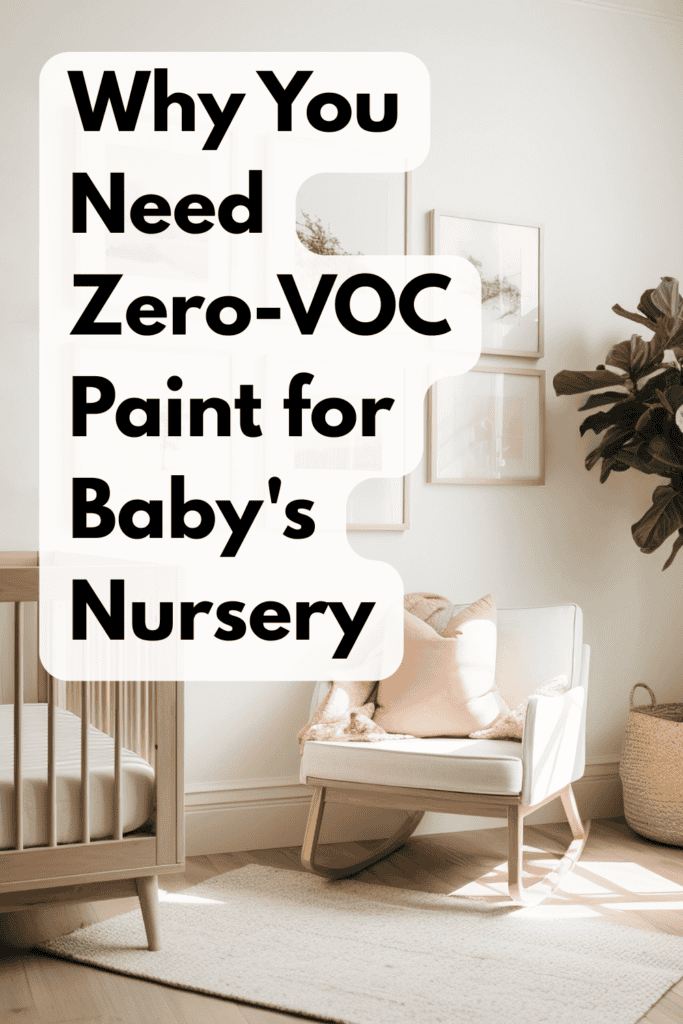
Fresh paint is one of the most common nursery pollutants. Conventional paint releases VOCs for weeks to months after application. That “fresh paint smell” is chemical off-gassing.
What to look for:
- Zero-VOC paint (not “low-VOC,” which still emits some)
- GREENGUARD Gold certified
- No added fragrance
Recommended brands: Benjamin Moore Natura, Sherwin-Williams Harmony, ECOS Paints (truly zero VOC, zero toxin). All are available at major paint retailers.
Timing matters: Paint the nursery at least 2-4 weeks before baby arrives. Even zero-VOC paint benefits from curing time. Keep windows open during and after painting.
3. Crib and Furniture
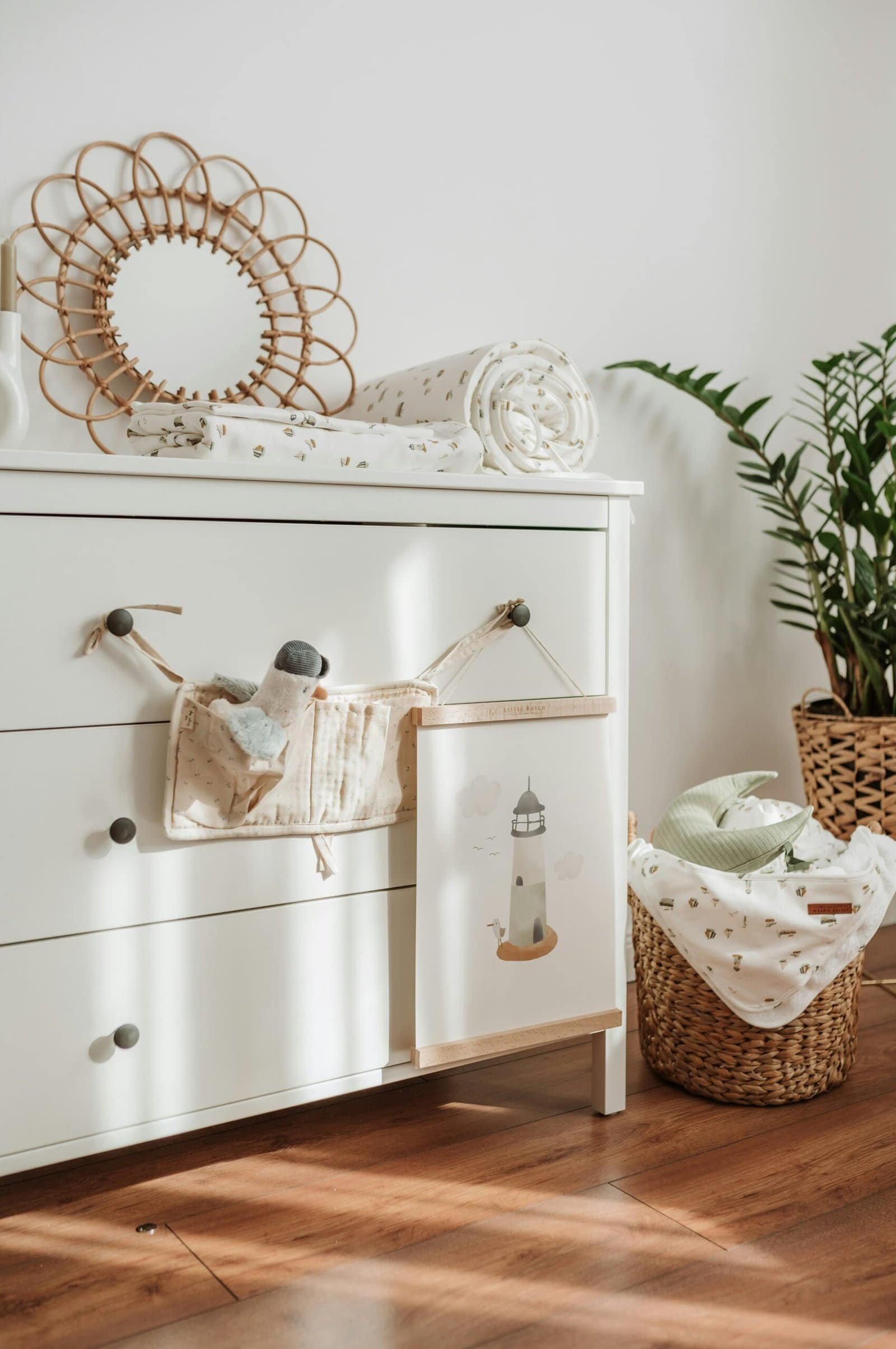
Nursery furniture (crib, dresser, changing table, rocker) can off-gas from the finish, adhesives, and composite wood (particleboard and MDF contain formaldehyde-based glues).
What to look for:
- Solid wood construction (not particleboard or MDF)
- GREENGUARD Gold certified
- Water-based or zero-VOC finish
- No drop-side cribs (safety issue, not chemical)
Recommended brands:
- Babyletto: GREENGUARD Gold certified across their line. Sustainable materials. Modern designs.
- IKEA Sniglar crib: Solid beech wood, no paint or finish. One of the cleanest and most affordable cribs available ($80-$100).
- DaVinci by Million Dollar Baby: GREENGUARD Gold certified, solid pine construction, non-toxic finish.
The honest truth: You don’t need a $600 organic crib. A solid wood crib with a non-toxic finish is perfectly fine. The IKEA Sniglar is raw beech wood with no finish at all. It’s $80 and it’s one of the cleanest options on the market.
For existing furniture: If you inherited or bought secondhand furniture, let it air out in a garage or well-ventilated room for a few days before bringing it into the nursery. If it has a strong smell, it’s off-gassing. Time and ventilation solve most of it.
The nursery is the perfect place to start going non-toxic. The free 7-Day Non-Toxic Home Kickstart helps you keep the momentum going through every other room.
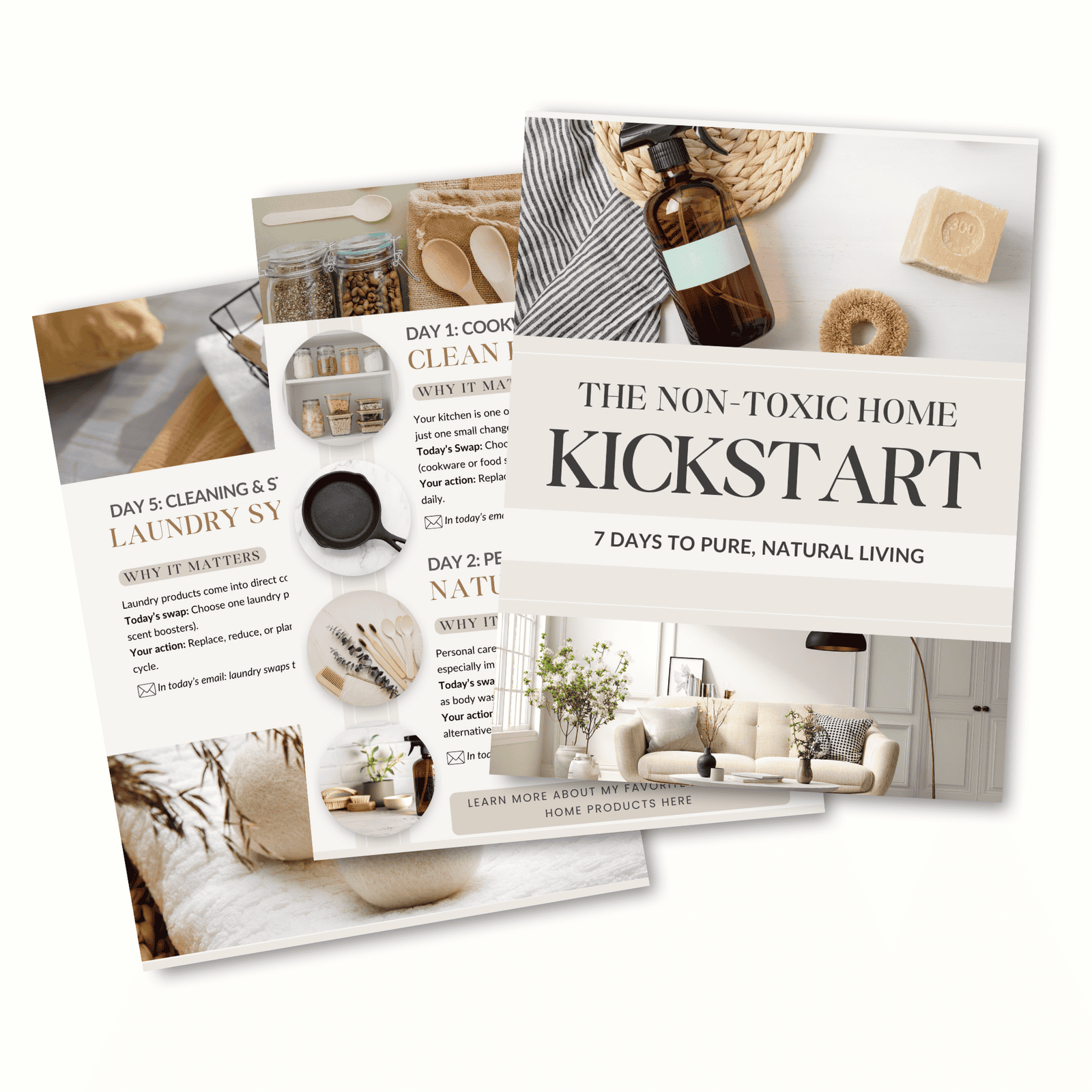
Your 7-Day Kickstart To A Non-Toxic Home
One swap per day. No overhaul required. Just 7 small changes that make your home a healthier place to live.
No spam. Unsubscribe anytime.
4. Bedding and Textiles
Conventional crib sheets, blankets, and curtains can contain formaldehyde (wrinkle-resistance treatment), synthetic dyes, and flame retardant chemicals.
What to look for:
- GOTS certified organic cotton (Global Organic Textile Standard)
- Oeko-Tex Standard 100 (tested for harmful substances)
- No wrinkle-free, stain-resistant, or flame-retardant treatments
Where to find it: Burt’s Bees Baby makes affordable organic cotton crib sheets ($12-$15). L’ange Baby, Pottery Barn Kids organic line, and IKEA’s organic cotton options are also good.
Tip: Wash all new textiles before use. Hot water with non-toxic detergent removes surface chemicals from manufacturing and shipping.
5. Air Quality
The nursery should have the best air quality in the house. Baby is in this room more hours per day than any other.
Essential:
- Ventilate. Open the nursery windows daily for 15-20 minutes (weather permitting). Fresh air circulation reduces accumulated VOCs.
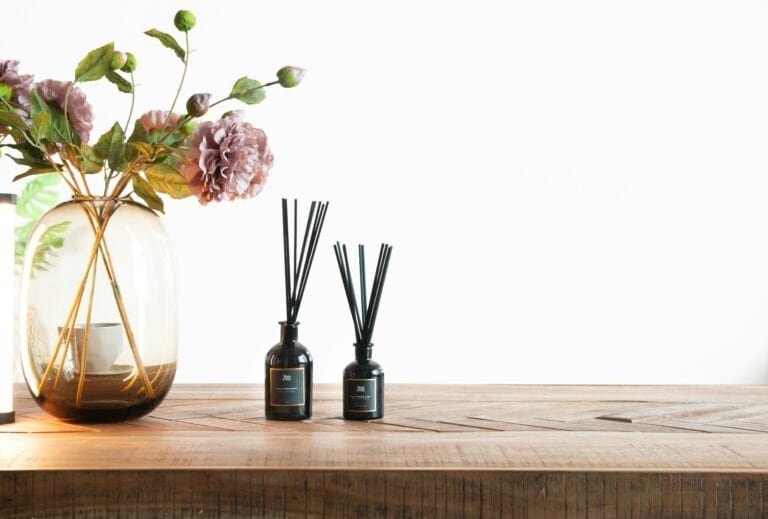
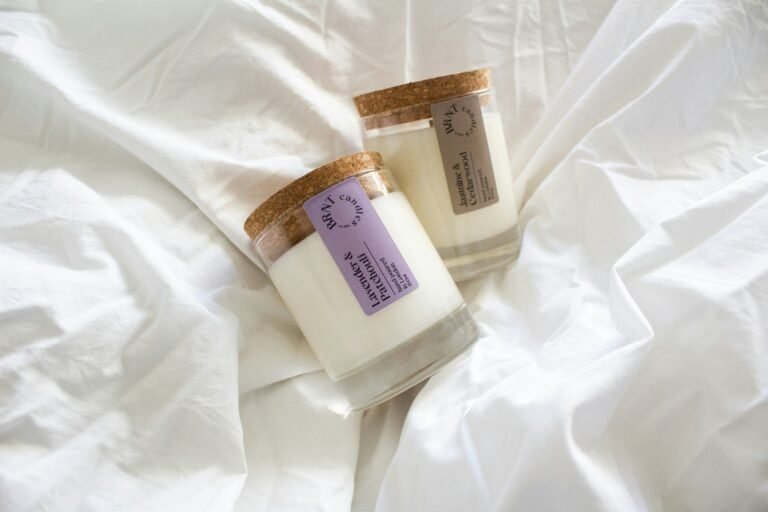
- Skip synthetic air fresheners, scented plug-ins, and conventional candles entirely. For scent, use a lavender sachet in the dresser.
- Run the bathroom exhaust fan if the nursery shares a wall with the bathroom.
Worth adding:
- An air purifier with a true HEPA filter ($80-$200). Place it in the nursery and run it while baby sleeps. This filters dust, allergens, and fine particulates from the air.
- A few non toxic house plants. Spider plants and Boston ferns are safe and effective air purifiers. Place them out of reach as baby grows.
Skip: Ionizers and ozone generators. They produce ozone, which is a lung irritant. HEPA-only purifiers are what you want.
6. Flooring
If possible, the nursery floor should be solid surface (hardwood, tile, or natural linoleum) with a natural fiber rug. Conventional wall-to-wall carpet contains adhesives, stain treatments, and can trap allergens and dust mites.
If you have carpet: Vacuum weekly with a HEPA vacuum. Consider an organic wool or cotton area rug over the carpet for the play area (this provides a cleaner surface layer).
For area rugs: Look for untreated wool, organic cotton, or natural jute. Avoid synthetic rugs with latex backing (off-gassing) and stain-resistant coatings (PFAS chemicals).
Recommended: Lorena Canals makes washable cotton rugs without synthetic treatments. Hook & Loom makes non-toxic area rugs with OEKO-TEX certification.
7. Cleaning Products
Everything used to clean the nursery should be non-toxic. Baby is on the floor, touching surfaces, putting hands in mouth.
What to use:
- Vinegar and water all-purpose cleaner (safe for all surfaces)
- Castile soap for floors and general cleaning
- Hydrogen peroxide for disinfecting (3% solution in a spray bottle)
What to avoid: Bleach, Lysol, conventional disinfectant sprays, anything with synthetic fragrance. These leave residue on surfaces that baby touches and crawls on.
Full recipes are in our DIY cleaning guide.
8. Diaper Changing Area
Changing pad: Skip the vinyl-covered changing pad if possible. Look for organic cotton covers and pads without PVC. Keekaroo Peanut Changer is a popular non-toxic option (no fabric cover needed, wipeable, GREENGUARD Gold).
Wipes: Water-based wipes without fragrance, alcohol, or chlorine. WaterWipes (literally 99.9% water), Honest Company, or cloth wipes with warm water (the zero-waste option).
Diaper cream: Avoid petroleum-based products. Look for zinc oxide-based creams with simple ingredient lists. Burt’s Bees Baby Diaper Ointment and Earth Mama Organic Diaper Balm are good options.
9. Toys (For When Baby Starts Playing)
What to look for:
- Solid wood (untreated or finished with food-grade oils)
- Organic cotton for soft toys
- Silicone teethers (food-grade silicone, not plastic)
- No PVC, no phthalates, no lead paint
What to avoid: Cheap plastic toys with strong chemical smells. Painted toys from unknown manufacturers (lead paint is still a problem in some imports). Foam play mats with “puzzle piece” interlocking design (many contain formamide).
Recommended play mat: Look for one that’s GREENGUARD Gold or Oeko-Tex certified. Several brands make non-toxic foam and natural rubber play mats.
The Nursery Is the Room That Gets You Started
Once you see what matters in the nursery, you start noticing it in every room. The 7-Day Non-Toxic Kickstart covers one simple swap a day across your whole home, starting with the easiest wins.
The “Don’t Stress About It” List
As an Amazon Associate, I earn from qualifying purchases. This means if you click an Amazon link and buy something, I may earn a small commission at no extra cost to you.
Not everything needs to be organic or certified. Here’s what matters less than the internet suggests:
Organic clothing is nice but not essential. Regular cotton clothing washed before first wear is fine. Baby’s skin contact with clothing is lower risk than mattress contact during sleep.
Blackout curtains don’t need to be organic. If your budget is limited, spend it on the mattress and paint, not the curtains.
The crib brand doesn’t matter as much as the material. A $100 solid wood crib is better than a $400 MDF crib with a fancy brand name.
You don’t need a nursery-specific air purifier brand. Any HEPA purifier works. The “baby” label on some models is just marketing.
Focus your budget where it counts: mattress, paint, and air quality. Everything else can be addressed gradually.
The Priority Order
If you can’t do everything at once, here’s the order that makes the most impact:
- Crib mattress (highest exposure, 12+ hours/day)
- Paint (highest VOC source if recently painted)
- Air quality (ventilation + skip synthetic fragrance)
- Cleaning products (baby touches every surface)
- Bedding (direct skin contact while sleeping)
- Furniture (off-gassing decreases over time)
- Flooring (rugs and vacuuming handle most concerns)
- Everything else (as budget allows)
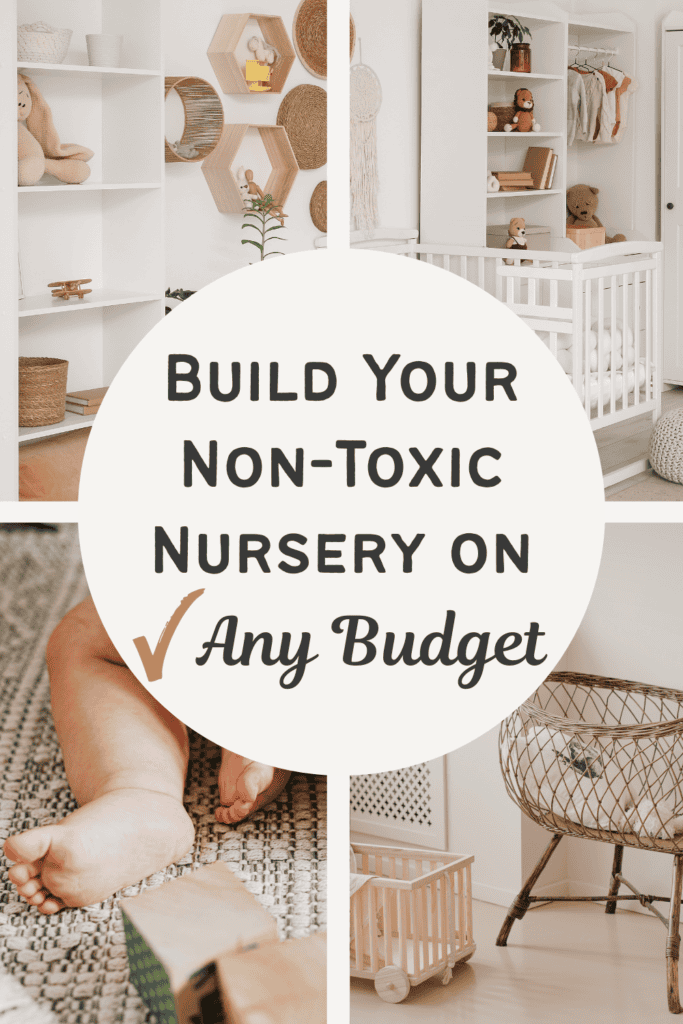
A non toxic nursery doesn’t require a $5,000 budget. It requires informed choices about the few things that matter most. An organic mattress, zero-VOC paint, and clean air cover 80% of the impact. The rest is improvement at the margins.
For the full room-by-room approach to a healthier home, check out our 25 non toxic swaps for every room.
Save This For Later
Want the Easy Version?
Get the free 7-Day Non-Toxic Home Kickstart, one simple swap a day, delivered to your inbox.
Your 7-Day Kickstart To A Non-Toxic Home
One swap per day. No overhaul required. Just 7 small changes that make your home a healthier place to live.
No spam. Unsubscribe anytime.