Essential Oil Cleaning Recipes: 10 DIY Blends for Every Room
Most essential oil cleaning recipes floating around the internet have the same problem. They list oils like they’re magic potions. “Add 10 drops of lemon for a fresh scent!” Cool. But why lemon? What does it actually do? Will it eat through your granite countertop?
We got tired of the vague advice. So we put together 10 essential oil cleaning recipes that are specific, practical, and organized by where you’ll actually use them. Every recipe includes exact measurements, the reason each oil is in the blend, and a heads-up on surfaces to avoid.
But first, the part nobody talks about.
Not All Essential Oils Clean the Same Way
Essential oils aren’t interchangeable. Each one has different chemical compounds that make it useful for different things.
Antibacterial oils (tea tree, lemon, eucalyptus) contain compounds like terpinen-4-ol and limonene that disrupt bacterial cell membranes. A 2015 study in the Journal of Applied Microbiology found tea tree oil effective against several common household bacteria. These are your workhorses for kitchens and bathrooms.
Antifungal oils (tea tree, clove, thyme) target mold, mildew, and fungal growth. Tea tree shows up twice because it genuinely does both jobs well. Clove oil contains eugenol, which is particularly effective against black mold.
Deodorizing oils (lavender, peppermint, lemon, eucalyptus) neutralize odors rather than just covering them up. If you want your house to smell good without synthetic fragrance, these are your go-to options. We covered more ways to do this in our guide to natural home fragrance without toxins.
Grease-cutting oils (lemon, orange, grapefruit) contain d-limonene, a natural solvent that breaks down grease and sticky residue. Orange oil is so effective at this that it’s used in commercial degreasers.
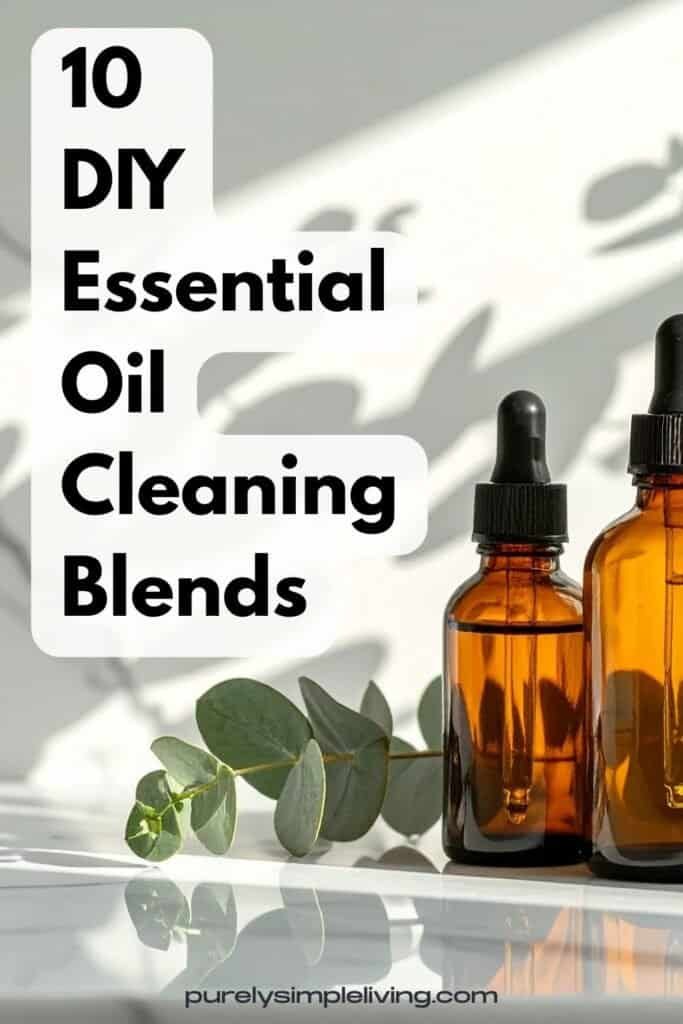
The Starter Kit: Your First 4 Oils
As an Amazon Associate, I earn from qualifying purchases. This means if you click an Amazon link and buy something, I may earn a small commission at no extra cost to you.
If you’re buying essential oils for the first time, don’t buy 12 bottles. Start with four.
- Tea tree ($8-12). The MVP. Antibacterial, antifungal, deodorizing. Goes in almost every recipe below.
- Lemon ($6-10). Cuts grease, smells clean without smelling “chemical,” antibacterial.
- Lavender ($8-14). Deodorizing powerhouse. Also calming, which is a nice bonus when you’re scrubbing the shower.
- Peppermint ($7-10). Pest deterrent (spiders and mice genuinely dislike it), deodorizing, cooling.
Total starter kit cost: $29-46. These four oils will cover 8 of the 10 recipes below.
Where to buy: Plant Therapy and Rocky Mountain Oils are both reputable, GC/MS tested, and reasonably priced. Avoid Amazon unless you’re buying directly from a verified brand store. Counterfeit essential oils are a real problem on third-party marketplaces.
Quick Dilution Guide
Essential oils are concentrated. Using too much doesn’t make your cleaner work better. It wastes oil, can damage surfaces, and sometimes leaves an oily residue that attracts more dirt.
Standard cleaning ratio: 10-15 drops per 16oz (2 cups) of liquid. That’s it. More than 20 drops per 16oz is overkill for cleaning purposes.
For spray bottles: Always add oils to vinegar or witch hazel first, then add water. Oil and water don’t mix (literally), so the vinegar acts as an emulsifier to distribute the oils evenly.
For mopping solutions: Add oils directly to your mop bucket. The agitation of mopping distributes them well enough.
Now, the recipes.
Essential oils are just one part of going non-toxic at home. The free 7-Day Non-Toxic Home Kickstart gives you a simple swap for every room, starting today.
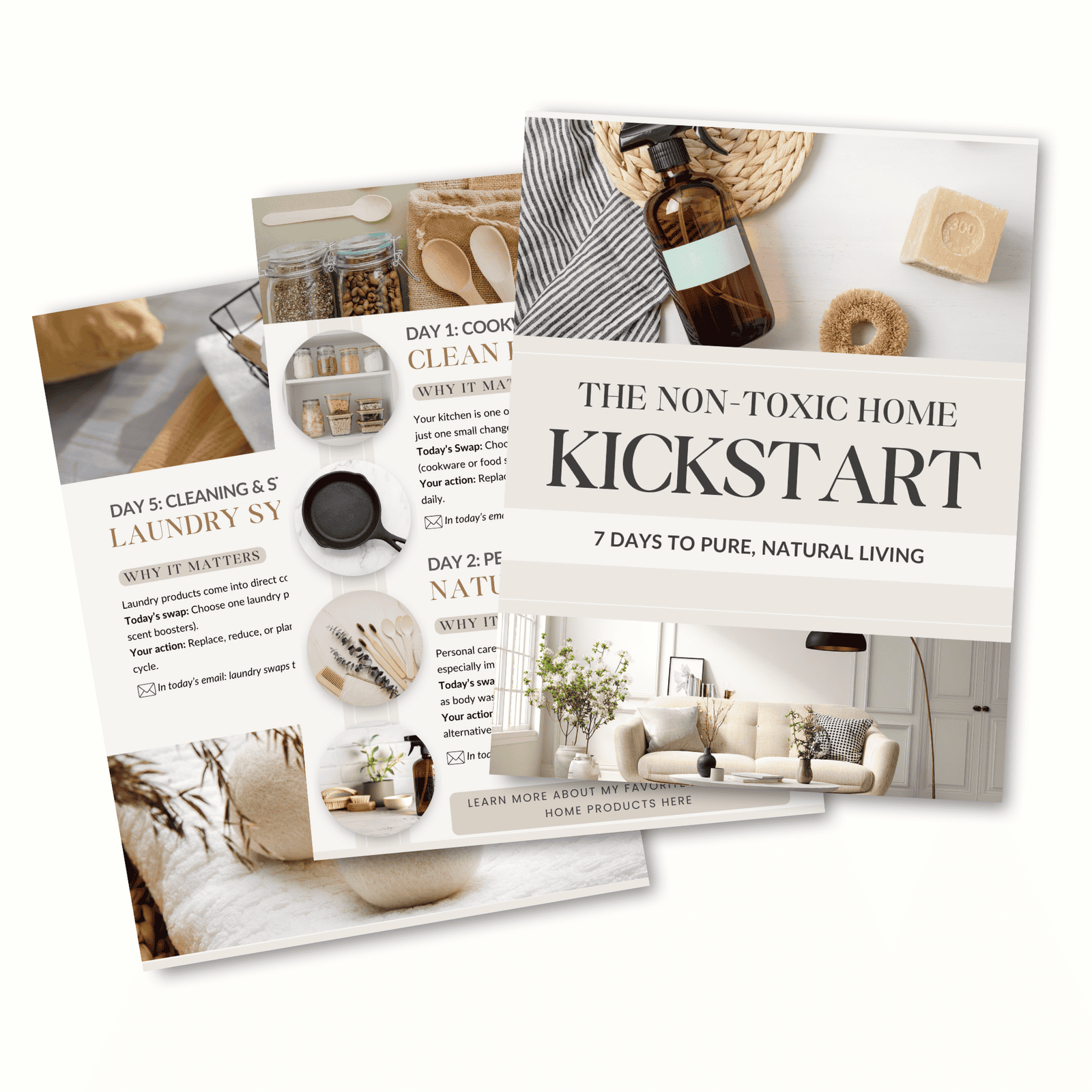
Your 7-Day Kickstart To A Non-Toxic Home
One swap per day. No overhaul required. Just 7 small changes that make your home a healthier place to live.
No spam. Unsubscribe anytime.
Recipe 1: All-Purpose Kitchen Spray
This one lives on our counter permanently.
- 1 cup white vinegar
- 1 cup water
- 10 drops lemon essential oil
- 5 drops tea tree essential oil
Combine in a glass spray bottle (essential oils can degrade plastic over time). Shake before each use.
Why it works: The vinegar cuts grease and disinfects. Lemon boosts the grease-cutting power and adds antibacterial properties. Tea tree handles anything the vinegar misses.
Don’t use on: Marble, granite, or any natural stone. The acid in vinegar etches stone surfaces. For stone countertops, swap the vinegar for 2 cups of water and add 1 tablespoon of castile soap instead.
Recipe 2: Bathroom Tile and Grout Spray
Mildew doesn’t stand a chance.
- 1 cup water
- 1/2 cup white vinegar
- 15 drops tea tree essential oil
- 10 drops eucalyptus essential oil
Spray on tile, grout, shower walls, and tub surfaces. Let sit 10 minutes before scrubbing. For tough mildew, spray and leave it overnight.
Why it works: Tea tree and eucalyptus are both antifungal. The combination attacks mold and mildew from two angles. Eucalyptus also opens up your airways, which is a nice side effect when you’re cleaning an enclosed shower.
Don’t use on: Natural stone tile. Same vinegar rule applies.
Recipe 3: Glass and Mirror Cleaner
Streak-free without the blue dye.
- 1 cup water
- 1 cup white vinegar
- 8 drops lemon essential oil
Use with a microfiber cloth or newspaper (yes, newspaper). Spray, wipe in one direction, done.
Why it works: Vinegar dissolves mineral deposits and water spots. Lemon cuts through any greasy fingerprints. The result is the same as commercial glass cleaner, minus the ammonia and synthetic dyes.
Recipe 4: Hardwood and Laminate Floor Cleaner
Most commercial floor cleaners leave a waxy buildup that dulls wood floors over time. This doesn’t.
- 1 gallon hot water
- 1/4 cup white vinegar
- 10 drops lemon essential oil
- 5 drops lavender essential oil
Damp mop only. Wring your mop until it’s barely wet. Excess water warps hardwood.
Why it works: The very diluted vinegar cleans without stripping floor finish. Lemon cuts any sticky spots. Lavender leaves a subtle scent that lasts about an hour. If you want more floor cleaning methods, we covered different approaches for every floor type alongside non toxic cleaning products you can make at home.
Real talk: Some hardwood floor manufacturers say vinegar will damage their finish. The concentration here (1/4 cup per gallon) is extremely diluted. But if your floors are brand new or you’re worried, test in a closet first.
Recipe 5: Garbage Disposal Refresh
That smell. You know the one.
- 1/2 cup baking soda
- 10 drops lemon essential oil
- 5 drops peppermint essential oil
- White vinegar (separate)
Combine baking soda and essential oils. Pour the mixture down the disposal. Let it sit for 15 minutes. Then pour 1 cup of vinegar down the drain. The fizzing action loosens buildup while the oils deodorize. Run cold water and turn on the disposal for 30 seconds.
Why it works: Baking soda is a natural deodorizer and mild abrasive. The baking soda and vinegar reaction physically loosens gunk stuck to the blades. Lemon and peppermint don’t just mask the smell. They leave behind antimicrobial compounds that slow regrowth.
Recipe 6: Toilet Bowl Cleaner
Commercial toilet cleaners are some of the most toxic products in your house. This works just as well.
- 1/2 cup baking soda
- 1/4 cup white vinegar
- 10 drops tea tree essential oil
- 5 drops lavender essential oil
Sprinkle baking soda into the bowl. Add essential oils. Pour vinegar in and let it fizz for 10 minutes. Scrub with a toilet brush, focusing on the waterline and under the rim. Flush.
Why it works: Tea tree disinfects. Baking soda scrubs without scratching porcelain. Lavender handles the odor. The fizzing action reaches spots your brush might miss.
Recipe 7: Linen and Fabric Spray
For couches, pillows, curtains, mattresses, and anything else you can’t throw in the washing machine.
- 1 cup water
- 2 tablespoons witch hazel (or vodka, seriously)
- 15 drops lavender essential oil
- 5 drops tea tree essential oil
Combine in a spray bottle. Shake well before each use. Mist lightly from about 12 inches away.
Why it works: Witch hazel helps the oil and water blend and speeds drying time. Lavender is a natural deodorizer (not just a nice smell). Tea tree kills dust mites and bacteria that build up in soft fabrics. This is a genuinely useful recipe for between-wash freshening.
One note: Test on an inconspicuous spot first with dark fabrics. The witch hazel can occasionally leave a slight watermark.
Recipe 8: Stainless Steel Polish
Fingerprints on stainless steel appliances are the bane of every kitchen.
- 1/4 cup olive oil (yes, cooking olive oil)
- 10 drops lemon essential oil
- Soft cloth
Put a small amount of olive oil on the cloth. Add a few drops of lemon oil. Wipe in the direction of the grain (every stainless steel surface has a grain direction). Buff with a dry cloth.
Why it works: The olive oil polishes and creates a barrier that resists future fingerprints. Lemon oil cuts through existing grease and smudges. This is the same basic approach commercial stainless steel polishes use, minus the petrochemical solvents.
Don’t overdo it. A little oil goes a long way. Too much leaves a greasy film. Start with about a teaspoon on the cloth and add more only if needed.
Recipe 9: Carpet Deodorizer
Better than any powder you can buy. And you probably already have everything.
- 1 cup baking soda
- 10 drops lavender essential oil
- 5 drops peppermint essential oil
- 5 drops eucalyptus essential oil
Mix the oils into the baking soda thoroughly (use a fork to break up clumps). Sprinkle over carpet. Let sit for 30 minutes to an hour. The longer it sits, the more odor it absorbs. Vacuum thoroughly.
Why it works: Baking soda absorbs odors at the molecular level. It doesn’t mask them. The essential oils leave behind a light scent and their antimicrobial properties help address the bacteria causing the smell in the first place.
Pet owners: This is safe for homes with pets, but keep animals off the treated carpet until you’ve vacuumed. Baking soda dust isn’t great for their paws or lungs in concentrated amounts.
Recipe 10: Laundry Booster
For loads that need a little extra help. Gym clothes, towels, kids’ stuff.
- 10 drops tea tree essential oil
- 5 drops lavender essential oil
- Added directly to the wash cycle (not the detergent dispenser)
Add oils directly to the drum with your clothes before starting the wash. Use warm or hot water when possible. The heat helps disperse the oils more effectively.
Why it works: Tea tree is antibacterial and antifungal, which is exactly what gym clothes need. Lavender provides a subtle clean scent that survives the dryer without using synthetic fragrance dryer sheets.
Budget tip: This costs about $0.15 per load in essential oils. Compare that to scented laundry boosters at $0.30-0.50 per load.
Common Mistakes (and How to Avoid Them)
Using too much oil. We see recipes online calling for 30-40 drops per spray bottle. That’s wasteful and can leave oily residue on surfaces. Stick to 10-15 drops per 16oz.
Using plastic spray bottles. Certain essential oils (citrus oils especially) break down plastic over time. Use glass bottles, or at minimum, PET plastic bottles rated for essential oils. Amber glass is ideal because it also protects the oils from light degradation.
Mixing oils you shouldn’t. Not a safety issue for cleaning purposes, but some combinations just don’t work well. Clove and peppermint together is overwhelming. Tea tree and cinnamon compete. Stick to 2-3 complementary oils per recipe.
Skipping the patch test. Before spraying any new blend on a visible surface, test it somewhere hidden. Some oils (particularly cinnamon and clove) can stain light-colored surfaces. Citrus oils can strip certain finishes.
Expecting essential oils to replace actual cleaning. Oils enhance your cleaning products. They don’t replace scrubbing, vinegar, or baking soda. A spray bottle of water with lavender oil in it is a room spray, not a cleaner.
Quick Reference: Which Oil Does What
| Oil | Antibacterial | Antifungal | Deodorizing | Grease-Cutting | Pest Deterrent |
|---|---|---|---|---|---|
| Tea Tree | ✓ | ✓ | ✓ | ||
| Lemon | ✓ | ✓ | ✓ | ||
| Lavender | ✓ | ||||
| Peppermint | ✓ | ✓ | |||
| Eucalyptus | ✓ | ✓ | ✓ | ✓ | |
| Orange | ✓ | ✓ | |||
| Clove | ✓ | ✓ | |||
| Thyme | ✓ | ✓ |
Between the four starter oils and these 10 recipes, you’ve got every room covered. The entire setup costs less than two bottles of the “natural” cleaning spray at the store. And it works better, because you know exactly what’s in every bottle.
If you already have the 5 ingredients that replace every cleaner in your pantry, adding a few essential oils is the natural next step. Same simplicity, more cleaning power, and your house smells like actual plants instead of “Mountain Spring” from a lab.
Want the Easy Version?
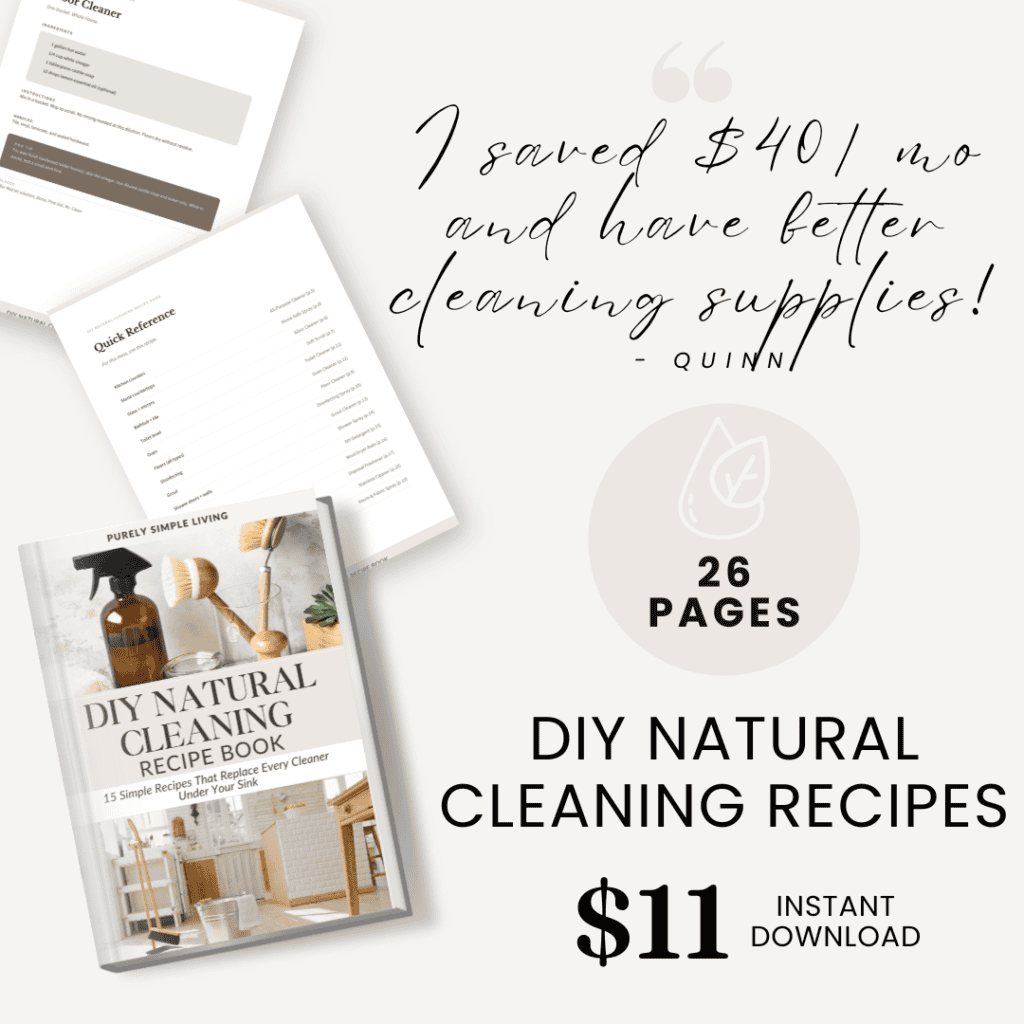
All 10 of these essential oil cleaning recipes (plus 18 more) are inside the DIY Natural Cleaning Recipe Book. Print it, stick it on the fridge, done.
Recommended products
Grab your 7-Day Non-Toxic Home Kickstart before you go!
Your 7-Day Kickstart To A Non-Toxic Home
One swap per day. No overhaul required. Just 7 small changes that make your home a healthier place to live.
No spam. Unsubscribe anytime.